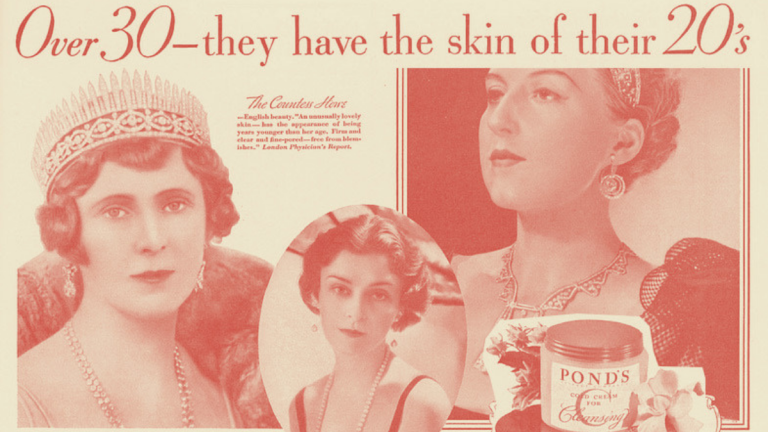
The 5 Worst Cleansers for Sensitive Skin Over 40 (and What to Wash With Instead)

Most of us can tell you exactly why we bought a face serum. We looked up the reviews, compared the percentages to other products, and maybe even watched an eleven-minute video of a dermatologist talking about it on YouTube. Our cleanser is another story: we might have picked it up from the grocery store a few months ago, or maybe we’re still using the handful of samples we got in the mail from our last skincare haul at Sephora or Dermstore.
If you buy through our links, we may earn a small commission at no cost to you. As an Amazon Associate, we earn from qualifying purchases. Our policy
The reason we generally don’t think twice about cleansers is because they’re usually inexpensive and do pretty much what they say they’re going to do: cleanse your skin and remove some or most of your makeup depending on how effective it really is.
And sometimes we’re loyal to cleansers out of laziness. And sure, that loyalty worked for decades, since the skin we had when first bought it was pretty much acting the same until maybe a few years ago.
Today, your skin might need something much different. Skin gets drier, more sensitive, and can be a reflection of everything we put on it when it used to be a faithful bystander with zero reaction, no matter what we did.
And sure, a cleanser might only touch your face for thirty seconds at a time, but it’s the one product that touches your face twice a day, for years. So, we think it’s about time for us to put some actual time and research into it.
But before we get into the ones that work, it helps to know which ones might be wrecking your skin. We found the five cleansers with the worst track record for sensitive skin over 40, plus a gentler swap for each. And. bonus? All but one are under $30!
1. Bar Soap (Yes, Even the Gentle-Sounding Ones)
The ol’ faithful soap bar in the shower is hard to argue with when it comes to cost and convenience. It’s about $2, it lasts a month or more depending on your shower habits, and the whole family can use it. Which is kind of gross to begin with LOL. But the bigger problem is the chemistry.
Soap bars are alkaline due to their composition of lye (sodium hydroxide) and fat, and this includes the classic white bars and the green ones that smell like a golf course. Alkaline means a high pH, and our skin runs slightly acidic. So when they come into contact with each other multiple times per day, the soap always prevails.
Skin’s surface naturally sits on the acidic side, around a pH of 4.7 to 5.5. Classic bar soaps measure between 9 and 10 on the same scale, and some go higher. A study in the International Journal of Dermatology that tested 29 cleansers on people with sensitive skin found the true soaps measured a pH of 9.75 to 12.38 and produced irritation scores several times higher than the gentle synthetic bars. The researchers also noted that this matters more as we get older: cumulative irritation takes longer to recover from, and repeated washing with harsh soap can get in the way of that repair. Dermatologist Dr. Rachel Nazarian of Mount Sinai puts the difference between soap and cleansers simply: “Cleansers have a pH that matches the skin, and they don’t strip the whole barrier off the way old-school soap does.”
Our Beauty Empties Experts (BEEs) have learned this one the hard way. One BEE who tried a week of washing her face with the gold antibacterial bar reported it left her drier and more broken out than when she started. Another BEE’s advice in a recent group convo was blunter: Don’t put a bar anywhere near your face. The American Academy of Dermatology’s guidance for skin in menopause says the same thing more politely: wash with a mild cleanser instead of soap, which can be too drying.
For bar lovers, we suggest Vanicream. It comes in a pump for about $13. It’s fragrance-free, dye-free, sulfate-free and paraben-free, and it has been given the National Eczema Association’s Seal of Acceptance, one of the strictest gentleness credentials a drugstore cleanser can have. It won’t sud up like the bar did (no cleanser this gentle does), but it gets the job done.
One note from the hive: a few BEEs with very oil-prone skin find it a touch rich, and one reported it “clogs my pores and makes me greasy.” If your skin still runs oily, start with a nighttime-only trial.
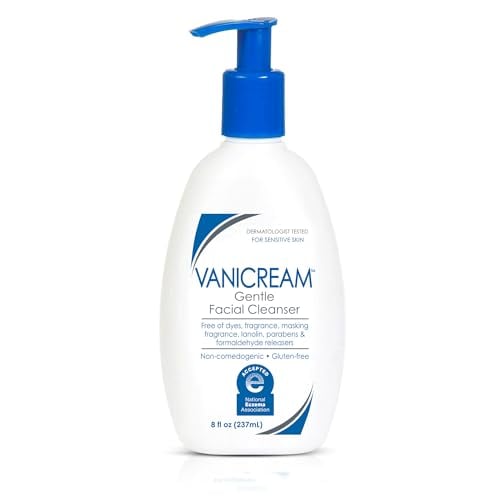
Vanicream Gentle Facial Cleanser
The eczema-association-approved wash for faces that thought bar soap was fine.
2. St. Ives Fresh Skin Apricot Scrub
No product on this list inspires devotion like this one. The apricot scrub has been in America’s bathrooms since before many of today’s kids were born. For only $4, it produces a smooth, sanded feeling that no gentle product has replicated. The debate over it got so intense that it ended up in federal court. (More on that below.)
The scrubbing agent is walnut shell powder, ground shells, and it sits second on the ingredient list, ahead of the glycerin. In 2016, a class action filed in California claimed the shells created “microtears” in skin, comparing the scrub to “using sandpaper on your face.” The court dismissed the case in 2018 for lack of evidence of actual injury, and an appeals court agreed in 2020. No study has ever proven the microtear theory. What remains, however, is a long line of dermatologists who want ground shells nowhere near a reactive face.
Dr. Hadley King, a New York dermatologist, explains the concern: “if you use a product that has particles that are large and rough with sharp edges like walnuts, you can create micro-tears in the skin that can lead to irritation, inflammation, and possibly even infection.” Even the brand’s own directions say to use it two to three times a week, and it’s said the scrub is best for oily skin, which is the skin type most of us waved goodbye to a few years ago.
From the Hive
The buzz from our Beauty Empties Experts. Sign up to join!
“Every single time I see a post besmirching St. Ives Apricot Scrub, I feel morally obligated to defend its honor!” one reviewer wrote, while another admitted her dermatologist told her to drop it years ago and she still keeps a tube around anyway. The most balanced take in the hive: “people tend to forget how different everyone’s body chemistry is. If St Ives scrub works for your skin then it works for your skin.” If yours is sensitive, though, the odds are not in the scrub’s favor.
The scrub habit is sort of engrained (pun intended) in us if you grew up in the 70s, 80s, or 90s. If you couldn’t feel the grit, a scrub just wasn’t working! We won’t tell you to stop exfoliating, just to switch to a gentler grit. Dermalogica’s Daily Microfoliant is a rice-based powder that activates with water and polishes with papain (a papaya enzyme) and a small dose of salicylic acid instead of ground shells. It’s gentle enough that the brand rates it for daily use, though if your skin is reactive, every other day is the smarter start. The one real drawback is the price: just under $50 for the full size, which is a serious jump from a $4 scrub. In its defense, you only use a small scoop of powder per wash, and there’s a $19.50 travel size if you’d rather test-drive it first. (And if powders aren’t your thing, a leave-on acid once a week gets you the same smoothness.)
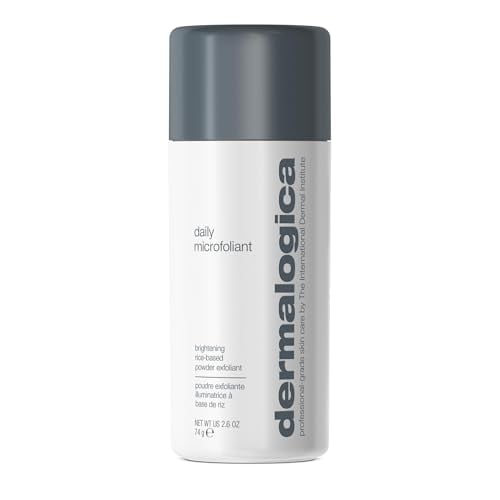
Dermalogica Daily Microfoliant
A rice-based powder that polishes with enzymes instead of shells, gentle enough for daily use. Certified cruelty-free (PETA).
I use this powder and I am really, really happy with it. I like the faint rice smell, and it’s been doing a great job of removing peeling skin from my retinol. This is going to be a Beauty Empty very soon and I will give my full review!
3. Noxzema Original Deep Cleansing Cream
One whiff of the camphor in the blue jar and it’s 1985 again, with you at a slumber party painting the cream on your face like you’re Bob Ross. The idea back then was that the cooling, slightly burning sensation meant it was working. But the tingle didn’t really mean it was cleaning; ingredients such as camphor, menthol, and eucalyptus make the skin feel cool by causing minor irritation to the nerve endings in it. Younger, resilient skin took that as a fun sensory bonus. Today, many adults have skin that reacts negatively to those ingredients, and a product built around counter-irritants such as menthol or eucalyptus can just end up irritating you.
The current ingredient list still stacks fragrance, camphor, menthol, eucalyptus oil, and clove oil, plus the individual fragrance components (eugenol, geraniol, limonene, linalool). These have been known to cause some with sensitive skin to react, so much so that European regulators require brands to disclose those fragrance components on the label.
Dr. Marisa Garshick, a Manhattan dermatologist, names the ingredient categories drier, easily-irritated skin should skip: “abrasive scrubs, harsh soaps, alcohol, and fragrance.”
What the jar’s loyalists love is that creamy texture, and the good news is you can get that feeling without the camphor. La Roche-Posay’s Toleriane cleanser is a soft, milky cream with ceramides and niacinamide, and it has zero fragrance. It was one of our top cleanser picks in our post on the most common anti-aging skincare mistakes after 50, and it’s earned the repeat mention. One of our BEEs with rosacea uses it for her flare-up weeks because she can use it on a cotton pad without rinsing. The complaints are mostly to do with price (it’s about $22) and if you do like some fragrance, you’re out of luck (but that’s the whole point!)
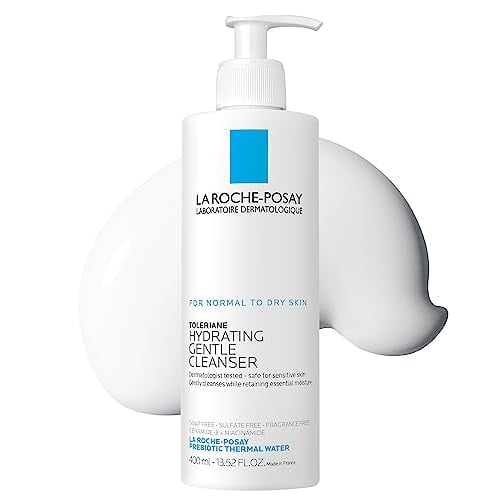
La Roche-Posay Toleriane Hydrating Gentle Cleanser
A milky cream with ceramides that cleans the way the blue jar only felt like it did.
4. Neutrogena Deep Clean Facial Cleanser
“Deep clean” might be the two most successful words in the history of the cleanser shelf. And for easily irritated skin over 50, they describe exactly the opposite of what you want. When you’ve washed your face enough that nothing else will come off on a cloth, washing off whatever is left means removing your own natural barrier. So a product that cleans your face but leaves it feeling tight isn’t giving you a better finished result; it’s giving you a worse one.
This particular gel runs on sodium C14-16 olefin sulfonate, a strong detergent from the same functional family as the sulfates brands love to say they’ve dropped, plus fragrance, salicylic acid, and two dyes. Daily salicylic acid inside a strong detergent base is a lot to ask of skin that’s already short on oil. Research backs up the tight-face warning: a review in Dermatologic Therapy found that harsh cleansing surfactants damage skin proteins and lipids, leading to “after-wash tightness, dryness, barrier damage, irritation, and even itch.”
Dr. Kellie Reed, an Austin dermatologist, gives the over-50 version of the advice: “If your skin is drier, then consider cutting back on these acid-based cleansers, or opt for a gentle cleanser.” One BEE found that one week of a too-harsh salicylic cleanser took her “a couple months to recover.”
What keeps people loyal to a gel like Deep Clean is the lather; it foams up in your hands and feels like it’s accomplishing something. CeraVe’s Hydrating Cream-to-Foam keeps the lather and loses the harshness. It starts as a cream, works up a real foam, and takes off makeup and sunscreen without that stripped-tight finish, with three ceramides in the formula and no fragrance. BEEs who made the switch say the first few washes feel like they didn’t do anything, only because the tight afterfeel is gone; that impression fades within a week or so. I mentioned in the mistakes piece that I’ve been using Drunk Elephant’s Beste No. 9 myself; it’s pricier, but it runs on the same low-pH, fragrance-free logic.
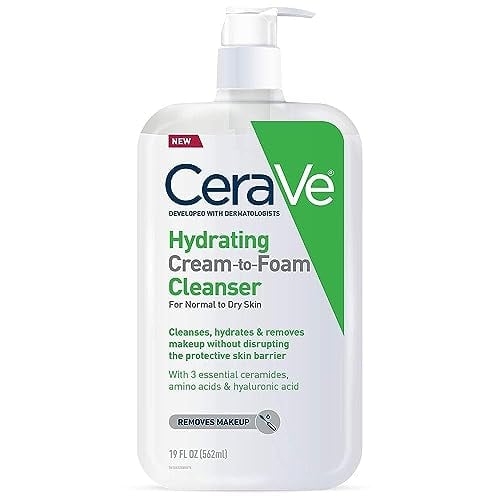
CeraVe Hydrating Cream-to-Foam Cleanser
Foam for people who need the lather but not the stripped feeling after.
5. Makeup Wipes, When They’re the Whole Routine
Wipes were never made as a cleanser; they were developed for airplanes, gym bags, and when you barely have the energy to brush your teeth at 11:40 p.m. Somewhere along the way wipes became the main star of the show instead of the opener.
Dr. Craig Kraffert, a board-certified dermatologist, describes the design flaw: “A wipe’s limitation is that it requires the skin to be exposed to higher concentrations of cleansing ingredients, without the benefit of being able to rinse them away with water.” Dr. Angela Lamb of Mount Sinai is more forgiving but lands in the same place: “The wipes are fine, but they often leave a film on your face and are best when you are in a rush or to remove makeup before an actual wash.”
From the Hive
Our BEEs don’t defend wipes so much as confess to them. “I’ve known for a while that the wipes were not a great solution but I really haven’t had the energy to come up with a better solution,” one wrote, and energy is the heart of it. Nobody reaches for a wipe at the end of the night because she thinks it’s skincare. She reaches for it because the sink feels far away.
We get it. Wipes are fast and easy. So if we’re going to recommend a swap it need to be just as lazy-girl approved or it won’t work. Our recc? A no-rinse cleanser, in lotion form. You smooth it on, wipe it off with a cotton pad, and you’re done. No sink needed. Avène made it for skin that reacts to just about everything (no fragrance, no soap). At $28 it’s not drugstore-cheap, but for a nightly wipe replacement the value is still there; you’re paying for a formula designed to stay on reactive skin without picking a fight with it.
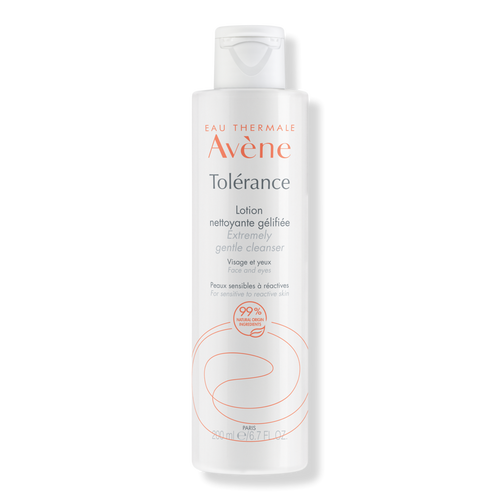
Avène Tolerance Extremely Gentle Cleanser Lotion
The no-rinse lotion that makes the lazy cleanse an actual cleanse.
If you remember one thing at the drugstore, make it the ten-second label check. Flip the bottle over. Look for fragrance high up on the ingredients list (top half), a “sulfate” or “sulfonate” right after water, and any promises of deep cleaning, invigorating, or tingle. Any of those, and back it goes. The best cleansers for skin over 50 are very uninteresting: cream or lotion textures, minimal ingredient lists, no fragrance, no tingling and no sandpaper feels before, during, or after. Let your serums be the interesting ones!
A cruelty-free mark means the brand is certified by PETA, Leaping Bunny, or both at the time of writing. A missing mark doesn’t mean a brand tests on animals; it just means the brand isn’t certified by these programs.
What Our BEEs Are Buzzing About
Here’s what the beauty community is saying about gentle cleansing (and the washes that aren’t):
Want to become a Beauty Empties Expert?
BEEs get free products to test, exclusive discount codes from our brand partners, and live access to The Hive sessions with dermatologists and beauty editors. Spots are limited and hand-picked.