What Nobody Tells You About Red Light Therapy Masks (and Which Ones Are Worth Your Money)

Red light therapy masks are everywhere right now. TikTok, Sephora, every beauty editor’s Instagram story, the hover-around-$400 price tag with the implicit promise that you can buy a piece of in-office dermatology and run it from your bathroom three nights a week. The marketing is convincing for a reason, and plenty of it is even true. The problem is what doesn’t make it onto the product page.
If you buy through our links, we may earn a small commission at no cost to you. As an Amazon Associate, we earn from qualifying purchases. Our policy
There are five things almost no LED mask brand will tell you in plain language, and each of them is the kind of detail that turns a smart purchase into an expensive paperweight or, in the wrong combination, a dermatologist visit. This is what the research actually supports, what dermatologists say in their own offices about which masks they recommend (and which they steer patients away from), and the seven masks worth the money in 2026.
What Nobody Tells You: The Four Things Marketing Leaves Out
1. Heat Can Trigger Melasma in Pigment-Prone Skin
This is the single biggest “nobody tells you” caveat, and it has on-the-record dermatologist confirmation. Dr. Dendy Engelman (a New York City dermatologist) told Yahoo Health that “at-home LED masks worsened melasma” in a few of her patients, with heat as the likely culprit. Dr. Morayo Adisa (a Chicago dermatologist) added in the same piece that LED masks can “trigger or induce melasma in someone who is susceptible.” The mechanism, per Dr. Nava Greenfield: heat signals pigment-producing cells to make more melanin. Dr. Whitney Bowe has put the practical warning sign on TikTok: if your skin starts to feel warm during a session, that warmth is the cue to think twice.
The risk is highest for medium to deeper skin tones, with active or history of melasma, with hormonal triggers like pregnancy or hormonal contraception, or with sun-induced hyperpigmentation already in play. The American Academy of Dermatology states explicitly that “people with darker skin tones face increased risk of hyperpigmentation from visible light exposure.” A peer-reviewed pilot study by Mpofana and Ramhurry on six Type VI patients found five improved on LED, but one darkened. The category isn’t safe for everyone the way the marketing suggests.
2. FDA Cleared Does Not Mean FDA Approved (and Neither Means It Works)
Every major LED mask brand puts “FDA cleared” on the box. What that phrase legally means is much smaller than it sounds. Cleared just means the manufacturer has proven the device is similar to one already on the market and is unlikely to hurt you. It does not mean the FDA tested whether it actually works. The American Academy of Dermatology states this directly: “FDA clearance indicates safety, not effectiveness.”
FDA “approved” is a higher bar that no consumer LED face mask currently meets. Any product page claiming “FDA approved” is either using the term wrong or selling something that needs more scrutiny. The practical takeaway: “FDA cleared” tells you the device is safe. It does not tell you it delivers what your skin actually needs.
3. The 12 to 14 Month Durability Cliff
If you read through the LED mask threads on Reddit, the same complaint keeps coming up: masks tend to break somewhere between 12 and 14 months of use, often just outside the standard one-year warranty. Battery problems, controller breakdowns, and LED strips going dim or dark are the most common reasons, and the issue shows up across CurrentBody, Solawave, Qure, and other brands. None of the major brands publish long-term durability data.
A $400 mask at 14 months works out to about $1.30 per session if you used it three times a week. That’s reasonable. If the mask fails at 14 months and the warranty is twelve months, the next replacement starts the math over. Look for warranty length, refund window, and replacement-part availability before the price.
4. The Time Commitment Is Real, and Most People Quit Before the Studies Did
Every meaningful clinical trial of LED light therapy ran sessions two to four times a week for at least four weeks, with most studies running for eight to fifteen weeks before primary endpoints were measured. The consumer expectation, reinforced by short-form social content showing two-week before-and-afters, is much faster than the research supports. The most common reason people abandon their LED mask is they expected results in four to six weeks and gave up.
The smallest amount of time that actually works is about 30 minutes a week (three 10-minute sessions) for three months. That works out to 90 minutes a month, or about an hour and a half of sitting still with a glowing mask on your face. Worth doing the math before you click buy, not after.
How to Evaluate a Mask Before You Buy
The five-part filter for evaluating any LED mask before purchase is straightforward, and it’s the same filter dermatologists use when patients ask which device to buy. Tap each one to expand.
1. Wavelengths the mask uses +
A device that doesn’t publish its specific wavelengths in nanometers is a red flag. Anything that lists “red light” without a number can’t be evaluated, and that ambiguity is intentional.
2. Strength of the light +
Look for two numbers: how strong the light is (in mW/cm²) and how much total light each session delivers (in J/cm²). Research has tested 30 to 65 mW/cm² for light strength and 3 to 50 J/cm² for dose as the range that actually works. If neither number is on the brand’s site, the brand is leaving out the specs that actually determine whether the device works.
3. Fine print on “FDA cleared” +
Verify the clearance number on the FDA’s database if the brand cites it. Lack of clearance is a serious red flag. Presence of clearance is the entry ticket, not the destination.
4. Funding behind the research +
Brand-sponsored studies are not necessarily wrong, but the bar is higher. Look for studies in PubMed-indexed journals (Photomedicine and Laser Surgery, Lasers in Surgery and Medicine, Journal of the American Academy of Dermatology) over claims like “97 percent of users reported improvement” from a manufacturer survey of 30 people.
5. Warranty and durability +
A mask that looks perfect on paper but breaks at 14 months and weighs your nose down is worse than a slightly less impressive one you’ll actually use for two years. Read the warranty fine print before the LED count.
Seven Red Light Therapy Masks Worth the Money
These seven masks meet most or all of the five-part filter above. Six are LED masks, which is the established category with the longest evidence base. JOVS is the only laser-based option in the lineup, a newer and completely different category. Each card includes the wavelengths, irradiance where it’s been published, FDA clearance status, the strongest evidence claim, and the trade-offs the brand pages tend to leave out.
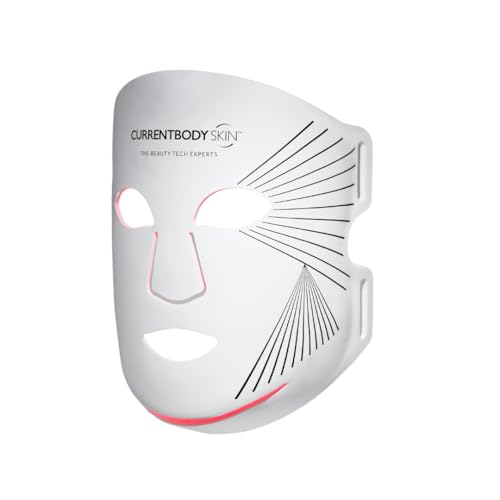
CurrentBody Skin LED Light Therapy Mask Series 2
The most thoroughly equipped mask in the consumer category. The Series 2 adds a third, deeper wavelength of light on top of the two that most masks use, which means it reaches further into the skin to support firmness. Sessions are ten minutes, three to five times a week. FDA cleared as of June 2025. The brand publishes a clinical study showing fine line reduction in four weeks. Retail is $469.99.
Pros. The Series 2 is the only mask in the lineup that includes a third, deeper wavelength of near-infrared light, on top of the two wavelengths most masks use. It’s FDA cleared and the clearance is publicly verifiable. The mask is flexible silicone, so it fits most face shapes. The brand publishes the strength of its light, which is the spec most others won’t share.
Cons. Users on Reddit report that the eye openings let through more light than expected, even with the included eye covers. Customer service complaints have come up in 2025 Reddit threads about the Series 2 specifically. The price ($469.99) is on the higher end for a non-laser mask. The clinical study supporting the brand’s claims was funded by the brand.
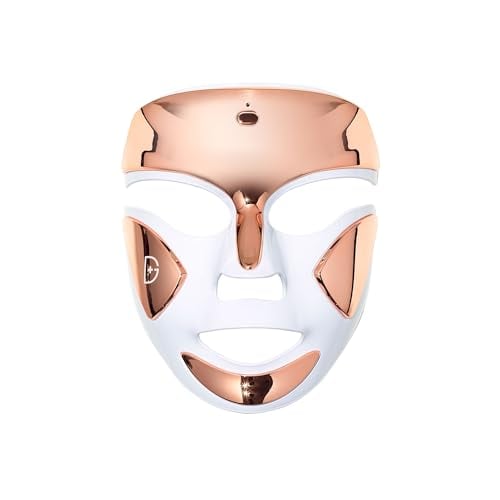
Dr. Dennis Gross DRx SpectraLite FaceWare Pro
The most-recognized premium mask, and the one beauty editors mention most often. It combines red light for fine lines with blue light for breakouts, in a three-minute daily session that’s much shorter than the competition. FDA cleared. The brand says 97 percent of users in their internal trial saw improvement in fine lines, wrinkles, tone, and breakouts. Retail is around $455. Certified cruelty-free (PETA).
Pros. The session is three minutes a day, which is the shortest in the lineup and actually fits into a busy routine. The mask combines red and blue light, so it works for both fine lines and breakouts. Beauty editors and dermatologists name-check this one constantly. The mask is FDA cleared.
Cons. The mask is a hard plastic shell rather than soft flexible silicone, so it’s less comfortable and doesn’t fit as many face shapes. The brand doesn’t publish how strong its light is, so there’s no way to compare it directly with competitors on the spec that matters most. Reddit reviewers tend to say it’s overpriced for what you’re getting. Some users report pressure marks on the bridge of the nose.
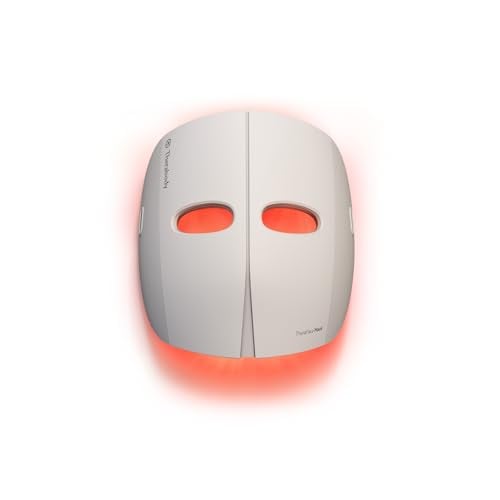
Therabody TheraFace Mask LED Light Therapy
The mask backed by the largest clinical study in the category, run on 104 people across the full range of skin tones (very fair to deeply pigmented) over twelve weeks. The trial found measurable improvement in radiance, texture, firmness, and elasticity. The mask uses three colors of light (blue for breakouts, red for fine lines, near-infrared for deeper repair), and the original includes an optional vibrating massage feature. FDA cleared. Retail is $649.99 for the original, or $379.99 for the lighter Glo version.
Pros. The brand’s clinical trial is the biggest in the category, with 104 subjects spanning the full range of skin tones from very fair to deeply pigmented. The mask combines red, blue, and near-infrared light in one device, and the original includes an optional vibrating massage feature. The Glo version drops the price to $379.99 if vibration isn’t a priority. The mask is FDA cleared.
Cons. The original is the heaviest mask in the lineup, which can feel uncomfortable during longer sessions. The clinical trial behind the brand’s claims was funded by Therabody, which means a healthy dose of skepticism is warranted (though that doesn’t make the results wrong). The original retail of $649.99 is the highest of the LED masks here.
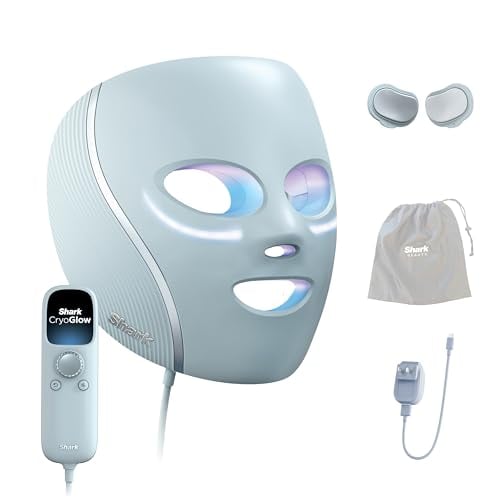
Shark CryoGlow
The most innovative recent entry, with three colors of light (blue for breakouts, red for fine lines, near-infrared for deeper repair) plus an under-eye cooling feature that no other mask offers. FDA cleared for both fine lines and breakouts. The brand has published two twelve-week clinical trials, one for fine lines on 60 people and one for breakouts on 59 people. Retail is around $349 to $399.
Pros. The under-eye cooling feature is unique in the lineup and tackles one of the most common LED-mask complaints, which is the warmth in the under-eye area that can trigger melasma in pigment-prone skin. The brand has run two twelve-week clinical trials, one for fine lines and one for breakouts. The mask is FDA cleared. The price sits in the middle of the lineup.
Cons. An independent LED device designer tested the mask and found that the light isn’t evenly distributed across the face, which means some areas get more light than others. The brand doesn’t publish the strength of its light, so there’s no way to compare specs directly. Both clinical trials were run by the brand, not an independent lab. The mask is heavier than the flexible silicone options.
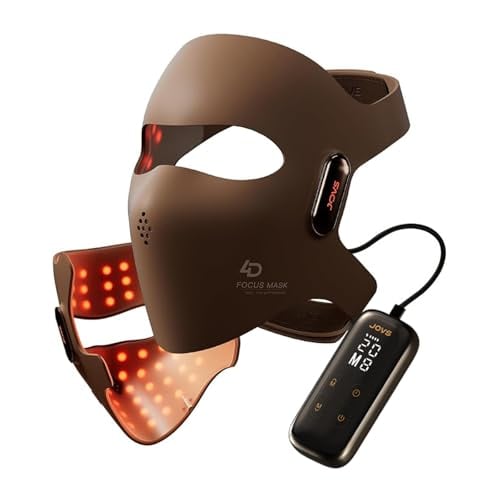
JOVS 4D Laser Light Therapy Mask
The first FDA-cleared at-home laser mask, and a different category from the LED masks above. Because it uses laser instead of LED, the light is roughly four times stronger than what the LED masks deliver, so your skin gets a clinical-grade dose in less time. The mask covers four wavelengths, two in the red range and two in the deeper infrared range. Sessions are ten to twenty minutes, three to five times a week. Retail is around $700 to $849.
Pros. JOVS is the first FDA-cleared at-home laser mask, which is a genuinely new product category. The light is roughly four times stronger than what the LED masks deliver, so you can get the same dose in less time. The mask covers four wavelengths, two in the red range and two in the deeper near-infrared range. The deepest wavelength is in the same range that dermatology offices use for clinical skin treatments. The light beams are narrow and aimed straight, which is how the brand engineers eye safety without separate goggles.
Cons. At-home laser masks are much newer than LED, so there is less long-term independent research on them so far. The price ($700 to $849) is the highest in the lineup. There is less long-term durability data on this device because it has been on the market for less than two years. The deepest wavelength is powerful enough that anyone with pigment-prone skin should talk to a dermatologist before using this one.
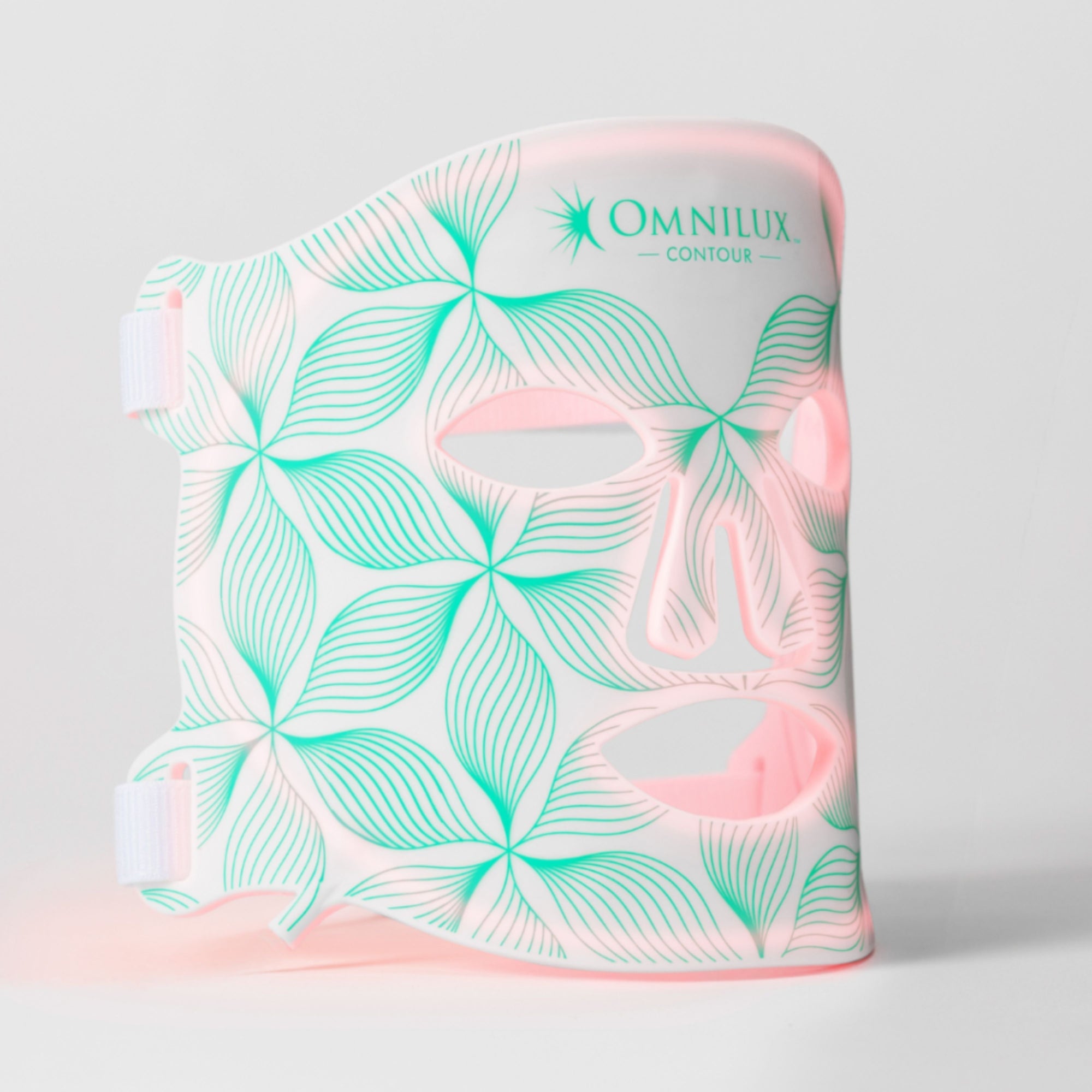
Omnilux Contour Face
The clinical-grade benchmark and the mask dermatologists name most often when patients ask. It uses the two colors of light (red and near-infrared) that have decades of research behind them for fine lines, skin tone, and collagen. Sessions are ten minutes, three to five times a week, and most people see visible improvement after four to six weeks. The brand has more than 40 peer-reviewed studies behind its formula. Retail is around $395.
Pros. Omnilux is the mask dermatologists most often recommend by name, and is regularly called the gold standard for at-home use. The light wavelengths and the strength of the light match what was used in the actual clinical trials, so you’re getting the same dose as the studies tested. The brand has more than 40 peer-reviewed studies behind its formula. The mask is flexible silicone, so it fits most face shapes.
Cons. Omnilux isn’t sold on Amazon, so you have to buy it through Nordstrom or the brand site. Some users say the silicone leaves a pressure mark on the bridge of the nose. A handful of reviewers report durability issues showing up around the six-month mark. The mask doesn’t include the third deep near-infrared wavelength that the newer CurrentBody Series 2 added.
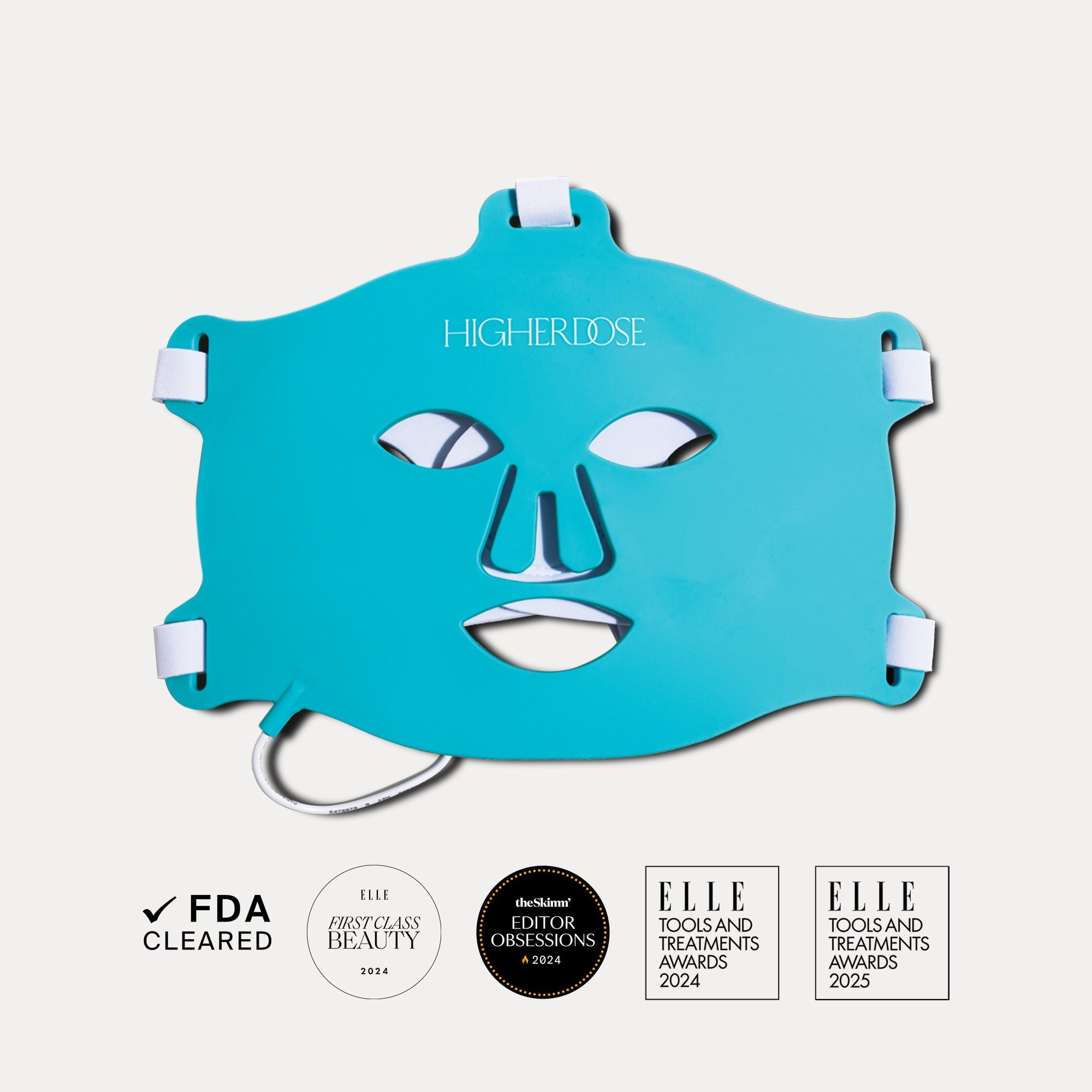
HigherDOSE Red Light Face Mask
The mask that delivers the most light energy in its price tier, which means your skin gets a stronger dose per session than it would from most masks at the same price. It uses the two most well-studied colors of light (red and near-infrared). FDA cleared. The brand offers a 120-day return window, which is long enough to actually see whether the mask works for your skin before you commit. Retail is around $349.
Pros. This mask delivers more light energy to your skin than most others in its price tier. The brand publishes a light-strength number that is noticeably higher than typical masks at this price. The 120-day return window is the longest in the lineup, which is actually long enough to see whether the mask works for your skin before you commit. The price is lower than Omnilux or CurrentBody, and the mask is FDA cleared.
Cons. HigherDOSE isn’t sold on Amazon, so you have to buy it through Sephora or the brand site. The brand hasn’t published its own clinical study, so claims about how well it works rely on the broader red and near-infrared research rather than a study on this exact mask. The mask only includes two wavelengths, not the third deep near-infrared wavelength that CurrentBody offers.
What the Research Actually Says
The strongest evidence base sits with two specific wavelengths used together: 633 nanometers (red) and 830 nanometers (near-infrared). Both have been studied for decades, and a body of peer-reviewed work supports specific clinical endpoints when these wavelengths are delivered at appropriate doses.
Wunsch and Matuschka’s 2014 trial in Photomedicine and Laser Surgery is the most-cited consumer-facing efficacy paper. The trial included 136 people, treated them twice a week with red and near-infrared light for fifteen weeks at the strength used in clinical settings, and compared the results to a control group. The result was a statistically significant improvement in fine lines, wrinkles, skin roughness, and collagen density, with most subjects reporting visible improvement at the end of the trial period.
A 2007 study by Lee and colleagues in the Journal of Photochemistry and Photobiology B used the same red and near-infrared combination twice a week for four weeks on 76 people, and showed up to 36 percent wrinkle reduction, 19 percent more elasticity, and microscope evidence of new collagen forming under the treated skin. A 2023 trial by Russell and colleagues in Photobiomodulation, Photomedicine, and Laser Surgery found a 30 percent reduction in periocular wrinkle volume with photobiomodulation in a randomized controlled trial.
For acne, the evidence is also strong, but it requires a different wavelength. Goldberg and Russell’s 2006 trial used a combination of 415 nanometer (blue) and 633 nanometer (red) light over eight sessions and found 81 percent lesion reduction at twelve weeks. A 2025 study by Dr. Glynis Ablon (a board-certified dermatologist and the principal investigator on the Omnilux acne trial), published in the Journal of Clinical and Aesthetic Dermatology, found 86 percent of subjects achieved at least a one-grade reduction on the Investigator’s Global Assessment scale after seven weeks of using a 415/633 nanometer mask four times weekly.
What the research does not strongly support is at-home LED for melasma, deep wrinkles, severe sagging, or as a standalone alternative to in-office treatments. Dr. Mona Gohara of Yale Dermatology has put this cleanly in published interviews: an LED mask is not going to deliver Botox or filler results, but it can add to your skin’s radiance and support collagen over time. The category is real but bounded, and the marketing routinely overstates what’s inside the bounds.
The Buzz
Red light therapy started at NASA in the 1990s, where researchers using red LEDs to grow plants in space noticed that wounds on the astronauts handling the equipment healed faster. That observation seeded a new field called photobiomodulation, and clinical LED panels moved from research labs to dermatology offices through the 2000s and 2010s. The consumer mask category is much newer. Most of the masks now competing for your $400 launched after 2020.
What All the Light Terms Actually Mean
The marketing for at-home light therapy mixes up “red light,” “LED,” “laser,” “near-infrared,” “blue light,” and “photobiomodulation” as if they all mean the same thing. They don’t. There are two separate questions wrapped up in those terms: what color of light the device makes, and what kind of technology makes it.
The color of light is what determines what your skin actually does with it. Blue light (around 415 nanometers) works at the surface, which is why it’s used for acne. Red light (around 630 to 660 nanometers) goes a few millimeters deeper and reaches the layer where collagen lives, which is why it’s the go-to for fine lines and tone. Near-infrared light (around 810 to 850 nanometers) goes deeper still. Devices that combine red and near-infrared have the strongest research behind them.
The technology is either LED or laser. An LED is a small bulb that scatters light broadly, which is why LED masks have hundreds of bulbs covering the face. A laser produces a focused, single-color beam, which means lasers deliver more concentrated light to a smaller area. Lasers have been used in dermatology offices for decades. The newest category of at-home masks is laser-based, with JOVS being the first one FDA-cleared (announced in 2025). The downside is laser masks are very new, so there is much less long-term research on them than on LED.
Both technologies work the same way once the light hits your skin. The light is absorbed by your skin cells’ energy-producing parts, which boosts cellular energy and signals the collagen-producing cells to make more collagen and elastin, calm inflammation, and support repair. The visible result is firmer, calmer, slightly less lined skin over weeks of consistent use. The differences in how well a mask works come from the color of the light (the wavelength) and the strength of the light hitting your skin.
How to Use a Red Light Therapy Mask So It Actually Works
The technique that makes the difference between visible results and disappointment is the same across every device in the category, and it has nothing to do with which mask you bought.
The frequency that matches the clinical literature is three to five sessions per week. Daily use is acceptable but not necessary, and skipping below three sessions per week pushes the timeline out so far that most people quit before the visible result. The duration is whatever the device manufacturer specifies (most are eight to twelve minutes per session), and the timeline before judging results is at least eight weeks, ideally twelve. Anything shorter is below the trial threshold.
The skincare timing matters more than most users realize. Sessions should happen on cleansed, bare skin with no actives applied. Retinol, alpha hydroxy acids, beta hydroxy acids, and vitamin C should go on after the LED session, not before. Dr. Hee-Jin Koh, a dermatologist who has demonstrated this on TikTok, recommends the order of cleanse, then LED mask, then evening serum and retinol. The reason is that some active ingredients make your skin more sensitive to light, or get broken down by the light itself, and either way the session loses some of its benefit.
Eye protection is straightforward. Closed eyes are generally adequate for FDA-cleared LED face masks, since the wavelengths are non-thermal at the surface dose. Anyone with macular degeneration, retinopathy, cataracts, or photosensitive eye disease should follow the manufacturer’s protective-goggle instructions. If the included eye covers don’t feel right or too much light gets through, swim goggles or a regular sleep mask works just as well.
A few situations call for pausing the mask. Pregnancy in the first trimester is one of them, since the clinical data is thin and most manufacturers list pregnancy as a precaution. A recent course of isotretinoin is another, with most clinics suggesting you wait six months before starting light therapy. Some medications also make skin more sensitive to light, including certain tetracyclines, fluoroquinolones, NSAIDs, and St. John’s Wort. Active rosacea flares warrant a pause until the flare settles. Active or recent melasma with a history of heat-induced flares is the strongest case for consulting a dermatologist before starting any LED or laser device. None of these are permanent reasons to never use the mask, but each is a reason to talk to a dermatologist before starting or resuming.
Are These Masks Worth It? The Honest Verdict
The answer depends on three things: your skin concerns, your willingness to commit, and your budget.
A red light therapy mask is worth the money when you have realistic expectations for what the technology can deliver, which is visible improvement in fine lines, skin tone, and texture over eight to twelve weeks of consistent use, not Botox-level smoothing. You can commit to three to five sessions per week for at least three months before judging results. Your skin is not actively fighting melasma, you are not on medication that makes your skin sensitive to light, and you are not in the first trimester of pregnancy. You have $350 to $700 budgeted for a quality device.
The mask might not be worth the money if you are looking for fast or dramatic results in four weeks, if you have a history of melasma or have a deeper skin tone and have not consulted a dermatologist about the heat risk, or if you can’t reliably make three sessions a week happen for ninety days. The technology is real, but the time commitment is real too, and the people who report poor results are most often the people who stopped at six weeks.
The mask is not worth the money if you are buying based on social media before-and-afters with a two-week timeline, if you are looking at a sub-$100 mask without published wavelengths and irradiance, or if you expect the device to fix deep wrinkles or sagging. The research does not support at-home LED for those endpoints, and the marketing that suggests otherwise is overstating what the science backs.
The bigger picture for the seven masks above is that all of them deliver the right amount of light within their stated specs. The differences between them are about fit, comfort, time per session, and which ancillary features (cooling, vibration, multi-wavelength, laser versus LED) actually fit your routine. Picking among them is less about the LEDs themselves and more about which mask you’ll actually use three times a week for three months.
A cruelty-free mark means the brand is certified by PETA, Leaping Bunny, or both at the time of writing. A missing mark doesn’t mean a brand tests on animals; it just means the brand isn’t certified by these programs.
What Our BEEs Are Buzzing About
Here’s the beauty community demonstrating these masks and the science behind them in action:
Want to become a Beauty Empties Expert?
BEEs get free products to test, exclusive discount codes from our brand partners, and live access to The Hive sessions with dermatologists and beauty editors. Spots are limited and hand-picked.
Related Articles
- What Nobody Tells You About Expensive Moisturizers
- 10 Common Beauty Habits That CAN Work Against Women Over 50
- The Best Moisturizers for Crepey Skin, According to Dermatologists
- 6 Eye Creams That Made a Skeptic a Believer
- Salmon Sperm Skincare Is Everywhere in 2026: Is PDRN Actually Worth Your Money?
- Skin Longevity Is the New Anti-Aging: The Over-40 Routine That Actually Works