What Nobody Tells You About Expensive Moisturizers

Most dermatologists know something the skincare industry would rather you didn’t. The most-respected board-certified dermatologists, the ones treating patients in NYC and Beverly Hills, the ones with their own product lines and TikTok followings, will tell you the same thing if you ask them directly: most of what you’re paying for in a $200 jar of moisturizer is the jar, the marketing, and the experience of buying it. The actives doing the actual work are also in a $17 tub at Target.
If you buy through our links, we may earn a small commission at no cost to you. As an Amazon Associate, we earn from qualifying purchases. Our policy
There are categories where the splurge actually buys you something meaningful (we wrote about a few of them in our splurge worthy beauty empties roundup). Moisturizers aren’t one of them. The research bears this out, and most dermatologists will quietly confirm it if you ask.
The Buzz
Dr. Dan Belkin, a board-certified dermatologist at New York Dermatology Group, put it bluntly in an interview: “There’s a lot of fluffery and non-evidence-backed claims” when it comes to expensive moisturizers. His clinical recommendation for patients who want a budget routine is to look for the same active ingredients in a drugstore product as you’d find in a luxury formula: a moisturizer with hyaluronic acid, a broad-spectrum sunscreen, and a night cream with retinol.
Where Your Money Actually Goes in a $200 Moisturizer
When dermatologists explain the price differential, they usually break it into four buckets. The first is packaging. A heavy glass jar, a metallic outer box, a magnetic closure, a custom applicator (think the Augustinus Bader spatula or the La Mer dipper) all add real manufacturing cost that gets passed to you. The second is marketing. A $300 fragrance ad in Vogue, a celebrity contract, a flagship store on Madison Avenue, none of that is in the formula but all of it is in the price.
The third bucket is brand markup, which is the simplest and least talked-about driver. Luxury skincare carries a 70 to 90 percent gross margin at the brand level. That means the actual cost of producing a $200 jar might be $20 to $40, with most of the rest going to retailer cuts, advertising budgets, executive compensation, and shareholder returns. The fourth is what brands call “proprietary technology,” which is real in some cases (Augustinus Bader’s TFC8 has decades of stem cell research behind it) and mostly marketing in others. Plant stem cells, gold flakes, dragon fruit extract, and most ferments are not doing more for your skin than glycerin or hyaluronic acid does at a tenth of the price.
What Actually Works in a Moisturizer
Every moisturizer on the market, regardless of price, works through one or more of three mechanisms. The first is humectants, which are molecules that pull water into the skin. Hyaluronic acid, glycerin, panthenol, and urea are all humectants, and they show up in both the $11 Eucerin and the $200 La Mer. The second is emollients, which fill in gaps between skin cells and make the surface feel smooth. Squalane, ceramides, fatty acids, and most plant oils are emollients. The third is occlusives, which form a thin physical layer on top of the skin and stop water from evaporating. Petrolatum, dimethicone, lanolin, and shea butter are occlusives.
A well-formulated moisturizer combines all three. The blue tub of CeraVe (more on that below) has hyaluronic acid (humectant), three ceramides (emollient), and dimethicone (occlusive) in a single formula that retails for under $20. The expensive equivalents are doing the same three things, just with fancier-feeling versions of the same molecules. There is no fourth mechanism that costs $200 to access.
What the Research Actually Shows
The most-cited piece of evidence here is a 2017 cohort study published in JAMA Dermatology that examined the top 100 best-selling moisturizers across Amazon, Target, and Walmart. The researchers found that products carrying a “dermatologist recommended” label cost about 20 cents more per ounce on average than equivalent products without the label, and 95 percent of those dermatologist-recommended products contained at least one common contact allergen. Of the products marketed as “hypoallergenic,” 83 percent had a known potential allergen in the formula. The takeaway from the authors was direct: marketing claims on moisturizers do not reliably reflect what is actually in the bottle.
Consumer Reports has tested anti-wrinkle moisturizers across price points and found no relationship between the type of active ingredients and overall performance. In their best-known head-to-head test, Olay Regenerist (a drugstore product under $35) was the top performer, edging out luxury creams that cost ten times as much. The wrinkle reductions were small across the board (none of the creams reduced wrinkle depth by more than 10 percent), but the larger point held: paying more did not buy better results.
Cochrane Review’s analysis of moisturizers for atopic dermatitis reached a similar conclusion. Prescription moisturizers, which can cost $50 to $100 per tube, didn’t outperform over-the-counter options on any of the things reviewers actually measured (dryness, itching, redness, how the skin barrier behaved over time). For most adults with normal-to-dry skin and no specific medical condition, the research consensus is that the moisturizer cost ceiling above which you stop getting more benefit is around $30.
When You Actually Should Spend More
There are three reasons it can be worth spending more on a moisturizer. The first is texture. Luxury moisturizers can often feel more pleasant to use. The good ones absorb faster, smell nicer, layer better under makeup, and look more elegant on a vanity. If using your skincare every day is a sticking point, a more luxurious texture might be the thing that keeps you consistent, and consistency matters more than what you are using.
The second is when a brand has actually figured out a unique way to get an ingredient into your skin that other products can’t replicate. Augustinus Bader’s TFC8 is the most-cited example, and the underlying research (decades of work on stem cells and wound healing) is genuine. SkinCeuticals’ way of stabilizing vitamin C in their C E Ferulic formula is another. La Roche-Posay’s thermal-water-and-prebiotic blend has actual clinical data behind it. These are exceptions, and worth paying for when the specific mechanism matters for your skin concern. They are not the rule across the prestige category.
The third is medical-grade formulations for specific conditions. If you have severe eczema, advanced rosacea, or post-procedure skin, a $40 to $80 medical-grade moisturizer prescribed by a dermatologist might genuinely outperform drugstore options. Outside of those clinical scenarios, the research does not support the spend.
What About La Mer and Augustinus Bader Specifically?
These are the two most-cited prestige moisturizers in the “is it worth it” conversation, so they deserve an honest look. La Mer has one peer-reviewed study, published in the Journal of Clinical and Aesthetic Dermatology in 2023, that found their kelp-ferment serum strengthened the skin barrier and helped post-procedure recovery (chemical peels, non-ablative laser) more than standard moisturizers. That is real evidence and worth respecting. The bulk of La Mer’s other claims come from in-house testing that hasn’t been independently published, which is the part the brand doesn’t talk about.
Augustinus Bader carries the most scientist-credibility of any prestige skincare brand because Professor Bader himself is a published stem cell researcher with three decades of wound-healing work behind him. The TFC8 complex isn’t indexed in PubMed under that name, though, and the brand-funded clinical trials (one cited a 54% reduction in crow’s feet after four weeks) involved small participant groups and don’t disclose the kind of methodology details an independent researcher would need to replicate the work. Stem cell biologist Paul Knoepfler at UC Davis has publicly questioned the independent evidence behind the marketing language.
In side-by-side comparisons between Augustinus Bader and CeraVe PM, the visible-results gap is meaningfully smaller than the price gap suggests. Per milliliter, Augustinus Bader costs roughly $5.80 versus under $0.30 for La Roche-Posay Toleriane. Both Bader formulas (The Cream and The Rich Cream) are genuinely well-made and the texture is unmatched at any price. They are also worth using when your budget allows. They are not, on the available evidence, ten or twenty times more effective than the drugstore alternative.
5 Drugstore Moisturizers Dermatologists Actually Recommend
Each of these is independently recommended by multiple board-certified dermatologists across editorial reviews, clinical practice, and TikTok content. None costs more than $30. All of them have the humectant, emollient, and occlusive structure that delivers the same hydration job a $200 cream does.
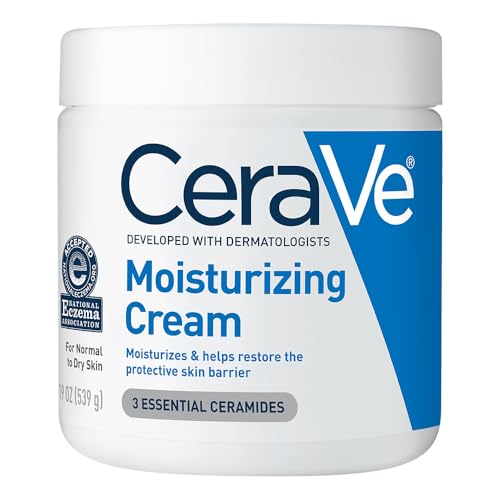
CeraVe Moisturizing Cream (the Tub), $17
Three essential ceramides, hyaluronic acid, and a 19oz price-per-ounce that’s hard to argue with. The most-recommended drugstore moisturizer in dermatology TikTok for a reason.
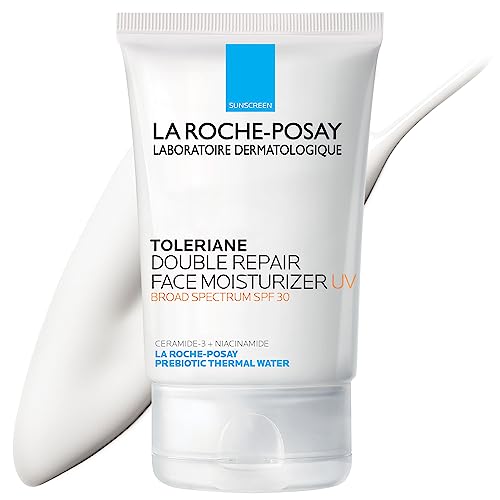
La Roche-Posay Toleriane Double Repair, $20
Ceramides, niacinamide, and prebiotic thermal water in a fragrance-free formula built for sensitive and reactive skin. The French pharmacy pick derms keep recommending.
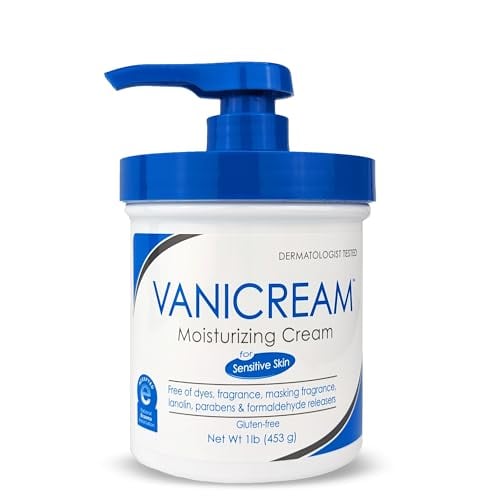
Vanicream Moisturizing Cream, $13
Free of dyes, fragrance, lanolin, parabens, and the most common contact allergens. The cream dermatologists hand to patients with eczema, rosacea, and reactive skin.
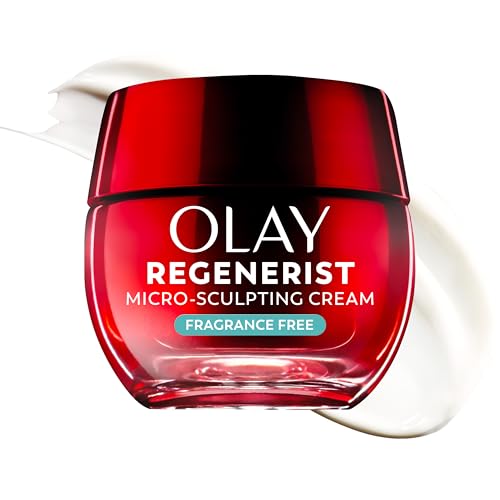
Olay Regenerist Micro-Sculpting Cream, $30
Amino-peptides, niacinamide, and hyaluronic acid at clinically-studied concentrations. The product Consumer Reports named the top performer in their wrinkle-cream testing.
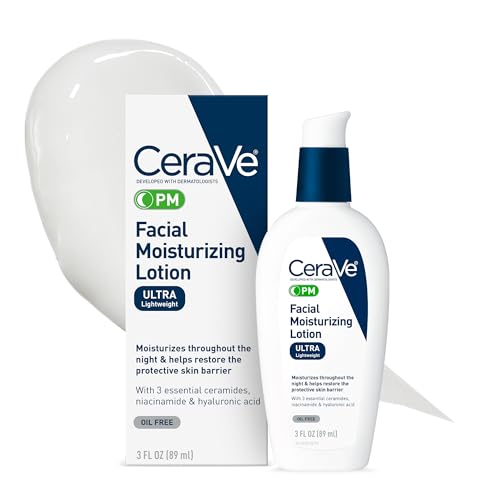
CeraVe PM Facial Moisturizing Lotion, $16
Three ceramides, niacinamide, and hyaluronic acid in a lightweight night formula. The companion product to the tub, sized for face use and lighter on richer skin.
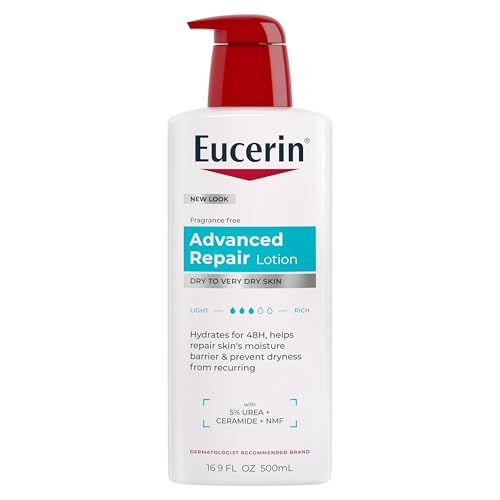
Eucerin Advanced Repair Body Lotion, $11
Ceramides, urea, and an occlusive base that holds moisture against the skin overnight. The cream most dermatologists recommend for crepey skin on arms, hands, and shins.
How to Read a Moisturizer Label Without Falling for the Marketing
There are three quick tests you can run on any product before buying it. The first is to scan the first five ingredients on the label, which by FDA rule are ordered from highest to lowest concentration. You want at least one humectant (glycerin, hyaluronic acid, sodium hyaluronate, panthenol), at least one emollient (squalane, dimethicone, ceramides, shea butter), and ideally one occlusive (petrolatum, dimethicone, mineral oil) somewhere in the top ten. If those mechanisms are missing, it does not matter what hero ingredient is featured on the front of the box.
The second test is to look for the marketing claim words the JAMA study flagged: “dermatologist recommended,” “hypoallergenic,” “clinically proven,” “clean.” None of those phrases is regulated by the FDA, none of them guarantees what you think it does, and any of them can legally appear on a product full of common allergens or untested ingredients. Treat them as decorative.
The third test is to flip the box and look at where the product is made and who owns the brand. A moisturizer from a contract manufacturer that produces formulas for both a $20 drugstore brand and a $180 prestige brand is, very often, the same base formula with different fragrance and packaging. This happens more than the industry talks about, and the existence of unbranded white-label suppliers like Korpack, Cosmoprof, and Mana Products is one of the reasons the $200 markup is so hard to justify.
Frequently Asked Questions
Are expensive moisturizers ever worth it?
For most people with normal-to-dry skin and no specific medical condition, no. The independent research (Cochrane Review of moisturizers for atopic dermatitis, Consumer Reports anti-wrinkle tests, the 2017 JAMA Dermatology study on best-selling moisturizers) has consistently found that luxury and prescription moisturizers don’t outperform over-the-counter options on the things that actually matter to skin. There are three legitimate reasons to splurge (texture, a real proprietary delivery system, or a medical-grade formula for a specific clinical condition), but the default answer for everyday hydration is that a $20 drugstore option does the same job.
What’s actually in a $200 moisturizer that isn’t in the $20 version?
Almost always, the same active ingredients. Hyaluronic acid, glycerin, ceramides, and squalane appear in both. What the $200 version typically has that the $20 one doesn’t is nicer packaging, a more elegant texture, a much bigger marketing budget, and sometimes a proprietary delivery technology (Augustinus Bader’s TFC8 is the most-cited example). The molecules doing the actual moisturizing work are essentially the same in both jars.
How can I tell if a “dermatologist recommended” or “hypoallergenic” claim is real?
You usually can’t, and the 2017 JAMA Dermatology study confirmed why. The researchers found that 95% of products labeled “dermatologist recommended” contained at least one common allergen, and 83% of products marketed as “hypoallergenic” did the same. None of those phrases is regulated by the FDA. Treat them as decorative and read the actual ingredient list instead.
What moisturizer do dermatologists actually use themselves?
Several of the most-followed dermatologists on TikTok have publicly named CeraVe Moisturizing Cream (the blue tub) as one they recommend to family or use themselves. La Roche-Posay Toleriane Double Repair, Vanicream, and Olay Regenerist also come up repeatedly. None of these costs more than $30. The quiet truth most dermatologists won’t put on their own product-line social media is that the $200 jar isn’t in their bathroom either.
Are Augustinus Bader and La Mer the exception to all this?
They’re the prestige picks worth taking the most seriously. La Mer has one peer-reviewed study (Journal of Clinical and Aesthetic Dermatology, 2023) showing post-procedure recovery benefit. Augustinus Bader’s TFC8 has the strongest scientist-credibility in the prestige category because Professor Bader is a published stem cell researcher. Both formulas are well-made and the texture is genuinely unmatched. In side-by-side comparisons with mid-range moisturizers like CeraVe PM, though, the visible-results gap is much smaller than the price gap suggests. Worth it if you can swing it, not necessary for hydrated skin.
A cruelty-free mark means the brand is certified by PETA, Leaping Bunny, or both at the time of writing. A missing mark doesn’t mean a brand tests on animals; it just means the brand isn’t certified by these programs.
What Our BEEs Are Buzzing About
Here is the dermatologist community on TikTok making the same case in their own words:
Want to become a Beauty Empties Expert?
BEEs get free products to test, exclusive discount codes from our brand partners, and live access to The Hive sessions with dermatologists and beauty editors. Spots are limited and hand-picked.
Related Articles
- The $68 Foundation That Ruined Me for Everything Else (And 4 More Splurge-Worthy Beauty Empties)
- SkinCeuticals C E Ferulic: An Honest Review
- Skin Longevity Is the New Anti-Aging: The Over-40 Routine That Actually Works
- The Best Moisturizers for Crepey Skin, According to Dermatologists
- 10 Common Beauty Habits That CAN Work Against Women Over 50