Skincare Ingredients You Shouldn’t Mix (and One Famous Pairing You Can)

If you’ve ever stood at the bathroom sink holding a bottle of vitamin C in one hand and a tube of retinol in the other, not sure whether layering them is fine or if you’ll end up looking like an actual orange, welcome! You’re in one of the most confusing corners of skincare. There have been so many convos over the years on “don’t use this with that,” “this one cancels that one out,” “that pairing will leave you red and peeling,” etc. Some of those rules are based in truth. A lot of them trace back to a single study from the 1960s that has gotten passed down like an old wives’ tale.
If you buy through our links, we may earn a small commission at no cost to you. As an Amazon Associate, we earn from qualifying purchases. Our policy
So, we decided to stop the insanity! (And if you know that phrase, I’m guessing we could probably be friends.) We went through what dermatologists actually say, the chemistry underneath it, and ALL the research. The good news? The reality is not as crazy as your Instagram feed might have you believe. Only a couple of pairings truly cancel each other out, and a few more are fine in theory but may end up irritating your skin, so it all comes down to what you are able to tolerate. And it turns out the most repeated “don’t ever mix these two products” on the internet is a myth! One commenter summed up how most of us learned these rules: “I don’t know how one knows these things tbh. I only know what not to use with vitamin c and copper peptides from numerous self-inflicted injuries followed by frantic symptom googling.”
How we researched: Two sources guided a lot of what’s below: Dr. Jenny Liu (a board-certified dermatologist and assistant professor at the University of Minnesota), and the duo behind YouTube’s Doctorly, board-certified dermatologists Dr. Muneeb Shah and Dr. Luke Maxfield.
Read on below to find out what’s fact and fiction, but remember this one ground rule before we start: if you do combine ingredients, patch test them on your inner arm first, add one new thing at a time (so you can determine what’s actually causing any potential irritation), and ALWAYS wear sunscreen. (duh)
1. Benzoyl Peroxide With Retinol, Vitamin C, or Hydroquinone
This is the pairing dermatologists mean when they say two things cancel each other out. Benzoyl peroxide is one of the best acne ingredients we have, and it works by creating oxidation to kill the bacteria behind breakouts. That same oxidizing action is rough on a handful of other ingredients. Put benzoyl peroxide together with most retinoids, with a pure vitamin C, or with the brightening agent hydroquinone, and it can break them down before they do anything, so you end up paying for two ingredients and getting one.
From the Hive
The buzz from our Beauty Empties Experts. Sign up to join!
BEEs fighting long-term breakouts tend to land on the simple morning-and-night split, a benzoyl peroxide wash at dawn and a retinoid at night so the two never touch on the skin. The ones who switched to adapalene specifically to keep their benzoyl peroxide say that’s when the pilling and the wasted product stopped. Nearly everyone warns about the first month, which can be dry and flaky enough to scare you off before it settles.
The workaround the tretinoin community has settled on is scheduling, not abstinence. “Say you have a rest day, maybe put all your favourite hydrating products on and do a benzoyl peroxide spot treatment. The two used together is just asking for more redness and irritation,” as one user puts it.
The research is fairly clear-cut. When tretinoin meets benzoyl peroxide and daylight, more than half of it degrades within about two hours and almost all of it within a day. The big exception is adapalene, the retinoid in Differin, which studies show stays stable next to benzoyl peroxide, which is exactly why the two are sold together in prescription acne combos. So if you love both, you have options: use one in the morning and one at night, switch your retinol to adapalene, or do what a lot of derms do and treat benzoyl peroxide as a wash you rinse off before applying your other ingredients to clean skin. Dr. Liu does exactly that, following a benzoyl peroxide cleanser with prescription tretinoin and still finding it works.
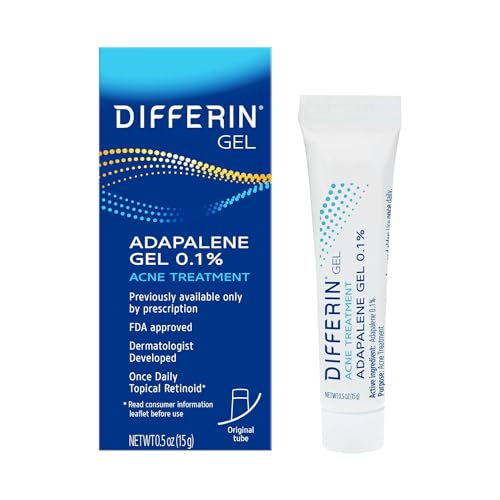
Differin Adapalene Gel 0.1%
The #1 pick if you want a retinoid that survives next to benzoyl peroxide. Adapalene is the one retinoid proven to stay stable alongside benzoyl peroxide, which is why this drugstore tube is the smart move for anyone treating acne on both fronts. It’s a real prescription-strength retinoid you can buy without a prescription, and it’s gentler on oil-prone skin than tretinoin. The honest caveat is the start: the first three or four weeks can bring dryness, flaking, and a purge before things settle, so begin every other night and give it a couple of months before you judge it.
2. Sunscreen With Anything That Waters It Down
The second real one surprises people because it doesn’t look like mixing at all. Layering two different sunscreens, or stirring your SPF into your moisturizer or foundation to save a step, waters down the protection you think you’re getting. Sunscreens are tested at a set concentration applied at a set thickness, and the moment you dilute that formula with something else, the number on the label stops being the number on your face. Blending two different sunscreens has the same problem, because their formulas aren’t built to combine.
Two numbers are worth holding onto. You need about a quarter teaspoon for your face alone, and Dr. Liu puts it closer to a tablespoon for face and neck together, which is far more than most of us actually use. And SPF is not additive, so a layer of SPF 30 over another SPF 30 does NOT add up to SPF 60. What you can and should do is apply one sunscreen properly, let it set, and reapply through the day, whether that’s the same one or a different one on top. Layering separate products is fine. Cutting one product with another in the name of efficiency is where you lose the protection without ever realizing it.
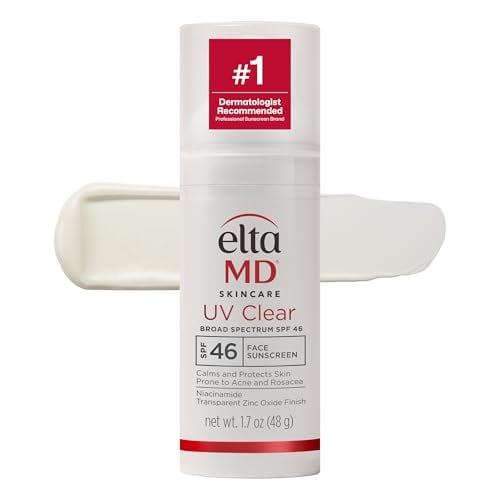
EltaMD UV Clear SPF 46
Good enough to wear on its own, so you never have to dilute it. This is the zinc oxide sunscreen dermatologists hand out most often, partly because it’s light, oil-free, and includes niacinamide to calm redness, which makes it easy to apply the full amount instead of skimping and blending it into something else. It layers under makeup without pilling and disappears on most skin tones. A couple of honest notes: it costs more than a drugstore SPF, and on deeper skin tones the untinted version can leave a faint cast, in which case the tinted one solves it.
BEEs back this up in practice. It’s one of their most repurchased sunscreens precisely because it feels like nothing on, so they actually use a real amount instead of rationing a thicker formula, and the trick they pass around is keeping a powder or stick SPF in their bag for midday touch-ups rather than reloading sunscreen into their foundation.
3. Retinol With Exfoliating Acids
From here on, the rules get shakier, because the rest of the internet’s no-list isn’t really about chemistry at all. It’s about irritation. Retinol and exfoliating acids (AHAs like glycolic and lactic, BHAs like salicylic) are the classic “never together” pair, and there’s no chemical reason they can’t share a routine. They don’t break each other down the way benzoyl peroxide does. What they do is irritate, and stacking two irritating ingredients in one night is how you end up raw, flaky, and tempted to quit both. As the dermatologists behind Doctorly put it, “the first rule of skincare is there are no rules in skincare,” it’s all about knowing your own skin.
Your own face will referee this one. “Stinging when I apply anything is my number 1 sign I’ve exfoliated my skin and will cause me to immediately rinse off an exfoliant and swap to a moisturizing, gentle routine,” one 30-plus user explains, and that sting test is more reliable than any chart.
The answer is timing, not avoidance. Use your acid one night and your retinol another, or follow a skin cycling schedule (exfoliate one night, retinoid the next, then a night or two of nothing but moisturizer). A serum that’s formulated with both already has the balancing done for you and is tested to be tolerable, so a single product that pairs them is safer than layering two of your own on top of each other. If your skin runs sensitive, keep them on separate nights and don’t rush to combine them at all. A gentle, slow-release retinol makes the whole thing easier, which is why it’s the pick here.
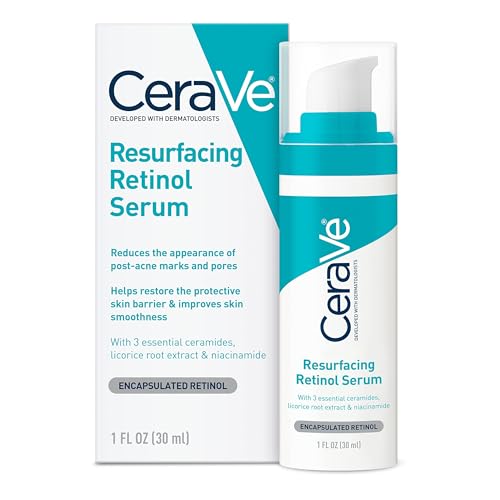
CeraVe Resurfacing Retinol Serum
A gentle retinol built for a slower, low-irritation schedule. This is an encapsulated retinol, which releases slowly and tends to sting less than a straight one, and it’s buffered with niacinamide and ceramides plus licorice root to fade the marks breakouts leave behind. That gentleness is the whole point if you’re trying to use a retinoid without piling irritation on top of your acids. The trade-off is strength: longtime retinol users with leathery tolerance may find it too mild and want something stronger. It’s fragrance-free and won’t clog pores.
The BEEs who finally stuck with retinol are mostly the ones who stopped layering it over their glycolic acid and gave each its own night, crediting the slow-release formula and the off-nights for getting them past the flaking that used to make them quit. A few who already tolerated stronger retinoids found this one too mild, which tracks.
4. Vitamin C With Exfoliating Acids
Vitamin C in its purest form (L-ascorbic acid) is itself an acid, formulated at a low pH so your skin can absorb it. Layer it over a glycolic or salicylic acid and you’ve doubled up on acid, which mostly doubles up on the sting. There’s no real danger in it, and the acid can even help your vitamin C sink in, but plenty of people simply can’t tolerate the combination. As Dr. Liu puts it, “double the acid means double the irritation,” and she counts herself among the people whose skin can’t take it.
From the Hive
Moving vitamin C to the morning and acids to the evening is the change BEEs say cleared up the tightness and stinging they used to blame on the products themselves. Glow Maker is the bottle skeptics mention most when they explain what changed their mind. The two recurring notes are that it can tingle on sensitive skin in the first week, and that it does turn darker over time, so the BEEs who buy it keep it out of a sunny bathroom and use it up rather than stockpiling.
The frantic-googling commenter from the intro filed this pairing under her hard-won rules too: “my understanding is that L-AA also shouldn’t be using with most AHAs and BHA.” (L-AA is L-ascorbic acid, the pure form of vitamin C.)
The same logic covers vitamin C and retinol, which is fine chemically but a lot for most faces at once. The simplest workaround is the one most people stumble into anyway: use vitamin C in the morning, where it doubles as antioxidant protection under your sunscreen, and save your acids and retinol for night. You get the benefit of all of them without asking your skin to absorb two strong ingredients in one sitting. If your skin is unbothered by the pairing, nothing’s stopping you, but splitting them across morning and evening is the path of least resistance.
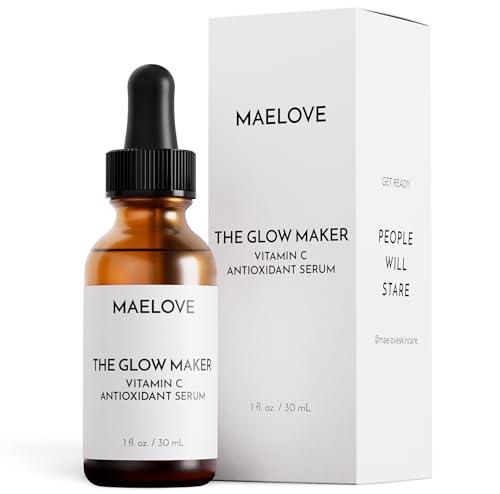
Maelove Glow Maker Vitamin C Serum
A stable morning vitamin C that keeps you from doubling up on acid at night. Maelove’s cult serum pairs 15 percent L-ascorbic acid with vitamin E and ferulic acid, a combination that helps the vitamin C stay effective longer and amounts to a much cheaper take on the famous derm-counter antioxidant. It sinks in fast and sits well under sunscreen, which is precisely where vitamin C belongs in your day. Worth knowing: 15 percent pure vitamin C can sting reactive skin at first, and like any L-ascorbic formula it will eventually oxidize and turn amber, so store it cool and finish it within a few months. Certified cruelty-free (PETA).
5. The Fix for When You’ve Overdone It
Sooner or later, most of us push too hard. You add a new acid, get a little excited, double up with your retinol, and three days later your face is tight, stinging, and flaking in the exact spot you were trying to improve. That doesn’t mean the ingredients are incompatible. Your skin just needs a break, and the move is to stop everything strong for a few days and let it settle down.
From the Hive
BEEs treat this as the panic button, the thing they slather on the night they realize they pushed a routine too far, and a few days of it in place of their usual treatments brings a raw, flaky face back faster than anything else they’ve tried. The only knock is the texture, thick enough that oilier BEEs keep it to the spots that actually need it.
The overdone stories all rhyme. “Made my skin look glowy, but absolutely destroyed my moisture barrier even when I was only using it once a week. I ended up breaking out because of it,” one Sephora forum member wrote about a famous daily peel, which is the exact arc this section exists to prevent.
Recovery is boring and it works. Pause the acids and retinoids, switch to a plain moisturizer or a soothing balm, and give it three to five days before you reintroduce anything, one product at a time. A simple panthenol-and-shea balm does more for an overdone face than any treatment will, because irritated skin mostly needs to be left alone and kept comfortable. Keep one in the cabinet as the reset button for every time the mixing experiment goes sideways, which it will, because that’s how everyone learns what their skin can take.
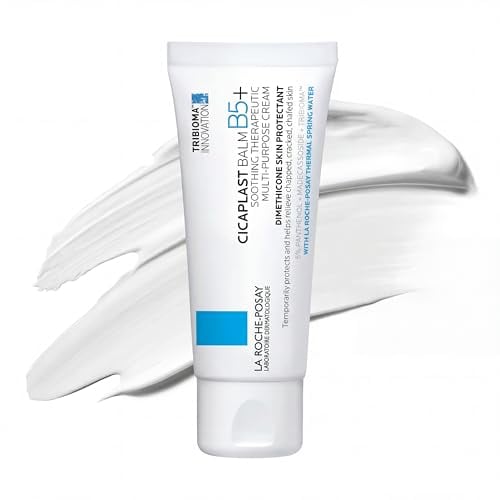
La Roche-Posay Cicaplast Baume B5
The rescue balm for when a routine goes too far. This is the soothing balm derms reach for after procedures, built around panthenol and shea butter with centella to calm irritated, stinging skin, and it’s the single most useful thing to own for the days you’ve pushed too hard. A thin layer over a recovering face stops the tightness fast and helps it heal without adding anything that could provoke it further. It’s rich and seals moisture in, so it’s a treatment-night and trouble-spot product rather than an everyday all-over moisturizer for oily skin.
6. The Myth: Vitamin C and Niacinamide
And then there’s the pairing that started half the panic and turns out to be completely fine. For years the internet insisted you couldn’t use vitamin C and niacinamide together, that they cancel each other out or turn your skin red and blotchy. The claim traces back to a study from the 1960s that used unstable forms of both ingredients and heated them to high temperatures, which produced a compound that turned the solution yellow and was assumed to deactivate the vitamin C.
From the Hive
Plenty of BEEs spent years carefully keeping their vitamin C and niacinamide apart, and the ones who finally used them together (or in a single bottle with both) report exactly none of the disasters they were warned about. The low price keeps it in steady rotation. The honest split is over texture, since a few find it tacky and prone to pilling, and the fix they pass along is to use less and let it sink in first.
“There’s no conflict between vitamin C and niacinamide. The myth that they can’t be used together has been debunked. There are a few people who may experience some flushing when using both in a single routine, but it’s harmless,” as one frequently-upvoted answer has it, with the standard onboarding advice attached: start vitamin C three mornings a week and build up.
The Buzz
The vitamin C and niacinamide scare comes from a 1960s experiment that bears almost no resemblance to how either ingredient is made or used today. Researchers combined raw, unstable forms and cranked the heat, which turned the mix yellow and formed a byproduct called nicotinic acid. Modern stable vitamin C at room temperature simply doesn’t do this, but the rumor outlived the science by about sixty years.
Two things make that study irrelevant today. We now have far more stable forms of vitamin C, and recreating that reaction takes extreme heat, much hotter than anything your bathroom shelf or your face will ever reach. Vitamin C and niacinamide are safe to layer or use in the same product, and they’re full of complementary benefits, since niacinamide calms and strengthens while vitamin C brightens and protects. That’s exactly why so many brands put them in one bottle. Both dermatologist duos we leaned on land where the cosmetic chemists do: when you want two ingredients to play nicely, the easiest answer is to buy them formulated together rather than playing chemist at your sink.
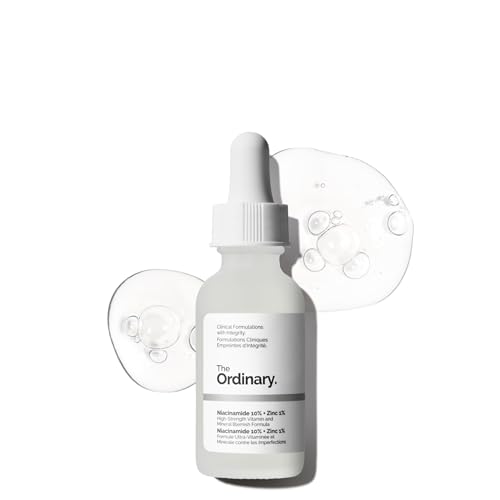
The Ordinary Niacinamide 10% + Zinc 1%
Safe to layer with your vitamin C, whatever the internet told you. This is the serum that proves the point, a few dollars of 10 percent niacinamide that you can absolutely use alongside vitamin C to balance oil, smooth texture, and fade post-breakout marks. It’s one of the best values in skincare, and it plays well with almost everything in a routine. The caveats are real but small: 10 percent niacinamide is on the high side and can cause flushing or tiny bumps for a few people, the texture pills if you layer it too fast, and it’s a supporting player, not a substitute for an actual vitamin C. Certified cruelty-free (PETA).
A cruelty-free mark means the brand is certified by PETA, Leaping Bunny, or both at the time of writing. A missing mark doesn’t mean a brand tests on animals; it just means the brand isn’t certified by these programs.
What Our BEEs Are Buzzing About
Here’s what the beauty community is saying about mixing skincare ingredients:
Want to become a Beauty Empties Expert?
BEEs get free products to test, exclusive discount codes from our brand partners, and live access to The Hive sessions with dermatologists and beauty editors. Spots are limited and hand-picked.