Dermatologists Say These 7 Makeup Habits Can Ruin Your Skin (Here’s What to Do Instead)

The makeup habits dermatologists flag are the small ones that don’t seem like they’re doing damage: the wipes you reach for on tired nights, the mascara that’s been in the makeup bag since last winter, the foundation you put on dry skin at 7 a.m., the brushes nobody is washing. None of these are catastrophic on their own, but a decade of them shows up as the dullness, breakouts, and fine lines you’ve been trying to treat with the rest of your routine.
If you buy through our links, we may earn a small commission at no cost to you. As an Amazon Associate, we earn from qualifying purchases. Our policy
Most of the items listed below appear at almost every dermatology appointment, regardless of whether it was a makeup-related issue that prompted the visit. The seven below are some of those that show up most often, with a simple solution for each.
1. The “Just This Once” Habit That Costs You the Most
The “just this once” version is the one dermatologists hear most. It’s also the version that does the most damage long term, because nobody counts it as part of the routine. Foundation, sunscreen, sebum (aka oily gunk), and a day’s worth of pollution spend the night marinating against the skin while you’re horizontal and warm. The damage shows up two ways: clogged pores by morning, and a slow inflammation underneath that surfaces months later as dullness, breakouts, and faint pigmentation. The eye area is the most fragile part of the equation; a 2018 medical case report described mascara residue accumulating under a patient’s eyelid after years of skipped removal.
Instead of wiping your face, we want to see a real cleanse, not a wipe (we’ll get to those in a minute). Double cleansing is recommended by dermatologists. The first step is an oil-based cleanser, which helps remove makeup, sunscreen, and sebum from the day. Then a gentle gel or cream cleanser rinses everything off. The key step for removing heavy, silicone-based products like foundation and waterproof mascara is that oil step. That’s why, if you’re sleeping in makeup, you might wake up with a smudge on your pillowcase rather than completely clean skin.
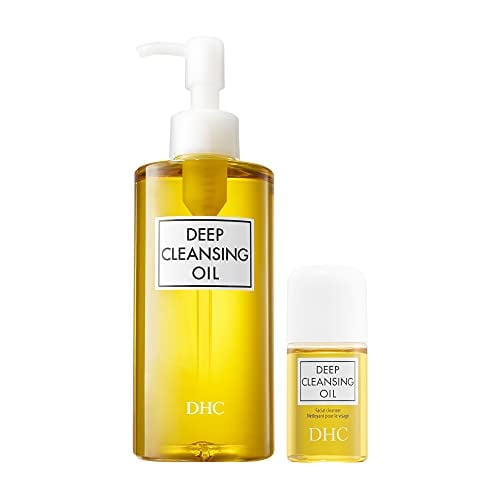
DHC Deep Cleansing Oil
The olive-oil cleanser that kicked off the double-cleanse trend, lifting foundation and waterproof mascara in one pass.
If you can’t manage a full double cleanse at night, dermatologists say keeping a bottle of micellar water or a cleansing balm on the nightstand is a good alternative. Instead of running to the sink for a full cleanse, it removes some of the surface buildup of makeup and sunscreen, so you’re not sleeping in layers of product. We’re not trying to have a flawless cleansing routine every single night; we’re just saying you shouldn’t ever sleep in a full face of makeup.
From the Hive
The buzz from our Beauty Empties Experts. Sign up to join!
BEEs name DHC and Banila Co Clean It Zero (a cleansing balm) as the two cleansers they finish quickest in this category. One thing comes up consistently across BEE reports on the original DHC: the pump dispenses fast, and few BEEs need more than half the suggested amount for a small face, so the bottle lasts longer.
2. The Wipe Habit Dermatologists Wish You’d Drop
Wipes are an easy way to quickly remove makeup after the gym or while traveling. Unfortunately, most dermatologists would strongly advise against using them as part of your nightly skincare routine. Makeup wipes contain cleansing agents that are meant to be rinsed away after they’ve broken down the makeup. Wipes aren’t rinsed off, so they leave behind residue from the makeup and the cleansers. Over time, this leads to redness, low-grade irritation, and breakouts, particularly in areas like the jaw and hairline.
A micellar water does what a wipe was supposed to do, without leaving residue on the skin. Micelles (tiny soap-like molecules in water) bind to oil and lift it off when you swipe with a cotton round, and most formulas are designed to be left on without rinsing. The original pink-cap bottle in this category has been a French dermatologist standby for almost thirty years. P.S. We still recommend making this part of a double-cleanse routine!
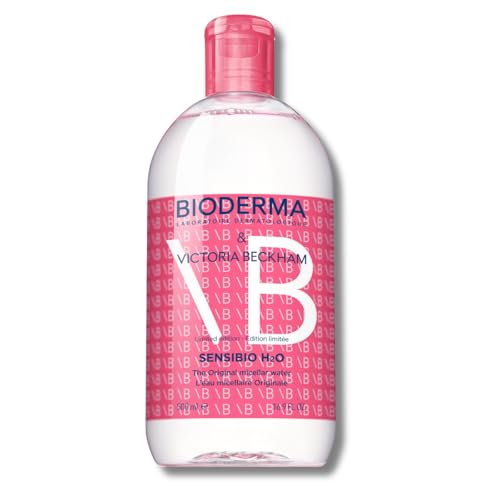
Bioderma Sensibio H2O Micellar Water
The pink-cap French micellar water dermatologists hand to sensitive, breakout-prone skin; lifts most makeup with no rinsing.
Makeup wipes aren’t bad; they’re just being used incorrectly. They can be a great option for travel days or when you can’t get to a sink to wash your face after the gym, but we should treat them as an emergency backup and follow up with a proper cleanse as soon as possible. If the only thing stopping you from falling asleep in a thick layer of makeup is a wipe, then so be it. At least that beats doing nothing.
BEEs also group Bioderma Sensibio H2O in with other basic, affordable pharmacy products. The pink cap is the original formula, while the blue cap is the formula for oily and combination skin. Both do a good job lifting most makeup except waterproof mascara, so a lot of BEEs keep an oil-based cleanser on hand for nighttime eye-makeup removal.
3. The Mascara Mistake Hiding in Your Makeup Bag
Mascara has a shelf life, and it expires quicker than any other product in your makeup bag. Very rarely does anyone track it. The wand returns to a warm, moist, dark tube every time you use it, and those conditions create the ideal breeding ground for bacteria. After about three months, the formula spoils: it dries out, loses its tackiness, and grows enough bacteria that the FDA flags mascara as the highest-risk category in mainstream cosmetics. Most board-certified dermatologists agree that mascara should be thrown away after three months, regardless of whether there’s still product left in the tube.
Separate from the issue of expiration dates, the pumping action also creates problems. Each time you pump in and out, it introduces air into the tube, which speeds up the drying of the mascara and pushes more bacteria toward the wand. Makeup artists typically pull the wand out slowly without pumping and twist it on the way back into the tube to load it with product. The flip side, buying a new tube each season, is easier to commit to when you’ve finished the old one.
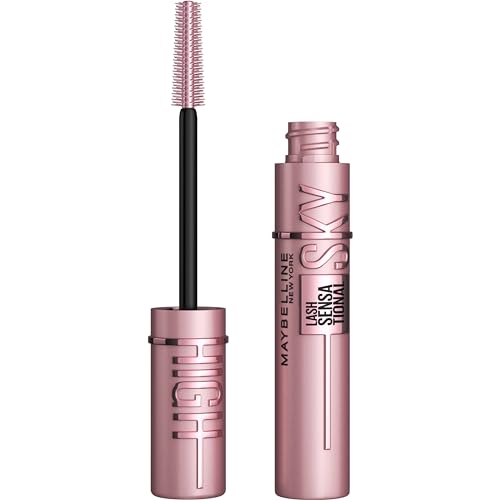
Maybelline Lash Sensational Sky High Mascara
A flexible-wand drugstore mascara that lengthens without clumping, cheap enough to replace every three months.
One simple way to stick to the three-month rule is to mark the date you opened the tube with a fine-tip marker, or replace it at the start of each new season. Mascara that has spoiled will usually show several warning signs: a strong chemical or gasoline-like odor, a clumped or dried-out formula, or an itchy, burning feeling in your eyes right after you apply it. Any one of these signals that it’s time to discard it, regardless of how much product is left in the tube.
The Sky High formula is the default for new BEEs starting a fresh three-month replacement cycle, mainly because of the reasonable price. The brush has fine bristles that reach the lower lash line without poking the eyes. The one complaint: the formula starts to get flaky after about three weeks if you over-pump the brush, which is part of how the no-pump method earned its place in the BEE community.
4. Why Your Foundation Streaks by 2 P.M.
A lot of women believe their foundation is bad because of how it looks an hour in. But most likely the issue isn’t the foundation itself, it’s the layer underneath. By 2 p.m., the foundation has settled into each and every fine line that wasn’t there earlier, the texture starts to feel grippy, and the dewy finish you were paying extra for turns flat and blotchy (none of which is the foundation’s fault). All of those issues go away once you start moisturizing properly again.
The most significant change comes from applying a barrier-supporting moisturizer ten minutes before your primer or foundation, while your skin is still slightly damp from cleansing. The brand matters less than the ingredients: glycerin and hyaluronic acid do the water-binding work, while ceramides and squalane seal the barrier. The most-emptied option in this category is also one of the least expensive, and it’s been packaged in the same French pharmacy bottle since 2009.
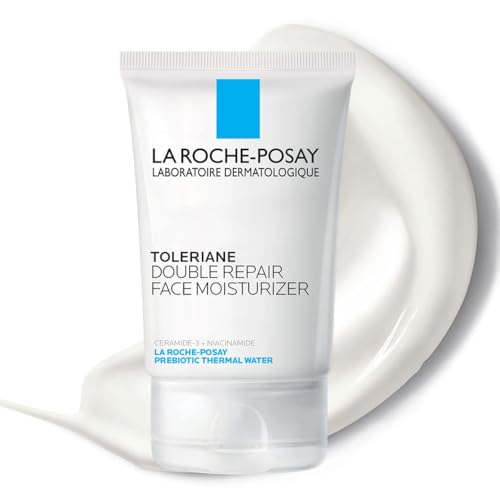
La Roche-Posay Toleriane Double Repair Face Moisturizer
A ceramide-and-niacinamide cream-gel that absorbs fast and won’t pill under makeup, fragrance-free for reactive skin.
Dry skin lacks oil and is usually a long-term skin type. Dehydrated skin lacks water and can happen to anyone, regardless of whether they have oily skin, especially during the winter months or after a few days of retinoids. The time you wait between moisturizer and foundation may seem insignificant, but it makes a big difference in how well primer and base adhere, and it’s why they often pill and roll off in small pieces.
In the BEE rotation, Toleriane Double Repair plays the same role as CeraVe AM (both are lightweight daily moisturizer bases that don’t pill). The ingredients read like a dermatologist’s textbook, and it absorbs under a primer in about two minutes. But a lot of BEEs find the pump bottle hard to use when there’s barely any left, so many end up unscrewing the top to scrape out the last quarter.
5. The Sunscreen Step Almost Everyone Skips
Many people remember to apply SPF in the morning but forget about reapplying through the day. Even though most understand they need to reapply sunscreen (usually at least every two hours, more if you’re outside), they can’t easily apply creams or sprays over a full face of makeup. Cream sunscreens tend to disrupt the foundation underneath when reapplied, while sprays tend to evaporate into the air.
A mineral powder SPF offers an effective solution for reapplication. It provides coverage over existing makeup without disturbing it, and adds an extra layer of mineral protection. One of the mineral powder SPFs dermatologists point to most has earned the Skin Cancer Foundation Seal of Recommendation on the packaging.
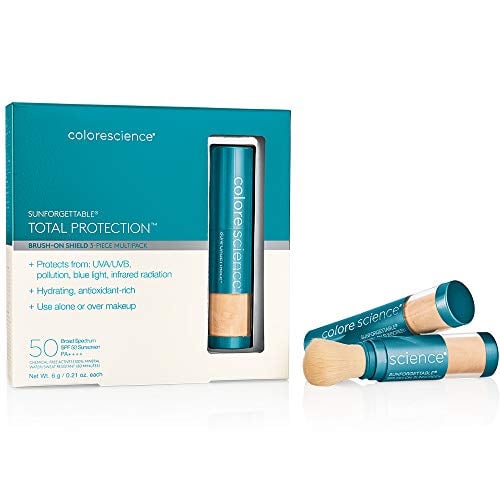
Colorescience Sunforgettable Total Protection Brush-On Shield SPF 50
A self-dispensing mineral powder brush (SPF 50) that reapplies sun protection over makeup without disturbing it.
SPF setting sprays exist too, but many dermatologists are skeptical that people apply them heavily enough to hit the SPF listed on the label. Since most people spend stretches of time outdoors (long lunches, walks, errands) when they’d need to reapply often, carrying a powder SPF in your bag gives you quick coverage through the day.
From the Hive
This is how a lot of BEEs use the Colorescience brush, as both a midday sunscreen and a powder set. The brush holds enough powder for roughly four months of daily reapplication. The common gripe is the price (around $69 for the full brush), and the refills take some practice to load without spilling powder all over the counter.
6. The Eye-Makeup Habit That Causes Fine Lines
The skin around our eyes is thinner than anywhere else on the face. It also has less collagen, less elastin, and fewer oil glands to support its structure. One of the major reasons fine lines and creases form in this area is excessive rubbing and tugging at the eye while removing eye makeup.
A cotton round dipped in a bilayer remover (the kind that separates into an oil layer and a water layer in the bottle, then blends back together when you shake it) can be gently pressed against your eyes for about ten seconds, then you swipe away whatever is left from top to bottom. This removes most of your eye makeup without damaging your eyes or pulling on the surrounding skin.
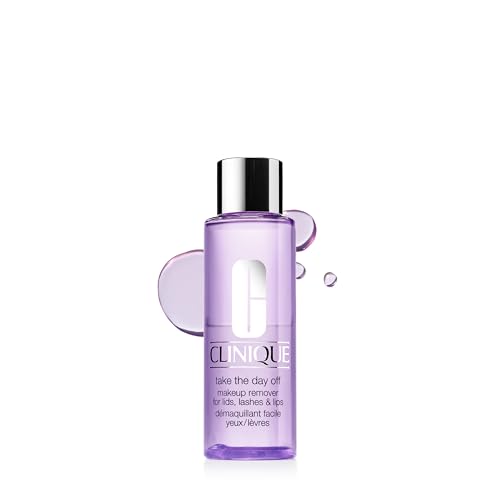
Clinique Take The Day Off Makeup Remover for Lids, Lashes & Lips
The original bilayer remover whose oil layer dissolves waterproof eye makeup in seconds, with no tugging.
When you compare a dedicated bilayer remover to regular micellar water, the main benefit of the bilayer is that oil layer. It breaks down waterproof and tubing mascaras and leaves no residue behind, where regular micellar waters tend to smear those mascaras around rather than lift them. A flat cotton round provides less friction across the lash line than a textured pad. If you wear lash extensions, avoid oil-based removers entirely and use an oil-free micellar formula, since the oils break down the adhesive holding the extensions on.
Take The Day Off (the bilayer version, not the balm or cleansing oil from the same line) is the eye remover BEEs name most when they want waterproof mascara gone in five seconds without rubbing at their eyelids. The oil layer lifts waterproof mascara; the water layer rinses clean and leaves no film on the lashes. The one thing BEEs flag is the pop-up cap, which can leak in a travel bag (a Ziploc fixes it).
7. The Breakout Source Most People Forget to Clean
Every time you use a foundation brush, it picks up foundation, sebum, dead skin cells, and bacteria. It holds onto all of it until the next application, when most of it gets pushed back onto your skin along with whatever new product goes on top. Dermatologists call dirty brushes one of the easier breakout sources to fix, since it’s largely a cleaning problem. For face brushes, once a week is the consensus; for eye brushes, every two weeks is fine.
Cleaning your brushes quickly enough that it becomes routine rather than a chore comes down to a good brush cleaner. The professional-grade ones (the kind used backstage on movie and TV sets, where brushes are cleaned rapidly between takes) dissolve makeup, mascara, and pigment without water and let the bristles dry fast enough to use right away. Soap and water still works for a weekly deep clean, and the spray version handles the days in between.
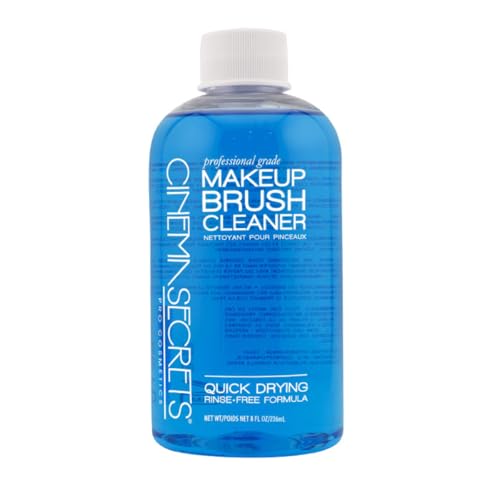
Cinema Secrets Professional Makeup Brush Cleaner
The backstage brush cleaner that dissolves makeup and dries bristles in about a minute, no water needed.
To deep-clean once a week, many makeup artists wash their brushes in warm (never hot) water and gently massage a small amount of mild shampoo into the bristles until clean. Then lay the brushes flat to air-dry, with the bristles slightly over the edge of the counter. Drying them upright lets water soak into the glue at the base and loosens the bristles over time. Beauty sponges need even more care, since they hold moisture deep inside, so wash them every couple of uses and replace them every few months.
For weekly brush cleaning to become a habit instead of a Sunday chore, BEEs say the deciding factor is the cleaner. Cinema Secrets gets named the most, because it dries both natural-hair and synthetic brushes within about a minute. The trade-off is the smell, which is strong in the way an art-supply store is strong, so most BEEs work near an open window or run the bathroom fan during the deep cleans.
A cruelty-free mark means the brand is certified by PETA, Leaping Bunny, or both at the time of writing. A missing mark doesn’t mean a brand tests on animals; it just means the brand isn’t certified by these programs.
What Our BEEs Are Buzzing About
The beauty community has plenty to say about these habits, too:
Want to become a Beauty Empties Expert?
BEEs get free products to test, exclusive discount codes from our brand partners, and live access to The Hive sessions with dermatologists and beauty editors. Spots are limited and hand-picked.
Related Articles
- 5 Makeup Mistakes That Instantly Age You
- 8 Old-School Beauty Products That Are Still the Best Around (Because They Actually Work)
- Skincare Ingredients You Can and Can’t Mix (and the Myths That Aren’t True Anymore)
- The Best Moisturizers for Oily Skin From $15 to $70
- 10 Common Beauty Habits That CAN Work Against Women Over 50