Skincare Ingredients You Can and Can’t Mix (and the Myths That Aren’t True Anymore)

If you’ve ever bought a vitamin C serum, a retinol, and an exfoliating acid in the same Sephora run, you’ve probably already googled “can I use these together” at 11 p.m. The internet has been contradicting itself on the answer for about a decade (one site insists vitamin C and niacinamide cancel each other out, the next says that’s a myth from a 1960s lab study at temperatures your bathroom will never reach). Meanwhile, you’re just trying to figure out what to put on tonight.
If you buy through our links, we may earn a small commission at no cost to you. As an Amazon Associate, we earn from qualifying purchases. Our policy
Most of what shows up in those late-night searches is at least five years out of date. Dermatologists have changed their tune on a lot of the old “don’t mix” rules, and new formulas have caught up too. The seven combinations below are the ones that should be on your radar in 2026.
Vitamin C + Niacinamide (Fine to Mix)
This is the one “don’t mix” myth that won’t die. The story goes that vitamin C and niacinamide combine into niacin (a different molecule that causes flushing), and the niacin then cancels out the vitamin C and irritates the skin. That story is actually based on a real study, but the study was done in a 1960s lab conditions at temperatures that don’t exist outside of a beaker.
In any normal skincare routine, vitamin C and niacinamide work fine together. Dermatologists actually recommend them as a pair for dark spots, sun damage, and uneven tone. The Ordinary, Naturium, La Roche-Posay, and a few other brands now sell single serums with both, which wouldn’t be on shelves if that old theory still held up. Dermatologists have called it a myth for about ten years; the rest of the internet is still catching up.
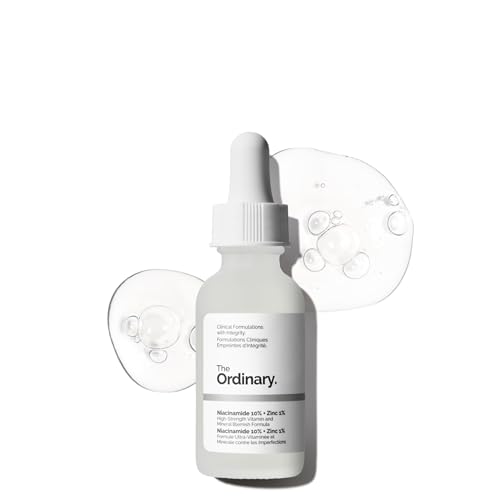
The Ordinary Niacinamide 10% + Zinc 1%
The cult $7 niacinamide that’s been the entry point for thousands of routines and pairs cleanly with almost any other active, including vitamin C. PETA and Leaping Bunny certified cruelty-free.
Retinol + Vitamin C (Don’t Use at Same Time)
This is one of the rare “don’t mix” rules that still holds up. Vitamin C works at low pH (around 3.5 in most serums), while retinol works at a higher pH around 5.5. Applying them together can shift each one out of its happy zone, which makes both less effective. There’s no irritation; you just get less out of products that are already expensive.
The key is just timing. Use vitamin C in the morning under sunscreen, and retinol at night with moisturizer. This is the routine most dermatologists have been recommending since the early 2010s, and it’s the easiest way to get the benefits of both without the chemistry tug-of-war. The one exception is encapsulated retinol, which is designed to release slowly and isn’t as pH-sensitive. But regardless, you should still use that at night, anyway.
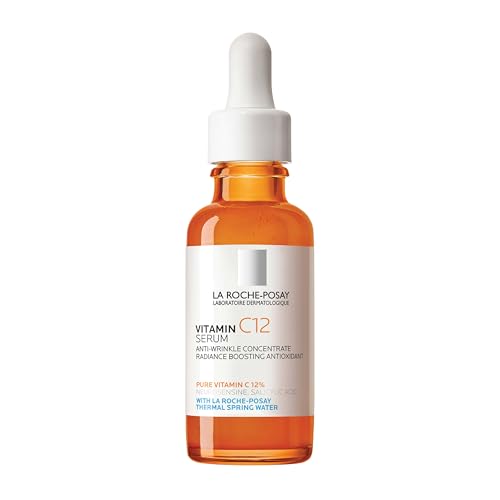
La Roche-Posay Pure Vitamin C10 Serum
A 10% pure vitamin C serum at a stable low pH, formulated for sensitive skin. Dermatologists name it as the morning step in any retinol routine. Around $40.
Retinol + Exfoliating Acids (Don’t Mix)
The issue is that both of these speed up cell turnover. Retinol pushes new cells up; exfoliating acids (the AHAs like glycolic and lactic, and the BHA salicylic acid) clear off the old ones. Using them together is like asking the skin to do a week of work in one night. The result, for some people, is irritation: redness, peeling, sensitivity, or even broken skin if the combination goes on for too long.
The fix? Alternate nights. Use retinol two or three nights a week, an exfoliating acid one or two nights, and a plain moisturizer on the off nights. Dermatologists usually tell new retinol users to skip acids entirely for the first six weeks while their skin adjusts. Once your skin has built a tolerance to it, alternating becomes an easy routine to follow, and without the irritation (win-win!).
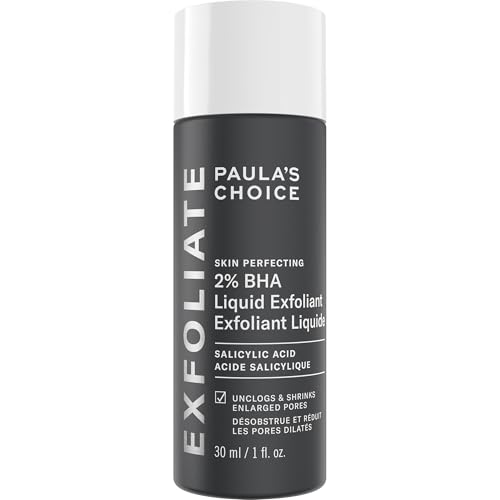
Paula’s Choice Skin Perfecting 2% BHA Liquid Exfoliant
The cult salicylic acid exfoliant that’s been the BHA benchmark since the early 2000s. Works well on acne-prone, oily, and clogged skin. PETA cruelty-free certified.
Retinol + Benzoyl Peroxide (Don’t Mix)
Mixing these two ingredients is a chemistry issue vs. skin sensitivity. Benzoyl peroxide is an oxidizer, meaning it kills acne bacteria with oxygen. Retinol is a vitamin A molecule that breaks down around oxidizers. Apply them together and the benzoyl peroxide doesn’t just cancel the retinol, it breaks it down into compounds that don’t do anything for skin at all.
The fix is the same as with vitamin C: separate them by time of day. Use benzoyl peroxide in the morning (with sunscreen, since it can also increase sun sensitivity) and retinol at night. Some newer formulas use a different retinoid called adapalene that holds up better next to benzoyl peroxide, but for standard over-the-counter retinol, you should still keep them in separate routines.
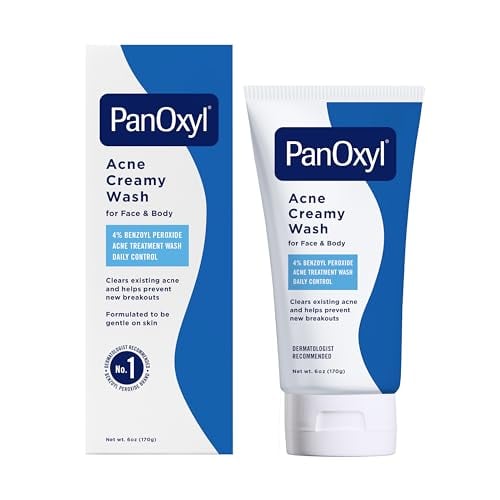
PanOxyl 4% Acne Foaming Wash
The 4% benzoyl peroxide wash dermatologists prescribe by name for body acne, chest breakouts, and stubborn cystic spots. Use in the morning, not the same routine as retinol.
Exfoliating Acids + Sunscreen (Recommended)
This isn’t a “can’t mix” so much as a “must always mix.” Exfoliating acids work by removing the top layer of dead skin cells, which is exactly where most of the skin’s natural sun protection lives. Using glycolic, lactic, or salicylic acid increases your skin’s sun sensitivity of for about a week after each use. Skipping sunscreen is the single fastest way to undo every benefit of the exfoliation (and to potentially get sun damage).
So, how should you mix them? Any morning that follows an acid night gets SPF 30 or higher, and the rest of the week ideally does too. In fact, lets just say that you should be applying SPF30 every.single.morning, rain or shine, inside or outside! Dermatologists tend to recommend mineral sunscreens (the ones based on zinc oxide or titanium dioxide) the morning after acid use because they’re less likely to sting on freshly exfoliated skin. But as long as you’re wearing sunscreen, you’re winning.
Retinol + Niacinamide (Recommended)
This is the pair dermatologists have been recommending together for the last decade. Niacinamide strengthens the skin’s barrier, which is exactly what retinol tends to weaken in the first few weeks of use. Using them together cuts down on the irritation that makes most people quit retinol within a month, and niacinamide also helps fade the dark spots that can linger after acne breakouts heal (which retinol use can sometimes cause).
Many modern retinol products include niacinamide in the same bottle for this reason. (I use a prescription with 4% Niacinamide and 0.025% Tretinoin every other night.) If you’re using separate serums, apply the niacinamide first (it’s water-based and absorbs fast), then the retinol on top once the niacinamide has dried. The pair works for sensitive, acne-prone, and aging skin equally well, which isn’t always the case!
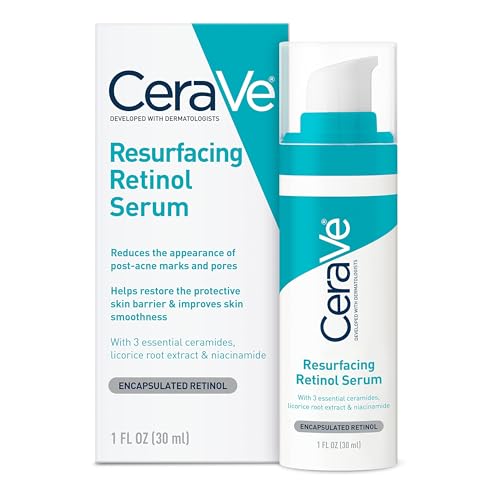
CeraVe Resurfacing Retinol Serum
An encapsulated retinol with niacinamide and ceramides in the same bottle, designed to release slowly enough to skip the usual peeling phase. Under $20 and the most-named beginner retinol on dermatology TikTok.
Hyaluronic Acid + Everything (Go Ahead!)
Hyaluronic acid is the one ingredient with no known conflicts in skincare. It’s a humectant (an ingredient that pulls water into the surface of the skin), it works at any pH, and it doesn’t react with retinol, vitamin C, exfoliating acids, peptides, or any other active. Apply it to slightly damp skin and seal it in with a moisturizer, because if there’s no water on the surface, hyaluronic acid will pull moisture from deeper in the skin instead of holding it where you want it.
Most dermatologists recommend it as the bridge layer in any routine, meaning it should be the thing that goes between stronger ingredients and your moisturizer. It softens the impact of the stronger ingredients underneath and helps everything else absorb. The cult favorite in this category has been The Ordinary’s Hyaluronic Acid 2% + B5 for most of the last decade, and at under $10 a bottle, it doesn’t have much serious competition.
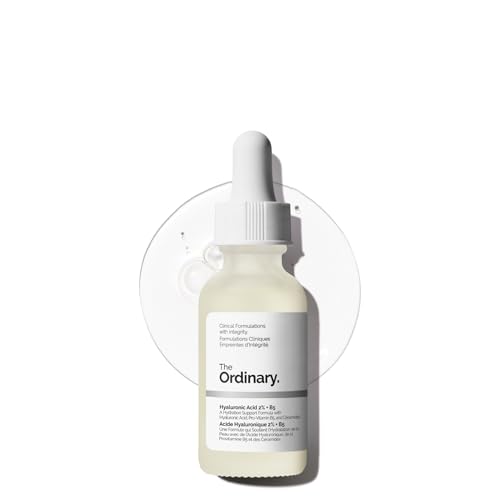
The Ordinary Hyaluronic Acid 2% + B5
The under-$10 hyaluronic acid serum that has held the cult spot in the category for most of the last decade, and that plays well with every other ingredient on this list. PETA and Leaping Bunny certified cruelty-free.
A cruelty-free mark means the brand is certified by PETA, Leaping Bunny, or both at the time of writing. A missing mark doesn’t mean a brand tests on animals; it just means the brand isn’t certified by these programs.
What Our BEEs Are Buzzing About
Here’s what the beauty community is saying about mixing these ingredients:
Want to become a Beauty Empties Expert?
BEEs get free products to test, exclusive discount codes from our brand partners, and live access to The Hive sessions with dermatologists and beauty editors. Spots are limited and hand-picked.