8 Old-School Beauty Products That Are Still the Best Around (Because They Actually Work)

Pull open the bottom drawer of your mom’s bathroom vanity and there’s a real chance you’ll find the same handful of products that are still on the shelf at Target right now. You know the ones: the jar of petroleum jelly with the label half rubbed off, the round tin of cold cream that’s been refilled twice (probably yours, definitely hers), the pink-and-green tube of mascara at the bottom of every makeup bag, the blue tin of face cream sitting unbothered in the corner. None of those formulas have been meaningfully updated in decades, and they keep getting replaced because they keep running out.
If you buy through our links, we may earn a small commission at no cost to you. As an Amazon Associate, we earn from qualifying purchases. Our policy
The reason they’re still around is the same one every dermatologist gives when you ask her about a $200 face cream (and not always with a straight face). Short ingredient lists tend to work better than long ones, formulas that have been studied for fifty years don’t have unknowns, and none of the fancy stuff has outperformed these in head-to-head comparisons at the BIG beauty magazines. The eight products below are ones people keep buying again across every retailer, and they still cost roughly what they did when our mothers were buying them.
Vaseline Original Petroleum Jelly
Robert Chesebrough patented petroleum jelly in 1872 after watching oil rig workers in Pennsylvania use the residue from their drills as a wound treatment (yes, really). The formula hasn’t been meaningfully updated since. It’s triple-purified petrolatum and nothing else, sealed into the same blue-labeled jar that’s been on every drugstore shelf in the country for as long as anyone reading this has been alive.
From the Hive
The buzz from our Beauty Empties Experts. Sign up to join!
The trade-offs are real. The texture is sticky enough to print onto pillowcases when used overnight as an occlusive, and the petroleum smell is faint but present (which is why some BEEs prefer Aquaphor for the lip-balm application). BEEs are also clear this is a nighttime or barrier-step product, not a daytime moisturizer, and that it doesn’t replace SPF, serum, or anything else doing real chemistry on skin.
Petroleum jelly works as an occlusive barrier sitting on top of the skin, keeping moisture from evaporating out of it. The “slugging” trend that took over beauty TikTok around 2021 (the slang for sealing a nighttime skincare routine with a thin layer of petroleum jelly so the actives underneath stay put) was almost entirely a Vaseline trend, though dermatologists were doing the exact same thing under the name “occlusion therapy” for thirty years before any of us had heard of TikTok. Board-certified dermatologists still name it as one of the products they reach for on their own skin when their face is unhappy.
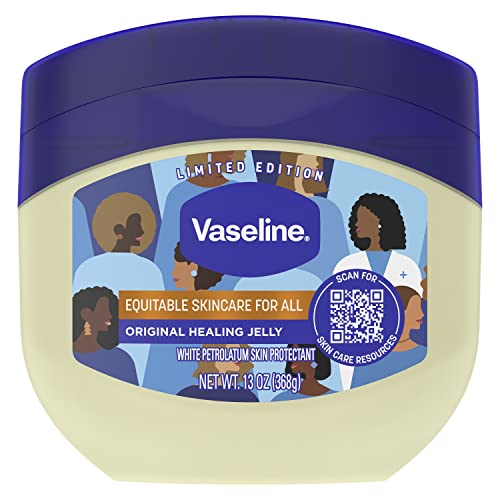
Vaseline Original Petroleum Jelly
The 150-year-old triple-purified petrolatum that dermatologists still name first for slugging, chapped lips, and post-procedure healing. Under $5 for a 13 oz jar that lasts a year.
Aquaphor Healing Ointment
Aquaphor was developed by Beiersdorf, the same German company that makes Nivea, and has been on the U.S. market for the better part of a century. The formula is 41% petrolatum (so it does most of what Vaseline does), but with three additions that change the way it sits on skin: lanolin, glycerin, and panthenol. The glycerin pulls a small amount of water into the surface of the skin while the petrolatum locks it in, which makes it what dermatologists call “semi-occlusive” instead of fully occlusive (the textbook example of a small chemistry tweak doing real work).
From the Hive
Two recurring complaints come up in BEE feedback. The lanolin is a real allergen for a small but consistent percentage of users (anyone allergic to wool is the canary on this one), and the texture is heavier than the marketing suggests, so a pea-sized amount stretches further than most people expect. BEEs who use it on lips overnight name the tube format (“on my third one”) more than the jar, because the jar tends to collect bacteria when fingers go in repeatedly.
That one structural difference is why most board-certified dermatologists name Aquaphor over Vaseline for chapped lips, eczema patches, healing tattoos, and anything that’s actively repairing. It’s the post-procedure standard at dermatology offices for chemical peels, laser, and microneedling, and tattoo artists send new clients home with it. It’s been on the National Eczema Association’s accepted-products list for years, which is the kind of credential that doesn’t get renewed easily.
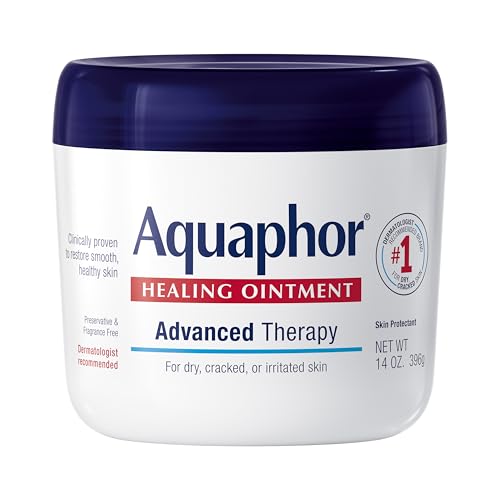
Aquaphor Healing Ointment
The semi-occlusive that dermatologists send patients home with after chemical peels and laser. 41% petrolatum with glycerin and panthenol, on the National Eczema Association’s accepted-products list.
Cetaphil Gentle Skin Cleanser
Cetaphil was mixed for the first time in 1947 by a pharmacist in Texas trying to fill a dermatologist’s prescription for a cleanser gentle enough to use on patients with chronic skin conditions. He landed on a formula with eight ingredients (which is fewer than most bottled salad dressings). It runs at a pH of around 5.5 (skin’s natural pH, and the opposite of traditional bar soaps that sit closer to 9 or 10), it doesn’t foam, and it can be wiped off with a tissue instead of rinsed.
From the Hive
The most common BEE note is that it doesn’t feel like cleansing. There’s no foam, no squeak, no sense that anything has been lifted off the skin (which is the entire point, but the absence of sensory feedback throws people who are used to a more active cleanser). The other recurring trade-off is that it won’t remove makeup on its own, so anyone wearing foundation or mascara still needs an oil cleanser or balm to break that down first. BEEs with truly oily skin tend to find it under-cleansing for evenings and swap to the gel formula instead.
That gentleness is what made it the default cleanser dermatologists send patients home with after procedures and when retinoids have left skin irritated. It also gets recommended to teenagers with new acne, anyone going through chemotherapy who suddenly can’t tolerate their usual products, and people with rosacea who can’t handle fragrance of any kind. The brand has launched dozens of variations since 1947, but the original blue-and-white bottle is still the one that shows up in dermatology offices, because nothing about skin chemistry has changed enough to make the formula need updating.
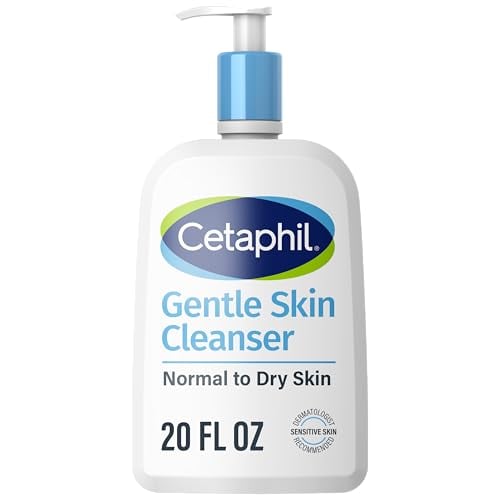
Cetaphil Gentle Skin Cleanser
The pH-balanced, non-foaming cleanser a Texas pharmacist mixed for a dermatologist in 1947. Still the post-procedure default in dermatology offices nearly eighty years later.
Pond’s Cold Cream
Theron Pond started selling extracts from witch hazel as a healing salve in 1846, and the cold cream formula that became the brand’s signature has been on shelves for over a century in the same round white jar (the one your grandmother almost certainly had on her vanity, and possibly still does). The ingredient list is short and almost entirely physical: mineral oil, beeswax, ceresin wax, a small amount of fragrance, water. It works the way every cold cream has worked since cold creams were invented, which is that oil dissolves oil.
From the Hive
The recurring critique is the fragrance. The classic Pond’s scent is unmistakable and divisive (BEEs who grew up with it on a grandmother’s vanity tend to love it, and BEEs encountering it for the first time often find it dated). The other consistent note is that it has to be followed with a real second cleanse for anyone wearing sunscreen, foundation, or both, because mineral oil left on the skin can clog if it isn’t fully removed. BEEs with acne-prone skin generally skip this one altogether.
That’s still the most efficient way to take off a full face of makeup, including the long-wear formulas built to survive a workout. You scoop a generous amount onto dry skin, massage it into mascara and foundation until everything melts, and then tissue or rinse it off (the tissue method is faster and uses less water, which makes it the move on a travel night when you’re tired and three sinks away from anything resembling a real cleanse). Makeup artists have been using it on set since the Marilyn Monroe era, and the cult around it on the vintage-makeup side of beauty TikTok hasn’t slowed in the last five years. It’s still under $8 for a jar that lasts months.
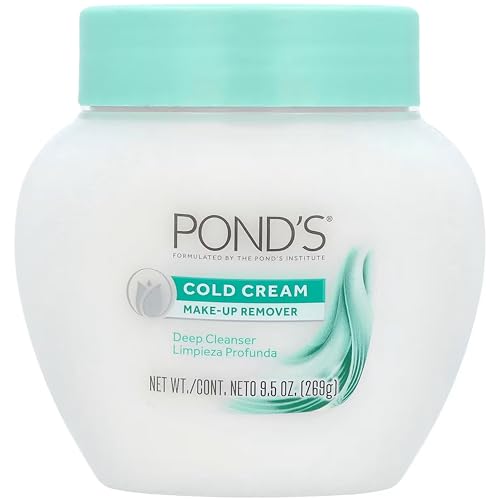
Pond’s Cold Cream Cleanser
The mineral-oil-and-beeswax classic that has been melting off full-face makeup since the Marilyn Monroe era. Still the cleanest, fastest way to remove long-wear foundation without a separate oil cleanser.
Nivea Creme (the Blue Tin)
Nivea Creme was the first face cream that successfully kept water and oil mixed in a jar without separating, which is a bigger deal than it sounds. Beiersdorf launched it in 1911 in Germany using a wax called eucerit that held oil and water together stably, and that single piece of chemistry is part of why every face cream you’ve bought since then exists. The formula has been almost unchanged for over a hundred years, and the round blue tin has been the same shape and color since 1925.
From the Hive
Two trade-offs are consistent. The texture is dense enough that it has to be warmed between fingertips before it spreads (BEEs note that the smaller travel tin is harder to work with than the big jar for this reason), and the scent is polarizing in the same way Pond’s is. BEEs with acne-prone or congested skin call it too heavy for the face, but the same BEEs name it the only thing that solves cracked heels and elbows by morning.
It keeps showing up in blind tests at women’s magazines against face creams that cost twenty to forty times more, and it keeps holding its own in a respectable number of them. The much-discussed head-to-head against La Mer years ago performed close enough to make news in beauty media (and made a lot of people in dermatology offices nod knowingly). European women apply it to face, body, hands, elbows, and the dry ends of their hair on a long flight, and the formula stays short: water, mineral oil, petrolatum, glycerin, lanolin, panthenol, and the small amount of fragrance that gives it the smell anyone who grew up in a European household will instantly recognize.
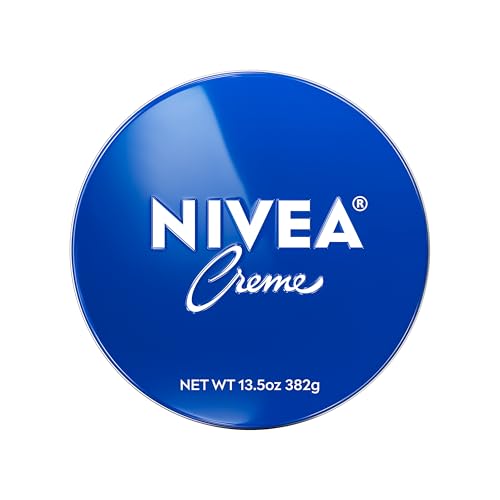
Nivea Creme
The 1911 face cream in the blue tin that’s been holding its own against $300 face creams in blind tests for decades. Under $10 for a 13.5 oz jar.
Maybelline Great Lash Mascara
Maybelline launched Great Lash in 1971 in the pink-and-green tube that’s been at every drugstore checkout since (you can picture it without even trying). By the early 2000s it was the best-selling mascara in the country, and Maybelline at one point estimated a tube of Great Lash was selling somewhere in the world every couple of seconds. Working makeup artists still keep it in their kits because they don’t need a mascara to do anything fancy, just one that lays down clean, glossy color that builds without clumping.
From the Hive
This is not a high-drama mascara, and BEEs are clear on that. It will not lift, curl, lengthen by a quarter inch, or hold a curl through humidity, so anyone whose mascara goal is “false-lash effect” should keep moving. It can also smudge under the lower lash line on anyone with oily under-eyes by mid-afternoon. The reason it stays in rotation is the finish: defined, clean, never spider-legged, and a non-negotiable kit pick for BEEs who do their own makeup for film, theatre, or stage lighting where waterproof formulas read as too heavy.
The formula is water-based, which makes it the lowest-effort mascara to remove (warm water and a flannel takes it off, no separate eye-makeup remover required). It separates rather than volumizes, defines rather than lengthens, and doesn’t flake the way drier formulas do. It’s been a beauty-editor desert-island pick for decades, which is unusual for a $5 product in a category where editorial coverage usually focuses on the $30 versions.
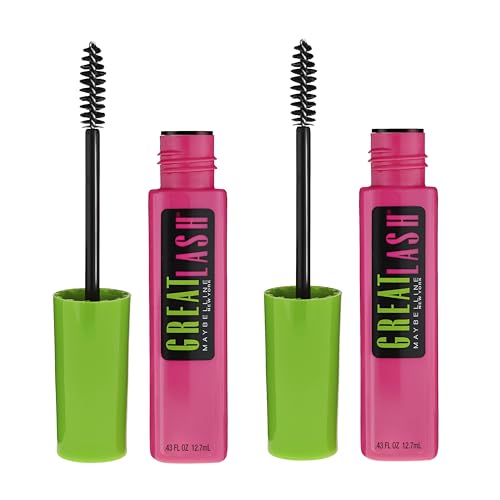
Maybelline Great Lash Mascara
The pink-and-green tube that’s been a beauty-editor desert-island pick since 1971. Clean, glossy color that builds without clumping and washes off with water for $5.
Aussie 3 Minute Miracle Deeeep Conditioner
The 3 Minute Miracle has been on drugstore shelves for over four decades in the same purple bottle (with the extra e’s in “Deeeep” that somehow nobody at P&G has ever edited out), and the only reason it sells the way it does is that it does the thing the bottle says. Apply to wet hair after shampoo, leave on for three minutes, rinse. The hair is meaningfully softer when it comes out of the shower, which is unusual for a conditioner at this price (it’s been under $5 for almost the entire life of the product).
From the Hive
Two issues come up regularly. BEEs with fine or low-density hair say it weighs roots down for a day or two after use, so it works better as a mid-shaft-to-ends treatment than a scalp-down soak. BEEs with curly hair who follow a strict silicone-free routine call it a non-starter (the formula is silicone-forward by design, which is exactly what makes hair feel so smooth coming out of the rinse). The scent stays polarizing across all hair types, but the BEEs who like it tend to be on their fourth or fifth bottle.
The formula relies on silicones to do the smoothing work, which puts it on the wrong side of the curly-hair community’s silicone-free rule but on the right side of every BEE with color-treated, heat-damaged, or generally fried hair who needs a fix that lasts more than one wash. The Australian-themed scent (a soft cherry-vanilla note that hasn’t been reformulated since the 80s) is one of the most-recognizable scents in beauty, and it’s the reason a lot of people who tried it in middle school still keep a bottle in the shower as adults. The nostalgia helps, but the softness it leaves behind is what keeps it in the rotation.
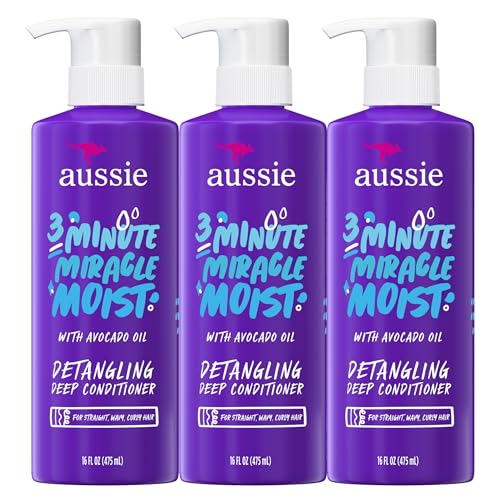
Aussie 3 Minute Miracle Deeeep Conditioner
The purple-bottle classic that actually softens dry, color-treated, or heat-damaged hair in three minutes flat. Under $5 and unchanged since middle school for most BEEs. Certified cruelty-free (PETA).
Dove Beauty Bar
The Dove Beauty Bar launched in 1957, and the launch ads weren’t being cute when they called it a “beauty bar” rather than a soap (they were being technically correct). It’s a synthetic-detergent bar (a syndet), not a true soap, with about a quarter of its weight made up of moisturizing cream. That’s why it runs at a skin-friendly pH around 7 instead of the 9-or-10 that traditional bar soaps sit at, and why the National Eczema Association has kept it on the accepted-products list for decades.
From the Hive
The most common note is the residue. The moisturizing cream that makes Dove gentler than soap also leaves a faint film on tile, glass shower doors, and certain washcloths, which is more of a cleanup issue than a skin issue but a real one. BEEs with very oily skin or back acne say the bar can feel under-cleansing on its own and needs to be paired with a wash that has salicylic acid for the affected areas. BEEs with eczema, post-laser skin, or any actively flaring sensitivity say it’s the only bar they tolerate.
The science is what’s kept it in dermatologist recommendations even as the body-wash category exploded into a multi-billion-dollar industry. Multiple reviews of skin-cleansing literature in dermatology journals have named syndet bars like Dove as the format least likely to strip skin or disrupt the barrier, ahead of both traditional soaps and most liquid cleansers. The price has stayed in roughly the same range it’s been for years, around $7 for a six-pack at any drugstore, which is what it costs to keep skin happy for a couple of months. Dove is also the only product on this list with PETA cruelty-free certification, which is unusual for a brand owned by one of the biggest beauty conglomerates in the world.
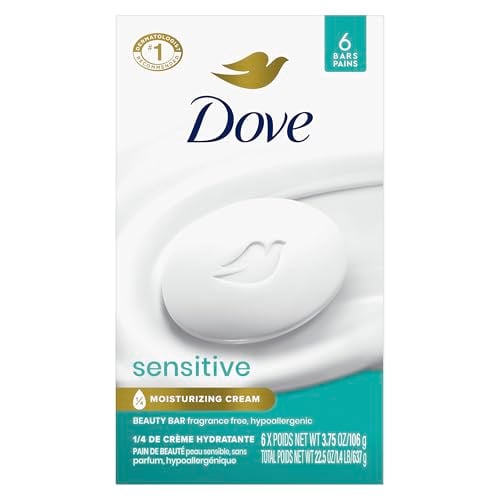
Dove Beauty Bar (Sensitive Skin)
The 1957 syndet bar with 1/4 moisturizing cream that dermatologists name first for sensitive and eczema-prone skin. On the National Eczema Association’s accepted-products list. Around $7 for a six-pack.
A cruelty-free mark means the brand is certified by PETA, Leaping Bunny, or both at the time of writing. A missing mark doesn’t mean a brand tests on animals; it just means the brand isn’t certified by these programs.
What Our BEEs Are Buzzing About
Here’s what the beauty community is saying about these products:
Want to become a Beauty Empties Expert?
BEEs get free products to test, exclusive discount codes from our brand partners, and live access to The Hive sessions with dermatologists and beauty editors. Spots are limited and hand-picked.
Related Articles
- The Best Retinols People Actually Use Up
- The Best Drugstore Sweat-Proof Makeup for Hot Summer Days
- 15 Beauty Products That Make People Stop and Ask What You’re Wearing
- The Hair Growth Products People Say Actually Work
- The 6 Most Common Skin Issues and the Products That Solve Them
- 10 Natural Beauty Habits Women Over 60 Refuse to Give Up