15 Drugstore Beauty Products Even Luxury-Beauty Devotees Buy on Repeat
A friend once texted me a photo of her bathroom counter: a $400 face oil parked right next to a $9 drugstore moisturizer (yes, both). She finished the drugstore one before the $400 oil was half empty. Naturally you’d assume that women with unlimited skincare budgets would only buy unlimited-budget products. They don’t, and after enough years of testing both sides, they tend to keep a pretty consistent group of drugstore and Amazon picks in the rotation right alongside the splurges, because at a certain point in a routine you figure out which products you’d pay for again.
If you buy through our links, we may earn a small commission at no cost to you. As an Amazon Associate, we earn from qualifying purchases. Our policy
Full disclosure: I’m not really a drugstore girl, razors aside. But my mom swears by St. Ives lotion for crepey skin, and her arms are doing better than mine. So consider this list the products that survive in households like ours, where the expensive stuff and the cheap stuff share a shelf.
I think all we have to do is really look at our parents and grandparents, right? My mom doesn’t use expensive creams, and she has gorgeous skin. So I really think you have to find what works for you. If a face oil works and your budget allows, great. If it doesn’t work, that’s just as bad as buying a bunch of cheap products. The ones that work are few and far between.
These are the fifteen products that come up over and over. The average price is around $14, and several appear in dermatology-recommended drugstore lists alongside their $300 counterparts. When the tub runs out at 11 p.m., Amazon has every one of them on two-day shipping, so a replacement is two days away.
The Cleansers, Toners, and Micellar Waters
This is where the luxury-versus-drugstore gap shrinks the most. A cleanser lifts makeup and oil off skin; past that, you’re paying for fragrance and a glass bottle. The three below have no real luxury upgrade.
Cetaphil Gentle Skin Cleanser
Cetaphil started in a Texas pharmacy in 1947 as a prescription cleanser for skin that couldn’t handle anything stronger, and the recipe hasn’t really changed. No fragrance, no foam, nothing extra. It’s the cleanser dermatologists hand out after lasers and peels, and it doesn’t try to do more than that.
From the Hive
The buzz from our Beauty Empties Experts. Sign up to join!
The weeks when skin is acting up are when Cetaphil earns its place with BEEs. The recurring critique is that the texture is more lotion than cleanser, so BEEs who normally use a foam might want a second cleanse on any night they wore SPF or heavier makeup. The bottle’s pump cap also gets flagged as a leaker. None of it has slowed the repurchases.
Women who normally use a $90 cult cleanser come back to this one the week their face starts reacting. In calmer weeks they push it to the back of the shower; the moment something starts going wrong, they reach for it again. Depending on the season and the routine, that can be most of the year.
“I’ve switched over from the vast majority of my expensive, buy-in-office products over the last few months to drugstore brands and could not be happier!” wrote one 55-year-old, with Cetaphil at the top of her list. The counterpoint, from reactive skin: “I actually found this too harsh and stripped my skin.” Even the gentlest cleanser on the market doesn’t work for everyone.
Ask a dermatologist and the answer gets blunter. “Not insignificant, but I gave up expensive skincare. Went to a dermatologist, asked what my skin really needs. 99% of the time, it’s going to be Cetaphil and Cerave. Mecca is taking you all for a ride!” (Mecca is Australia’s Sephora.)
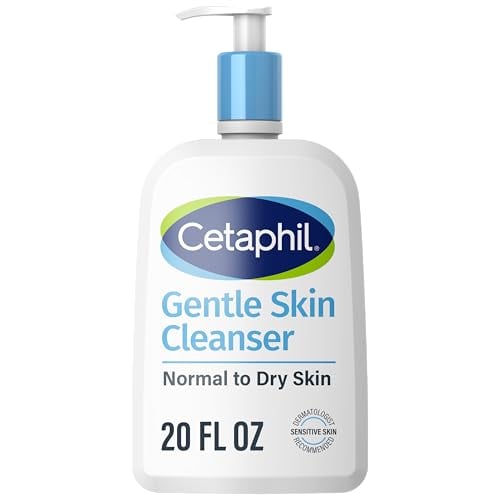
Cetaphil Hydrating Gentle Skin Cleanser, 20 oz
The 1947 non-foaming, pH-balanced cleanser dermatologists send patients home with after every in-office procedure. No fragrance, no active ingredient, no irritation.
Bioderma Sensibio H2O Micellar Water
Sensibio H2O is the makeup remover stacked backstage at the European fashion weeks, where show makeup goes on and comes off six times a day. French pharmacies sell it by the gallon. The original Sensibio is fragrance-free (the Hydrabio and Atoderm versions are not), and it takes makeup off without water, so makeup artists reach for it.
From the Hive
Ask BEEs about Sensibio and the first thing they mention is eye makeup coming off without any pulling at the lashes. The complaint that comes up most is that micellar water is still water, so waterproof mascara needs a balm cleanser first. BEEs who wear heavy daytime makeup follow Sensibio with an actual cleanser, BEEs who wear barely anything use it as the only step.
A good micellar water is such a great step in a double cleanse routine, and it’s so inexpensive to get. One 45-year-old’s whole rotation makes the same point: “I used to use a lot of expensive, trendy skincare, but my 45 year old skin looks amazing using high quality basics. My current loves are: Bioderma sensibio micellar water / Cetaphil bar soap / Vichy Mineral 89 Serum / Embryolisse Lait Crème Concentre / Vaseline rosy lips / CeraVe cream.”
Micellar water is what I like for taking makeup off. I also really like those Neutrogena eye makeup remover pads. Sometimes they’re a little oily, but sometimes they’re the only thing that can actually get the work done.
The 500ml size on Amazon is the one worth ordering. The full pump-style refill is half the per-ounce cost of the travel bottles, and once you’ve put it on the bathroom counter, you start using it as the first step of an evening routine rather than saving it for emergencies.
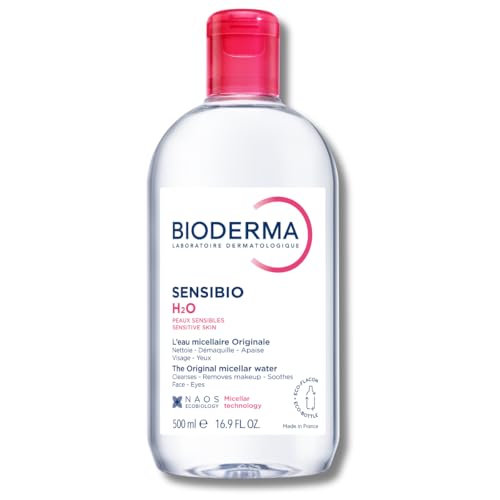
Bioderma Sensibio H2O Micellar Water, 500ml
The fragrance-free French pharmacy micellar water that backstage makeup artists use to take show makeup off models without irritation. The 500ml refill is the version worth ordering.
Pixi Glow Tonic
Pixi Glow Tonic sat on Boots shelves in the UK for a decade before American beauty editors caught on in the mid-2010s. It’s 5% glycolic acid with aloe and ginseng to take the bite off, and skin looks a little smoother and brighter the next morning without any flaking.
From the Hive
How BEEs feel about Pixi Glow Tonic comes down to skin type. Oily and combination BEEs use it three or four nights a week and credit it with the smaller pore look that the marketing was promising. BEEs with reactive or rosacea-prone skin find that even at 5%, glycolic still stings on a freshly cleansed face, and dial back to twice a week or skip entirely. Everyone who uses it agrees the flip-top dispenser saturates a cotton round in about half a second, so a little goes further than it looks like it will.
Women who own three other higher-percentage acids (a 10% glycolic for weekends, a salicylic for spot treating, a polyhydroxy for sensitive nights) still keep this one in the rotation because it’s the one they can use most often without consequence.
“It’s the only product I’ve repurchased consistently since the first time I bought it,” one loyalist says, while a more lukewarm reviewer keeps it honest: “I got the big bottle too and it’s pretty good but not HG status.”
The years-long users still run the math. “I have used Pixi Glow Tonic Glycolic Acid (5%) for years now, but it’s expensive so I’m going to try The Ordinary Glycolic acid (7%) next,” one admits, and reviewers with dry skin sometimes take a while to connect the dots: “I just figured out that using the Pixi glow tonic might be making my dry patches worse rather than better, and I’m low key annoyed I didn’t figure that out sooner.”
I like exfoliating acids. I use the toner from The Ordinary, and it’s pretty good. I also like the pads from Dr. Dennis Gross, but that’s not a toner.
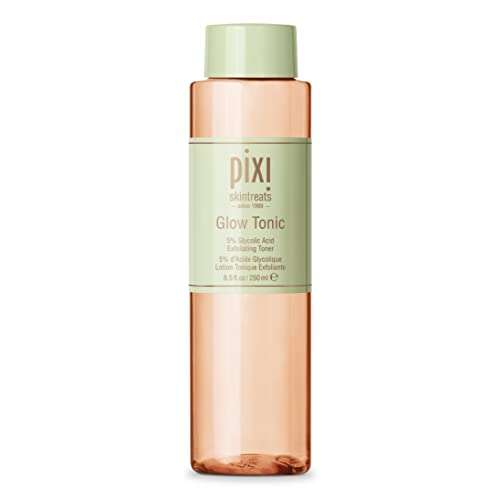
Pixi Glow Tonic, 8.5 oz
The 5% glycolic acid toner with aloe and ginseng that beauty editors named as a cult drugstore discovery in the late 2010s, and it has stayed on counters ever since.
The Moisturizers and Multi-Use Balms
These are the products you find in fashion-week backstage kits and on the bedside table of any dermatologist’s spouse with eczema. The jars are unglamorous, and the drugstore originals match their luxury equivalents ingredient for ingredient.
CeraVe Moisturizing Cream
The blue plastic tub tops nearly every dermatologist-recommended drugstore list, and the tub Hailey Bieber keeps on her counter is the same one teenagers grab at Target. The formula is the part worth paying attention to: three ceramides, hyaluronic acid, and a patented slow-release system (MVE) that meters the ceramides into skin over several hours instead of all at once. That delivery is a big part of why it beats the lookalike ceramide creams next to it on the shelf.
From the Hive
Month after month, no moisturizer gets emptied by BEEs more often than the CeraVe tub. BEEs who use it nightly say the slow-release ceramide delivery is the thing nothing else replicates, including the pricier ceramide creams sold three doors down at Sephora. The recurring complaints are the tub itself (BEEs would prefer a pump for hygiene reasons), the texture (heavy for summer in humid climates), and the dimethicone in the original formula, which a handful of BEEs find pills under makeup. The pump bottle version solves the hygiene complaint, and the lotion version solves the heaviness one.
Plenty of women keep this tub next to a $250 Augustinus Bader and finish the CeraVe first.
CeraVe is in my house too: my husband uses the facial wash, so I end up using it sometimes too.
The tub is also what dermatologists send home for the hard cases: “My son is 19 and has had some major eczema outbreaks. The one lotion that his dermatologist recommended is Cerave moisturizing cream. Not the lotion, the cream in the tub. It has ceramides your skin needs to heal.”
The defining review of this entire category: “I’ve spent a small fortune in my lifetime on different lotions and face creams and serums. I was never happy with the results. Then I had a kid and got poorer—so I bought the CeraVe moisturizing cream in the big tub at Walmart. With sunscreen, I’ve had better results than anything—even better than the La Mer I scrimped and saved for. I’ll probably never buy expensive skin care again.” It is not unanimous (“I’m 51 and going thru meno so my skin is drier than dry. Cerave ain’t shit on this skin,” one dissenter counters), but more people rebuy this tub than almost anything else.
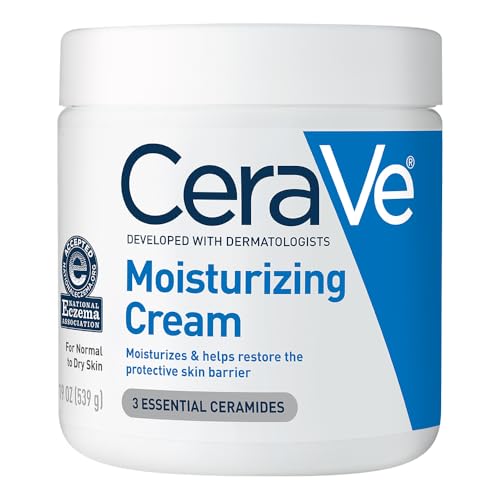
CeraVe Moisturizing Cream, 16 oz
The three-ceramide formula with the patented slow-release delivery system, in the blue plastic tub dermatologists recommend more than any other drugstore moisturizer.
NIVEA Creme
The cobalt blue tin has been the same product since 1911. NIVEA Creme was the first stable water-in-oil emulsion anyone figured out how to bottle and sell everywhere, and that chemistry is why a $7 tin does roughly the same job as a $400 cream; the differences are fragrance, marketing, and which store shelf it sits on. It’s rich enough to lock moisture in overnight, layered over a serum as a mask, and that overnight-mask trick is the reason luxury devotees keep it around.
From the Hive
BEEs use the blue tin three ways: as an overnight mask over a hyaluronic serum, as a winter hand cream, and as a soft-glow cheekbone primer.
George Clooney has named NIVEA Creme as the only thing he uses on his face. The tin is $5 to $7 and lasts the better part of a year.
“Nivea creme in the round blue tin (made in Germany) – it’s so lush and moisturizing and the perfect evening creme. I’ve used la mer, and this makes my skin feel even smoother,” one fan writes, and one less smitten reviewer pushes back: “Nivea Creme is kinda dated – very thick, very fragranced, not bad otherwise.”
One commenter in a budget-secrets thread walked through how she got here: “My cheapest skincare product is Nivea Creme — yes, the one in the blue tin! It all started when I received a tiny pot sample of Creme de La Mer. I didn’t have the disposable income to shell on such a cream, and I heard that Nivea Creme — do make sure that it is the German formula — was a great substitute. I tried it on a whim, and never went back.”
The dupe claim has its skeptics, and the best one is specific: “I disagree with people who say Nivea Creme is a dupe. Yes, many ingredients are similar, but the whole thing about the La Mer line is fermented kelp, which Nivea doesn’t include. It’s like saying two vaccines are dupes because they are both diluted in saline.”
The blue tin was a staple for my grandmother too. She used to put it all over her face. I tried that growing up and broke out; it was a little too moisturizing for me.
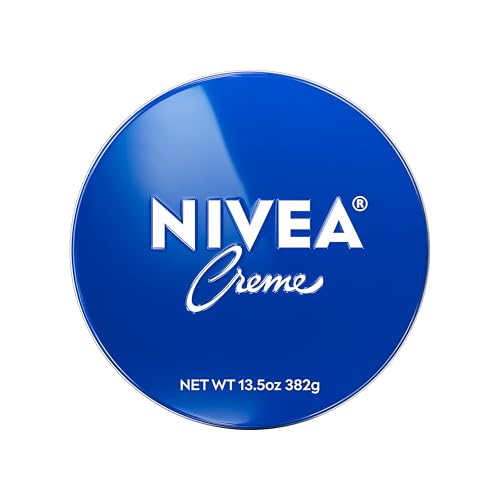
NIVEA Creme, 13.5 oz
The 1911 water-in-oil emulsion in the cobalt blue tin. Heavy enough to use as an overnight face mask, light enough to use on hands and elbows.
Embryolisse Lait-Crème Concentré
Embryolisse Lait-Crème Concentré has been the backstage moisturizer at Paris Fashion Week since 1950, and no “what models actually use” feature in the last twenty years skips it. The formula is shea butter, aloe, and soy proteins in a milky cream that works as a moisturizer, a primer, a makeup remover, and a hand cream.
From the Hive
Embryolisse is the moisturizer BEEs name when asked what they would pack for a long-haul flight if they could only bring one product. The main complaint is the tube itself, which can be hard to control on the squeeze (too much comes out and the bottle empties fast). A handful of BEEs find the soy proteins in the formula slightly heavy under makeup in summer, and switch to it only as a nighttime moisturizer in warmer months. A few BEEs flag that $30 is a lot for a drugstore shelf, but the multi-use math usually wins.
Buyers go back because one product is doing the work of three or four.
The reviews are an unusual mix, loyal but never gushing. “Been using for about 7 years. Not lightweight but absorbs well on me and great as a makeup base. I’m not crazy about it but it’s in my kit and countertop forever. Always repurchase,” one seven-year user shrugs, and in luxury-recommendation threads it shows up mid-routine between SK-II and Tatcha.
“I would sell blood and treasure for Embryolisse Lait Creme Concentrait. It’s my holy grail, I am on my fourth tube in the last few years and just ordered two more from Camera Ready Cosmetics. It doesn’t break out my super sensitive skin, doesn’t react to the Tret, looks amazing under makeup… it’s not greasy but not too light either,” goes the more devoted kind of review, and a mother-daughter household seconds it: “we keep repurchasing this one. Works on my 21yo daughter’s dry, acne-prone skin and on my sensitive combination skin.”
Reviewers with oily skin report something different: “Embryolisse is heavier on my face and has made my face sweat in the past (if I apply it to dry skin). I don’t have the perspiration issue if I put it on damp skin,” one user reports, and she is using up her tube without rebuying.
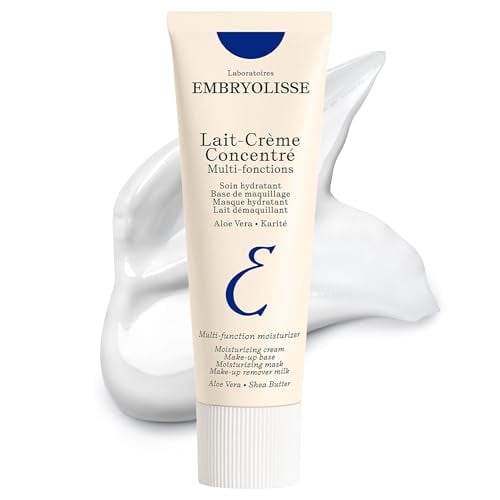
Embryolisse Lait-Crème Concentré, 2.6 oz
The 1950s French clinic’s multi-use moisturizer that doubles as a primer, makeup remover, and hand cream. Backstage at Paris Fashion Week for over seven decades.
Aquaphor Healing Ointment
Aquaphor comes from Beiersdorf, the German company behind NIVEA, and has been sold in the U.S. for about a hundred years. Petrolatum, panthenol, glycerin, lanolin alcohol. The uses pile up fast: post-tattoo, post-laser, chapped lips, the in-flight under-eye patch, and the slugging trend that has shown up in pretty much every model’s nighttime routine video since 2021, Hailey Bieber’s included.
From the Hive
Aquaphor is the lip product BEEs name most consistently, even ahead of dedicated lip balms. The drawback BEEs come back to is the lanolin alcohol, which a small percentage of BEEs are sensitive or allergic to. The texture is also slick enough that a thick layer at bedtime will transfer to the pillowcase, so the BEE workaround is a thin layer over a moisturizer rather than a thick one straight onto bare skin. For slugging specifically, BEEs are roughly evenly divided between Aquaphor and Vaseline, with Aquaphor winning on the panthenol-helps-the-redness front and Vaseline winning on price.
Women who own $400 face creams keep a tube anyway: it solves seven small problems for $14.
“I have tried dozens of other products including several very expensive ones and nothing has worked better for me than Aquaphor. I apply it every night at bedtime and always wake up with well moisturized lips with zero chapping,” goes one report from, of all places, the luxury-skincare forum. The honest flip side: “I wish that aquaphor or Vaseline worked as well for me as it does for others!”
And one reviewer shared a fix worth stealing: “My dry lips improved drastically once I started layering Vanicream moisturizing cream underneath my usual Aquaphor ointment. It had never occurred to me to put lotion on my lips.”
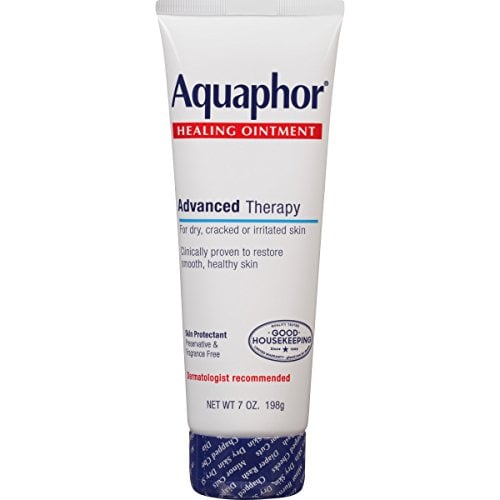
Aquaphor Healing Ointment, 7 oz
The petrolatum, panthenol, and lanolin ointment that handles chapped lips, post-laser skin, and everything in between for $14. The ointment backstage makeup artists and luxury-beauty devotees agree on.
Vaseline Original Petroleum Jelly
Vaseline started with a 22-year-old chemist named Robert Chesebrough watching Pennsylvania oilfield workers slather rig residue on cuts and burns in the 1860s. He patented the purified version in 1872, and the tub at CVS today is the same thing: 100% petrolatum, no fragrance, and nobody has invented a better version. Most dermatologists, asked to keep one product, pick this; Tyra Banks has famously slept in it with socks on for decades.
From the Hive
Nothing under five dollars gets finished by BEEs more often. They slug with the tub, travel with the squeeze tube, and keep the lip mini in a purse. It locks in whatever sits under it, so put a hydrating serum down first, and acne-prone BEEs keep it off the face.
Vaseline is the cheapest product in this piece, and every $90 night balm with petrolatum second on the label is Vaseline with a fragrance.
In a thread literally asking whether people are returning to drugstore brands after years of Sephora-level spending, the top answer didn’t hedge: “I’ve tried so many creams, including la mer, and Vaseline works the best.” The technique matters, though: “I guarantee you it will work as well for your dry skin if you put a good essence or serum under it.” Petrolatum seals; it doesn’t hydrate on its own.
A 42-year-old self-described skincare junkie keeps it in the same lineup as her retinoids and acids: “Sunscreen EVERY day without exception. Sunday Riley Good Genes alternating with Differin. Nivea under my eyes at night (bc ya girl can’t afford La Mer.) Finally, either pimple patches or plain old Vaseline for anything that I don’t want on my face.”
The tretinoin camp is blunter still: “La mer is basically Vaseline with some seaweed ‘broth’. Nothing will beat sunscreen and cheap rx tretinoin.” And the layering trick gets repeated everywhere: “Vaseline will turn any moisturizer into a mega moisturizer.”
I love the Vaseline trick of slathering it on your heels and putting socks on during a Sunday spa night. It’s the best thing I’ve ever used for dry heels.
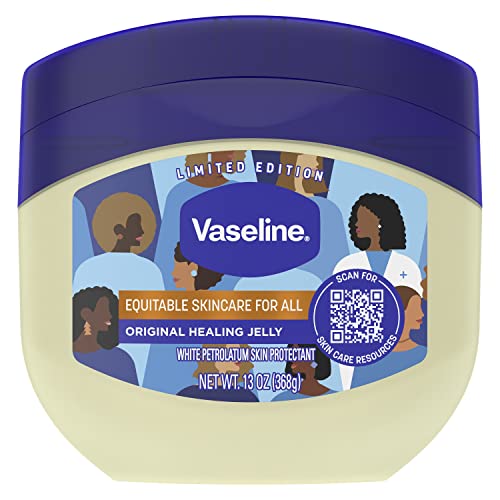
Vaseline Original Petroleum Jelly, 13 oz
The 1872 100% petrolatum tub dermatologists name when asked for their one-product desert-island answer. Cheapest in the lineup and the main ingredient in most $90 night balms.
The Serums and Treatments
This is the category where the price gap looks the most ridiculous on paper. A $7 niacinamide serum and a $90 niacinamide serum are usually the same molecule at the same dose. The three below are the ones luxury devotees stop pretending they need the splurge version of.
The Ordinary Niacinamide 10% + Zinc 1%
The Ordinary launched this serum in 2016 for $5.90 and built the whole brand on the idea that the ingredient is the product. Ten percent niacinamide is the maximum useful dose (the benefits plateau between 5% and 10% while irritation keeps climbing), and the same molecule shows up in $60 and $90 serums at the same concentration. The Ordinary is also PETA cruelty-free.
From the Hive
BEEs keep the niacinamide-and-zinc serum around because it cuts midday oil and fades post-acne marks over a four-to-six-week timeline. A small but persistent group of BEEs flush from the 10% concentration and either dilute it with a moisturizer or switch to The Ordinary’s lower-percentage Niacinamide 5% formula. The texture is slightly tacky compared to the luxury versions, and a few BEEs report pilling under silicone-heavy primers (the fix is letting it absorb fully before the next step). The dropper is also flimsy, but at $7 a bottle nobody is buying it for the packaging.
Plenty of devotees buy this serum in threes (one for the bathroom, one for the office desk, one for the suitcase), and three bottles still cost less than the Sephora version of one.
“I’ve been a The Ordinary girl for years now and always end up coming back to them even after trying new/more expensive products,” one user writes, and another deflates the $90 version of the same ingredient: “essentially niacinamide can be found in everything nowadays and at affordable costs. The Ordinary’s niacinamide serum is one of the most popular serums on the market.”
“I tried both bio oil and the ordinary niacinamide and zinc formula. personally the niacinamide and zinc worked wonders for my skin, AND it’s not super expensive!” is how converts sound. Not everyone stays: “at first I liked the ordinary niacinamide but now I’m noticing splotchiness after I use it?” Niacinamide agrees with most skin, not all of it.
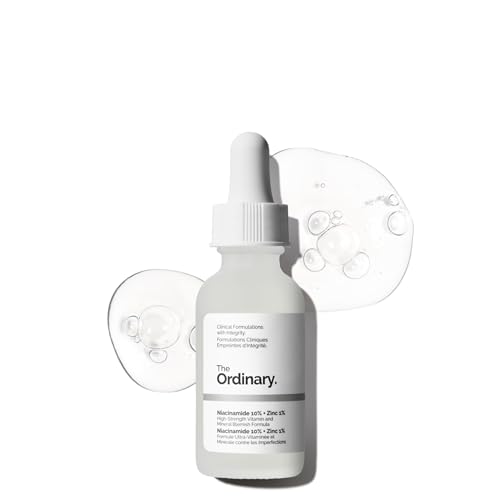
The Ordinary Niacinamide 10% + Zinc 1%, 30ml
The same niacinamide molecule the $90 luxury versions use, at the same maximum useful dose, in a no-frills glycerin-and-water base for under ten dollars. PETA cruelty-free.
Vichy Mineral 89
Vichy Mineral 89 is 89% Vichy thermal water with hyaluronic acid, somewhere between a toner and a serum, and it’s been the French pharmacy crossover beauty editors stock since 2018. The hyaluronic acid is the low-molecular-weight kind that sinks into the upper layers of skin instead of sitting on top.
On the kind of counter where La Mer and Augustinus Bader are the heavy hitters, Mineral 89 is the layer that goes on first. The serum-water does the surface hydration the richer creams can’t, and the richer creams seal that hydration in afterward.
“I use high end face care brands like ZO, Obagi, and Hale & Hush. But I swear that the only moisturizer that has worked wonders for me is Vichy Mineral 89,” one 45-plus user reports. Not everyone thinks the wow matches the price: “it worked fine as well but for the price it didn’t blow my mind.”
“Vichy mineral 89- honestly the most hydrating ever. Didn’t make me oily, beautiful texture. I’m in love,” writes a fan who then names the trap: “one major problem with this product is if u use it once, no other hyaluronic acid product/ hydrating product will seem good enough.”
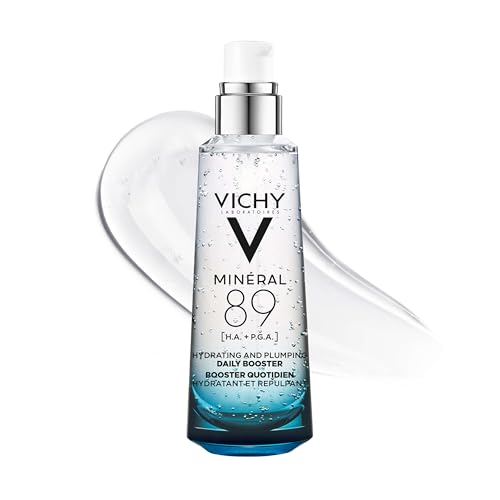
Vichy Mineral 89 Hyaluronic Acid + Polyglutamic Acid Serum, 2.53 oz
The 89% mineralizing thermal water + low-molecular-weight hyaluronic acid serum-water (now with polyglutamic acid added) that French pharmacy regulars and beauty editors have layered under heavier creams since 2018.
When someone asks for a hyaluronic serum without the $90 price tag, Mineral 89 is the usual BEE answer. It’s a watery serum rather than a thick gel (anyone expecting a thick Hada Labo-style gel will be surprised how watery it is), the pump can clog unless it gets wiped after use, and some BEEs say they won’t rebuy at $35 when The Ordinary’s hyaluronic acid costs half as much. The loyalists credit the mineralizing water for a smoother base than the cheaper bottles deliver.
Olay Regenerist Micro-Sculpting Cream
Olay Regenerist made headlines around 2009 when Good Housekeeping’s Beauty Lab tested it against luxury creams priced over $300 and the $20 jar beat all of them on hydration, smoothness, and fine lines. That result got cited for the better part of two decades, and it’s part of why women who already own three luxury creams keep buying this jar anyway. The formula is a peptide complex with niacinamide and hyaluronic acid.
Splurge-skincare buyers use this one as the daytime base layer under makeup and save the heavier evening creams for the nighttime routine.
The origin stories repeat. “In the past 7 years or so, I went nuts trying to fend off aging in my face and bought any and every expensive product out there. Quite by accident, I found that the cheap Olay Regenerist line is the best for my face, better than anything else I threw my money at before,” one reviewer wrote in a menopause forum, in a thread titled, perfectly, “Friggin Olay.”
An ex-insider is blunter: “Just buy Olay Regenerist instead on the basis of their substantiated claim that it works better than a $300 cream, ie La Mer. Source: used to work at P&G.” And the long-rotation crowd keeps landing in the same place: “I’ve used all sorts of expensive moisturizers including La Mer but I always always always come back to Olay Regenerist.”
This one is personal for me: Oil of Olay is what my grandmother used, forever. She was in the sun, and she still had moisturized, beautiful skin.
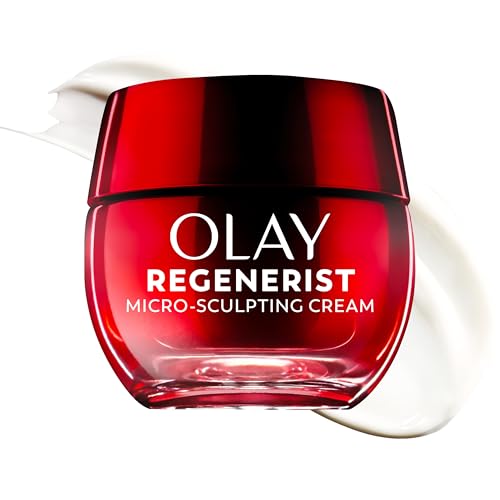
Olay Regenerist Micro-Sculpting Cream, 1.7 oz
The amino-peptide-and-niacinamide cream that outperformed luxury creams priced over $300 in a Good Housekeeping Beauty Lab clinical test, and has been on counters next to them ever since.
BEEs wear Olay Regenerist during the day, under SPF and makeup; it absorbs in under a minute. It is a perfumed cream, which fragrance-sensitive BEEs flag immediately, and some find it too rich for oily or combination skin. Longtime users also debate the formula’s many iterations; the current version runs lighter than the original; some buyers call that an upgrade and some miss the old heaviness.
SPF and Makeup
The last category is where “I’d actually buy this twice” becomes the bar. Sunscreen has to be the kind of product you’ll put on every single day, and the cheaper drugstore options are still the ones with the highest reapply rates. Makeup is more subjective, but a handful of drugstore picks have crossed over so completely that beauty editors no longer argue the luxury alternative is doing more.
Drugstore makeup is also where I started, the way most of us did. My mom didn’t let me wear makeup in the nineties, and I definitely got in trouble when I did, but I would put it on anyway, and finally she just gave up. I didn’t wear a lot. I liked it very natural, like I do today: Bonne Bell lip glosses, a Caboodles case, and whatever YM magazine said that month. Which, in the nineties, was basically some lip gloss and what is now my five-minute routine.
La Roche-Posay Anthelios Mineral SPF 50
Anthelios is the sunscreen you hear about the moment you corner a dermatologist at a party, and the mineral version (zinc oxide and titanium dioxide, no chemical filters) is the one recommended for sensitive, post-procedure, melasma-prone, and pregnant skin.
From the Hive
Among BEEs, Anthelios Mineral holds one specific title, the mineral sunscreen that doesn’t pill under foundation. The untinted version does leave a noticeable white cast, and BEEs with deeper skin tones consistently switch to the tinted version or to the chemical-filter Anthelios formulas (which are not sold in the U.S. with the same European filters, a recurring BEE frustration). The texture is also thicker than a chemical sunscreen, which BEEs with oily skin handle by mixing a pea-sized amount with a hydrating serum before applying.
Luxury-beauty devotees rotate this one in post-laser, after a peel, or during a melasma flare. $35 is the upper edge of drugstore, and the bottle lasts.
Anthelios is mine too. La Roche-Posay makes a great sunscreen, and it’s the one I really like.
“La Roche Posay Anthelios tinted is amazing. Feels like nothing on. But it is expensive. So I use it when I want an elegant sunscreen finish,” a 47-year-old managing melasma explains, and a sensitive-skinned fan adds the practical note: “causes no burning sensation, and the formula feels like velvet. I do need to put a little moisturizer on underneath first.”
The multi-year wearers get specific about why they stay: “LRP Anthelios Fluid SPF50 – I’ve used this for years. Some Japanese / Korean sunscreens are more cosmetically elegant, but I find that I get fewer dark spots in summer when I wear LRP – I assume the UVA protection or sweat resistance is better.”
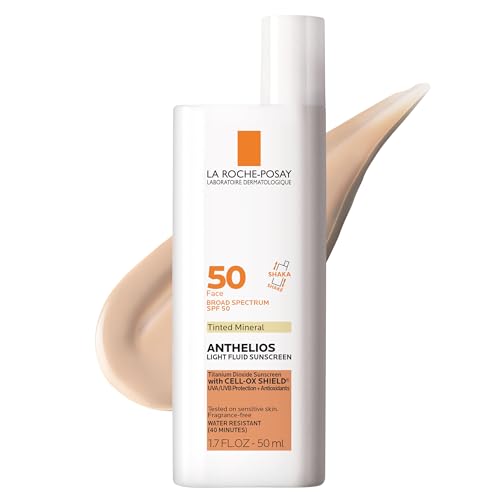
La Roche-Posay Anthelios Mineral Tinted SPF 50, 1.7 oz
The titanium dioxide + zinc oxide mineral sunscreen dermatologists hand to sensitive, post-procedure, and melasma-prone skin. The tinted version blends without a white cast.
Maybelline Sky High Mascara
Sky High launched in late 2020 with a curved wand, and within six months Vogue, Allure, and InStyle were running the same headline: the $13 mascara that does what Lancôme Lash Idôle does for $32. The formulas aren’t identical, but the payoff (long, separated lashes that hold a curl all day) is close enough that editors have routinely picked the $13 tube in side-by-side tests.
From the Hive
Sky High gets passed around the BEE community as the entry-level Lash Idôle, and most never find a reason to upgrade. The downsides BEEs name most: the wand is bulky and can be hard to maneuver on lower lashes or in the inner corners, and a portion of BEEs (especially those in humid climates) report flaking after seven or eight hours. The brush deposits product faster than it builds, so BEEs who want a thicker fluttery look layer it with a second mascara or with falsies. For everyday wear, it is one of the most-emptied mascaras across the BEE community at any price.
Backstage makeup artists reach for it when they need clean lengthening without falsies.
One confession, posted in the Sephora subreddit under the title “I’m probably going to get dragged for this but………”: “Recently, I tried Lancome Lash Idole and Glossier Lash Slick after hearing rave reviews. Went straight back to the Sky High. The brush is similar and it works better for half the price!” Removal is the complaint that comes up most: “i’ve cried in it and even fallen asleep with it on and it looks perfect after, but it’s a bit difficult to take off.”
Another switcher came for comfort, not price: “I love how Lash Idole makes my lashes look, but I noticed that my eyes become dry and irritated after a few hours. I switched to Maybelline Sky High and have no problems. I think Sky High looks better for a fraction of the price and zero irritation.”
I have not tried Sky High myself. The mascara I use and like is the tube mascara from Tarte.
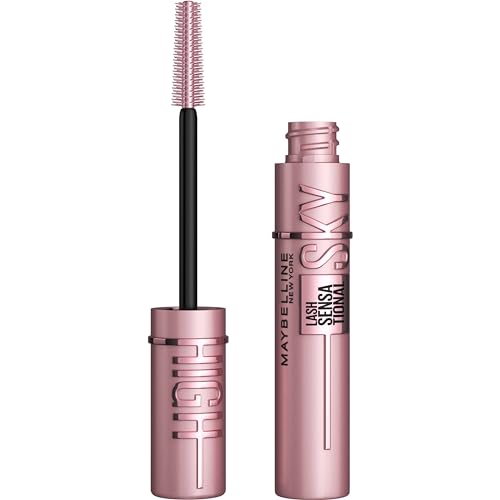
Maybelline Lash Sensational Sky High Mascara
The 2020 bamboo-fiber-and-curved-wand mascara that beauty editors have picked over Lancôme Lash Idôle in side-by-side tests since launch. $13.
e.l.f. Halo Glow Liquid Filter
Halo Glow hit shelves in 2022 and went viral within weeks as the $14 dupe for Charlotte Tilbury’s Hollywood Flawless Filter ($49). The comparison holds up better than most viral dupes: editors at Allure, Vogue, and InStyle have all run head-to-heads concluding the two are functionally similar. The dupe falls short on shade range, eight shades to Charlotte’s twelve.
From the Hive
Halo Glow tops the e.l.f. repurchase list with BEEs, and the most common review note is some version of “I cannot tell the difference from the Charlotte Tilbury.” The trade-offs BEEs flag are the shade range (the medium-light and light-medium shades are the safest bets, the deeper end runs slightly red), the finish (very glowy, not satin, so oily skin will need a setting powder), and the dropper applicator, which deposits enough product for the whole face in one squeeze if BEEs are not careful. The bottle is small enough that heavy daily use will empty it in eight to ten weeks.
Luxury-beauty devotees keep this on the counter even after the Flawless Filter bottle is empty, because the $35 saved on the repurchase goes further toward an Augustinus Bader refill.
“I only ever had a mini of the CT liquid Flawless Filter but when I compared it to the Elf Halo Glow Filter it was identical! Only issue is it starts to smell after a few months,” one side-by-side tester reports. The most consistent criticism comes from reviewers with fair skin: “They’re all yellow or orange. The actual CT Flawless Filter has a much better shade range.”
And e.l.f. is great. I think it’s one of the best brands out there, whether you’re shopping at Sephora or the drugstore.
Some don’t even bother with the hedge: “Elf halo glow is better than charlotte tilbury flawless filter imo.”
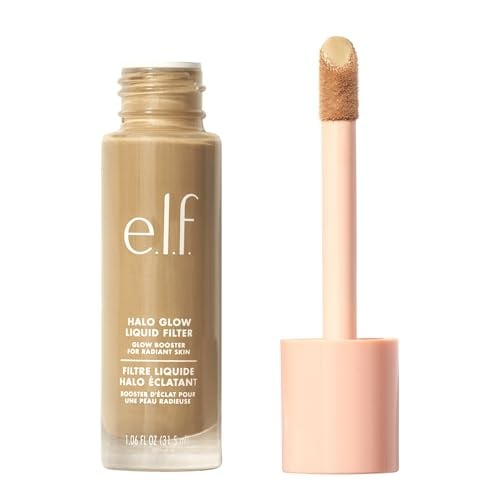
e.l.f. Halo Glow Liquid Filter, 1.05 oz
The 2022 hybrid skin tint + highlighter Vogue and Allure picked as the head-to-head equivalent of Charlotte Tilbury’s Flawless Filter at one-third the price. Certified cruelty-free (PETA).
e.l.f. Power Grip Primer
The Power Grip Primer is the e.l.f. answer to Milk Makeup’s $36 Hydro Grip, and the side-by-sides since it launched in 2022 mostly conclude the formulas are nearly identical: gel-based, niacinamide, the same tacky finish that grips makeup all day. The Power Grip is $10, and the case for paying the extra $26 has gotten thinner every year.
From the Hive
Power Grip keeps reappearing in BEE repurchase posts under the $20 line. The tackiness is the love-it-or-leave-it feature, daily wearers replace the small bottle every two to three months, and BEEs with very oily skin report some slip after eight or nine hours.
At $10, running out before a trip is never a real problem, so women pack it next to their Westman Atelier and Pat McGrath bases without thinking twice.
“I also bought like five of the power grip primers because I’m obsessed. Love it better than Milk’s hydro grip!” comes from one commenter who buys backups, and a hedged review agrees: “it’s basically a slightly less concentrated dupe of the milk hydro grip. I had both and honestly preferred the elf.”
The texture is the dividing line, and the haters don’t mince words: “I tried milk hydro grip and elf power grip. Elf is just a gluey gummy disaster.”
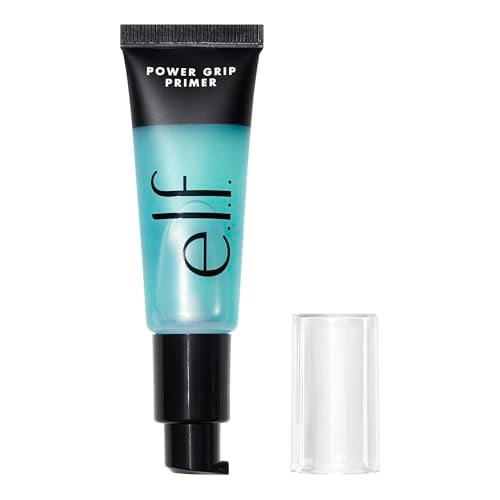
e.l.f. Power Grip Primer, 0.811 oz
The 2022 niacinamide-and-gel primer beauty editors have repeatedly named as the better buy versus Milk Makeup’s $36 Hydro Grip. The formulas are nearly identical, the price is one-third. Certified cruelty-free (PETA).
A cruelty-free mark means the brand is certified by PETA, Leaping Bunny, or both at the time of writing. A missing mark doesn’t mean a brand tests on animals; it just means the brand isn’t certified by these programs.
What Our BEEs Are Buzzing About
Here’s what the beauty community is saying about these products:
Want to become a Beauty Empties Expert?
BEEs get free products to test, exclusive discount codes from our brand partners, and live access to The Hive sessions with dermatologists and beauty editors. Spots are limited and hand-picked.
Related Articles
- The Best Moisturizers for Oily Skin From $15 to $70
- Skincare Ingredients You Can and Can’t Mix (and the Myths That Aren’t True Anymore)
- 8 Old-School Beauty Products That Are Still the Best Around (Because They Actually Work)
- Struggling with Skin Issues? Here Are the 6 Most Common Problems and the Products That Solve Them
- 4 Derm-Approved SkinCeuticals Swaps That Save You $508