8 Natural Ways to De-Puff Your Face, From an Ice Dunk to How You Sleep

Some mornings we wake up looking rested and glowing. Other mornings, well, we don’t look our, um, best. Your eyes look a little smaller, your jawline a little softer, your cheeks look like you’re saving food for winter. LOL. If you find yourself looking a bit puffy, it’s not in your head. (Well, it sort of is). What you’re seeing is mostly fluid. It’s water your face hangs onto overnight (it’s sentimental that way) and it’s because of all the usual suspects. A salty dinner, a glass of wine or two (or three), a short night of sleep, an upcoming period, allergies, and even plain dehydration, which makes your body cling to water instead of flushing it. Which sort of begs the question: Is there anything that doesn’t make your face puffy?
If you buy through our links, we may earn a small commission at no cost to you. As an Amazon Associate, we earn from qualifying purchases. Our policy
The good news is that a puffy face responds really well to small, mostly free changes, and almost none of them need a product. Below are the best ways to bring puffiness down naturally, plus the quick fixes for the mornings you wake up looking more swollen than you’d like.
One thing to get straight first: no serum is going to de-puff your face. The fluid that’s making you puffy sits deeper than anything you can put on top of your skin, so the things that actually work go after that instead. Cold water, movement, sleep, and saying no thank you to that second handful of chips.
1. Drink a Big Glass of Water First Thing
It seems counterintuitive to drink water when your face is retaining so much of it already, but dehydration is another sneaky cause of waking up puffy. When your body detects that it is low on water, it retains as much as it can, and your face is typically one of the first places it shows. Plus, you’ve gone roughly seven or eight hours without a sip, so you’re probably at your most dehydrated right when you’re looking in the mirror. A full glass first thing tells your body it can let go of what it was holding, and it gets your system moving for the rest of the day.
One commenter swears by a one-two punch in the morning: “i too wake up with a puffy face. i do cold water on my face in the morning. secondly, this is anecdotal, but i’ve noticed after my first cup of black coffee my face de-puffs and becomes slimmer.”
It’s the cheapest fix here and the one most worth building into a routine, because steady hydration does more over a few weeks than any single morning trick. BEEs who keep a glass on the nightstand and finish it before coffee say it’s the change they notice most, especially after a salty dinner.
“Sometimes with potassium salt if my face is especially puffy looking,” as one commenter puts it.
2. Hit Your Face With Something Cold
Cold is the quickest method to lower a puffy face and this is the only universally agreed upon quick fix among all dermatologists. The cold causes the blood vessels in your face to constrict, thereby reducing inflammation and excess fluid in your face instantly. According to Dr. Sam Ellis (a Board-Certified Dermatologist in Northern California) the most effective type of cold treatment for reducing puffiness is also the least glamorous: In college Dr. Ellis and her classmates would fill a bowl with ice water and submerge their faces for a few seconds. The sudden cold does two things at once: it brings down the swelling, and it settles your nervous system.
From the Hive
The buzz from our Beauty Empties Experts. Sign up to join!
The ice roller is one of the most-used tools among our BEEs for exactly this, and the daily users keep it in the freezer so it’s ready before they’ve had coffee. The diehards still swear by the full bowl-of-ice-water dunk on a really swollen morning, but most find the roller does the job without the drama. The shared reminders are to keep it gliding instead of pressing it into one spot, and to barely touch the under-eye area, since that’s where too much pressure does more harm than the cold does good.
The community method is even simpler: “Gently scoop it onto your face. It wakes you up and helps with puffiness. Makes my skin glow too.”
If dunking your face in ice water at 7 a.m. is a hard no (fair), an ice roller or a set of cold globes gets you most of the way there without the gasping. Keep it moving instead of parking it on one spot, since too much cold in one place can irritate the skin, and stay gentle around the eyes, where the skin is thinnest. A roller handles both, and you get a little massage out of it.
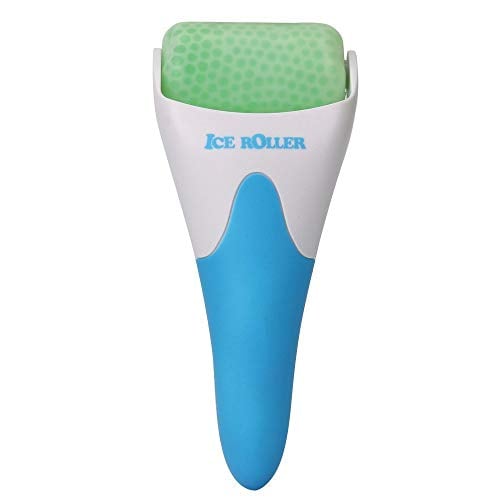
ESARORA Ice Roller
The easy way to get the cold without dunking your face in a bowl. You keep the metal head in the freezer and roll it over your face on puffy mornings, which delivers the vessel-tightening cold and a bit of drainage-friendly massage in one pass. It’s a few dollars, it lasts forever, and the rolling shape naturally keeps you from over-chilling one spot. Two caveats: the effect is temporary, more of a reset than a cure, and you have to remember to leave it in the freezer, so it lives there, not in a drawer. Go light around the eyes.
3. Move the Fluid With a Quick Massage
Lymphatic drainage massage is all over social media right now, but at its core it is just encouraging stuck fluid to move again. You do not need an expensive tool to do it. Your fingers will work just fine. So will a gua sha tool or an ice roller (from the previous point). All you have to do is sweep gently from the center of your face outward and downward towards your neck. Dr. Andrea Suarez (board-certified dermatologist behind YouTube channel ‘Dr. Dray’) states bluntly that there is limited scientific evidence supporting facial massage on its own. She will state that massage is safe; it aids in the physical movement of stagnant fluid away from your face, which your body may eventually clear; and massage is calming, which decreases stress hormones that contribute to your retention of fluids. Similarly, simply getting up and walking uses gravity and circulation to drain fluid away from your face. Tools are not necessary for either of these options.
“It’s a gentle massage using a stone tool that helps with lymphatic drainage, reducing puffiness and improving circulation. A few minutes a day can make a noticeable difference,” one commenter says of gua sha.
Whatever you use, stay gentle, especially near the eyes, where pressing hard does nothing helpful. If you go the gua sha route, the one real rule is to keep the tool clean, since you’re dragging it across your skin every morning.
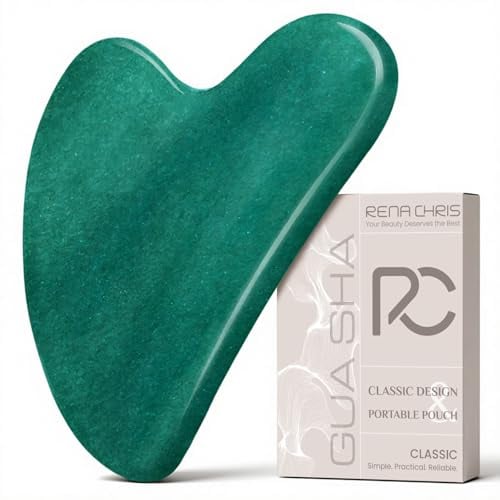
Rena Chris Jade Gua Sha Tool
For the massage half of de-puffing, minus a big spend. A flat jade stone is all you need to sweep fluid from the center of your face out toward your ears and down your neck, and this one costs about as much as a coffee. It feels good, it gives your morning a two-minute ritual, and it pairs naturally with a few drops of facial oil so it glides instead of tugging. Be clear-eyed about what it is, though: the evidence that gua sha de-puffs is thin, the results are short-lived, and most of the benefit may come from the movement and the few minutes of calm. Keep it clean and keep the pressure light.
BEEs are split on gua sha in a telling way. The ones who love it credit the daily ritual and the few quiet minutes as much as the de-puffing, while the skeptics say a morning walk gets you there for free. Either way, the group’s one firm rule is to wipe the tool down so you’re not running yesterday’s residue across your skin.
4. Cool the Under-Eye Area
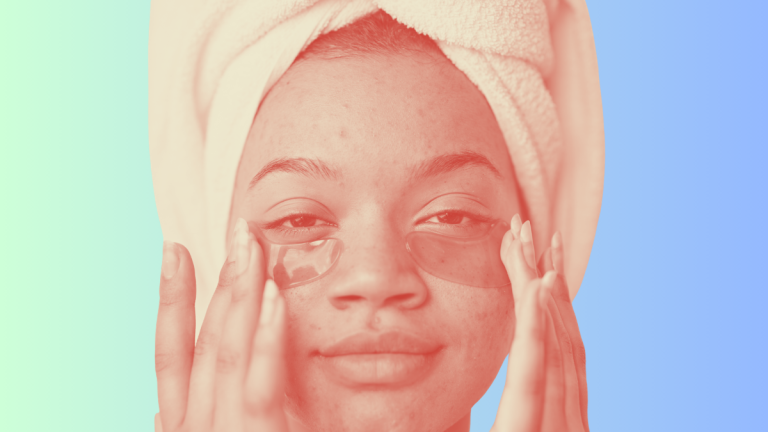
Under your eyes is where puffiness is typically seen the earliest and worst because the skin is very thin and therefore excess moisture looks like a large bag. In addition to helping to eliminate puffiness, applying a cold compress to this area also has another benefit. Dr. Dray stores hydrogel eye masks in her refrigerator so she can apply them ice-cold, thereby combining the effects of cooling and resting. Applying a cool wet washcloth to this area also works quickly and easily; the use of a sliced cucumber provides similar results due to its cooling properties and because of the thinness of the skin beneath your eyes.
From the Hive
BEEs treat fridge-cold eye patches as their before-an-event move, the thing they put on while doing their hair so their eyes look more awake by the time they leave. The consensus is that the cold matters as much as the patch, so the tub lives in the refrigerator door. Nobody pretends they last past the morning, but for photos or an early meeting, they deliver.
Patches have the edge over a washcloth because they stay put while you get ready, and many are soaked in hydrating ingredients (sometimes caffeine) that make the area look smoother for a few hours. They’re not fixing anything structural, and the effect fades, but for a morning when your eyes look tired and you’ve got somewhere to be, they’re a reliable twenty-minute reset.
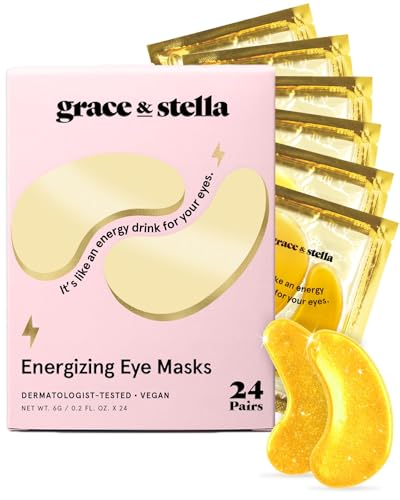
grace & stella Under Eye Masks
Keep a set in the fridge for puffy-eye mornings. These hydrogel patches are the cult drugstore-priced pick for a reason: chilled in the refrigerator, they cool and smooth the under-eye area while you do the rest of your routine, and a tub of them works out to pennies a pair. They sit flush enough to stay put for fifteen or twenty minutes, and the gel leaves the skin looking plumper and less creased. The limits are the same as any patch, since the effect is temporary and won’t touch a structural bag, and a few people find they slide if you talk or move around too much. Lying still for the full time is the move. Certified cruelty-free (Leaping Bunny).
5. Watch the Salt, Lean Into Potassium
If you awaken looking swollen after eating out or having eaten at a restaurant, it is likely due to excessive salt intake. Salt draws water into your body’s tissues; thus, if you consume too much salt during dinner, your body will retain water overnight, resulting in a larger face the following morning. The issue with salt is that it is hidden in foods that have little or no apparent salt flavor such as deli meats, bread products, sauces, frozen dinners and nearly all items purchased from restaurants. You do not necessarily need to measure grams of salt or restrict your consumption of these items. Just being aware of the salt in your food, and easing off it in the evening, makes a visible difference by morning.
“If I eat fast food or something really salty and greasy I wake up the next morning with a slightly puffy face,” is how one commenter describes the pattern.
The flip side is potassium, which works against sodium. The more potassium-rich food you eat, the less salt your kidneys hold onto, so you retain less water. Dr. Ellis points to bananas, avocados, potatoes, and coconut water as easy ways to get more. None of this is about a strict diet, and cooking for yourself instead of leaning on packaged and restaurant food is the biggest lever, since that’s where most of the hidden sodium is.
“Eat bananas for potassium and coconut water for electrolytes. Drink more water than usual, and icing your face in the morning helps with puffiness,” one commenter advises.
6. Sleep on Your Back, Head Slightly Up
Where you rest your face while sleeping influences puffiness more than you would believe. Sleeping on your stomach causes gravity to draw fluid into areas of your face for extended periods of time; hence, why individuals who sleep on their stomachs tend to experience the highest levels of puffiness in the mornings. According to both dermatologists, the best position to fall asleep in is on your back with your head slightly elevated so that fluid flows downward towards your heart rather than collecting in your cheeks and under your eyes. Dr. Dray claims that training herself away from sleeping on her stomach years ago had a noticeable impact on her puffiness levels in the morning.
From the Hive
Of every habit in this article, switching to back-sleeping is the one BEEs say changed their morning face the most, more than any tool or patch. The converts mostly used a contoured pillow to get there, and the pillow-under-the-knees trick comes up again and again as what finally made lying on their back bearable. The common gripe is the price of the fancier beauty pillows, and the week or two of feeling like you’re sleeping wrong before it clicks. A few say a weighted blanket over the chest was what helped them stop flipping onto their stomach at 3 a.m.
Training yourself to change how you sleep is more difficult than it seems; however, there are a few techniques that can assist. Dr. Dray places a pillow under her knees, similar to what spa tables have, allowing her to lie comfortably on her back. Dr. Ellis shared a patient suggestion to utilize a weighted blanket placed over her arms and torso; many people struggle to relax on their back because they miss the sense of being wrapped securely. A pillow designed to elevate your head and hold you on your back takes most of the willpower out of developing the new habit.
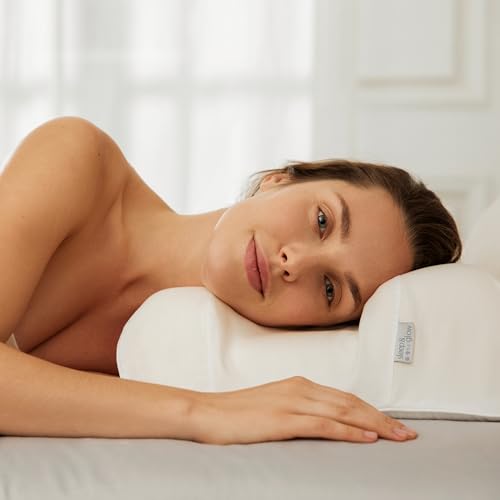
SLEEP & GLOW Omnia Beauty Pillow
Built to keep you on your back with your head elevated. This is the pillow shaped to train you out of face-down and side-sleeping, with a contour that holds your head slightly raised so fluid drains overnight instead of pooling, and side cutouts meant to keep your cheeks off the pillow. It’s the one Dr. Dray uses, and back-sleepers tend to notice less morning puffiness and fewer sleep creases within a few weeks. The caveats are real: it’s a genuine investment compared to a regular pillow, and there’s an adjustment stretch while your body gets used to the firmer, structured shape. If a back-sleeping habit is the goal, it does the heavy lifting.
7. Give Topical Caffeine a (Small) Try
This is the one thing you put on your skin that might actually help, with the emphasis on might. Both dermatologists land in the same place: caffeine is the single ingredient with a shot at temporarily de-puffing, especially under the eyes, because it tightens blood vessels much like a cold compress does. Both are clear the effect is mild and short-lived, and Dr. Ellis is upfront that the data behind it is thin.
It won’t reshape your face or erase a real bag, but it’s cheap and low-risk, so you’re not gambling much to find out whether your skin responds. Dr. Ellis points to The Ordinary’s Caffeine Solution as the no-nonsense way to test it without spending eye-cream money.
“The Inkey List Caffeine Eye Cream helped a lot with puffiness and slight dark circles for me,” one commenter reports of the drugstore version.
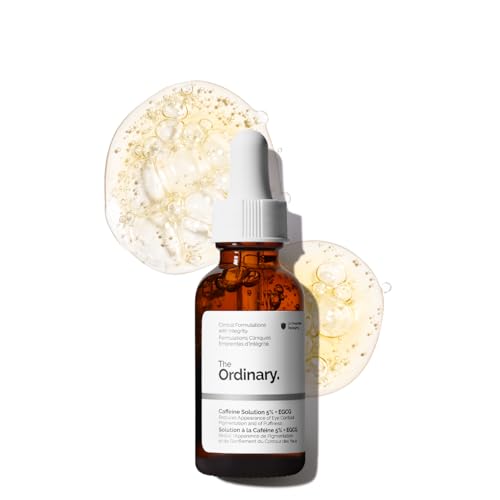
The Ordinary Caffeine Solution 5% + EGCG
The one topical with a real shot at helping, for a few dollars. At 5 percent caffeine plus EGCG (an antioxidant from green tea), this is the inexpensive way to find out whether topical caffeine does anything for your under-eyes, and a single small bottle lasts ages. Patted on in the morning, it can give the area a slightly tighter, less puffy look for a few hours. Be realistic about it: the effect is temporary and modest at best, it won’t fix dark circles or a structural bag, and the watery formula can feel a touch tacky until it dries, so let it set before concealer. Certified cruelty-free (PETA).
BEEs put this one in the nice-to-have column rather than the must-have one. The fans like it for a temporary morning tightening and keep it in the fridge so it goes on cool, which probably does as much as the caffeine, while plenty of others tried it, shrugged, and went back to a cold roller.
8. Get Allergies and Congestion Under Control
If your puffiness is worst in spring or whenever your nose is stuffy, allergies may be the real driver. Congestion backs up fluid in the small vessels around your face, and all the rubbing and sniffling adds irritation right where the skin is thinnest. Both dermatologists flag this as an overlooked cause, and the fix is to treat the allergies, not the face.
From the Hive
The BEEs who deal with seasonal allergies are the ones who connected the dots here, realizing the puffy eyes they fought every spring were really about congestion, not skincare. Once they stayed consistent with an allergy medicine and added a saline rinse, the morning swelling eased in a way no cream had managed. The note they pass to anyone new to rinsing is the water rule, since the distilled-only step is non-negotiable for safety.
For chronic stuffiness, rinsing your sinuses can help, whether with a neti pot or a saline rinse, by clearing the congestion that’s holding fluid in your face. One real safety note: always mix the rinse with distilled, sterile, or previously boiled and cooled water, never straight from the tap. It’s not the prettiest step here, but when congestion is what’s behind your puffiness, nothing else comes close.
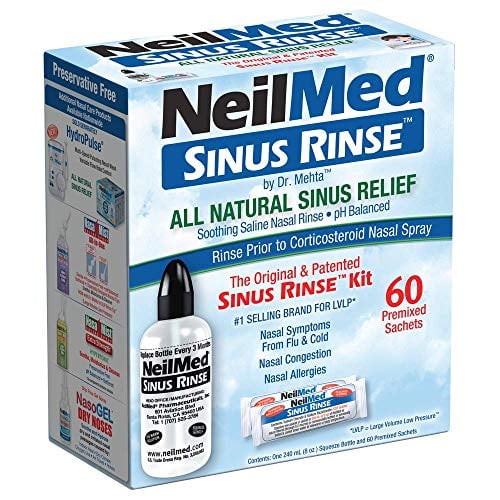
NeilMed Sinus Rinse Kit
For the puffiness that’s really about congestion. When a stuffy nose is what’s keeping fluid pooled in your face, a saline rinse clears the congestion at the source, and this is the drugstore standard that comes with pre-measured packets so you get the salt ratio right. Used a few times a week through allergy season, it can take down the under-eye puffiness that no eye cream was ever going to reach. The one rule that matters: only ever mix it with distilled, sterile, or boiled-and-cooled water, never tap. It’s a clinical little tool rather than a beauty one, but when congestion is the cause, it outperforms anything you’d put on your skin. Certified cruelty-free (PETA).
One last thing worth knowing, because it surprises people: sometimes a puffy face isn’t about last night’s dinner at all.
The Buzz
Dr. Ellis has a surprising one for her patients: old hyaluronic acid filler can hold onto water and cause chronic puffiness, sometimes years later. Filler placed near the eyes a decade ago, back when everyone assumed it dissolved within a year or two, can linger and keep holding water. The fix is an enzyme called hyaluronidase that dissolves it, and she says patients are often shocked how much their puffiness improves.
A cruelty-free mark means the brand is certified by PETA, Leaping Bunny, or both at the time of writing. A missing mark doesn’t mean a brand tests on animals; it just means the brand isn’t certified by these programs.
What Our BEEs Are Buzzing About
Here’s what the beauty community is saying about de-puffing a face naturally:
Want to become a Beauty Empties Expert?
BEEs get free products to test, exclusive discount codes from our brand partners, and live access to The Hive sessions with dermatologists and beauty editors. Spots are limited and hand-picked.