6 Swaps That Bring the Glow Back to Skin Over 50

These days, “glow” is its own product line. You can find a serum for it, a primer, some drops, a powder; in fact, there are likely at least three of them in your bathroom cabinet. We put our money down on them with the hope they’ll restore that healthy, lit-from-within effect that seems to disappear the older we get.
If you buy through our links, we may earn a small commission at no cost to you. As an Amazon Associate, we earn from qualifying purchases. Our policy
But a glow is really just an optical effect. When skin is even-toned, well-hydrated and smooth, light has a clear path. If the skin is uneven or rough, the light scatters, which is what we’re looking at when our skin seems flat.
For the most part, we can point to a few well-meaning routines that we started years ago, when our skin was younger and more forgiving, and we’ve been stuck using them to this day.
New York dermatologist Doris Day, MD (yes, that’s her name!) described the pile-up this way: “It’s rarely one thing, it’s a stack. Collagen and elastin drop, so the scaffolding gets weaker. Oil and water content fall, so the glow dims. Cell turnover slows, so dullness lingers. Blood flow to the skin decreases, so that lit-from-within color fades.” She added that no single one of those screams “tired” on its own, “but together they read as a different face in the mirror.”
Below are the six most common routines actually working against your skin’s glow, and what you should do instead.
The Buzz
The numbers behind that are steeper than most of us realize. According to the American Academy of Dermatology, women’s skin loses about 30% of its collagen in the first five years of menopause, then roughly 2% a year for the next 20. Oil output drops on a similar schedule: a 2002 study in Dermatology found that in women not taking hormone therapy, sebum production declined significantly across that first decade. So the surface really has changed. The routine sitting on top of it usually hasn’t.
1. Reaching for the Scrub When You See Some Dullness
It’s easy to reach for an exfoliant if your skin is feeling lackluster and blugh. And the reason behind it sound legit: cells don’t turn over as quickly as they did at 30, so sloughing some off gives you a brighter face for a day or two. You think it’s working so you add some acid pads, grainy exfoliating face wash, and maybe even an exfoliating brush all in one week.
But come the following week, your skin will start to feel all that stuff. It feels taut, has a hint of redness and looks just as flat as before. That only makes you want to do it all again! After a while, your face ends up in worse shape than if you had left it alone. It must just be the moisturizer, you think.
Susan Massick, MD, associate professor of dermatology at Ohio State University College of Medicine, names this as the first thing she sees going wrong. “A common mistake is over-exfoliating, which leads to dry, irritated, and dull-appearing skin,” she said. Her instruction is short: “Back off or do it less frequently.”
Our BEEs (Beauty Empties Experts) describe the confusion that comes with this whole train of thought. One put it this way: “I have had half of the people tell me I am dehydrated, some tell me I need to exfoliate … then the next day I’m told I’m exfoliating TOO much. I really don’t know.”
What to Do Instead: Try one exfoliating product (not three) once or twice a week. Then, give it a month to see if you notice a difference. Board-certified dermatologist Donna Hart, MD, sets the bar even lower for dry skin, recommending you “choose a gentle AHA such as lactic acid once weekly.” On skin over 50, something like lactic or mandelic acid will serve you better than the heavy-handed options, simply because your face doesn’t rebel to it as quickly, which means you can actually keep using it.
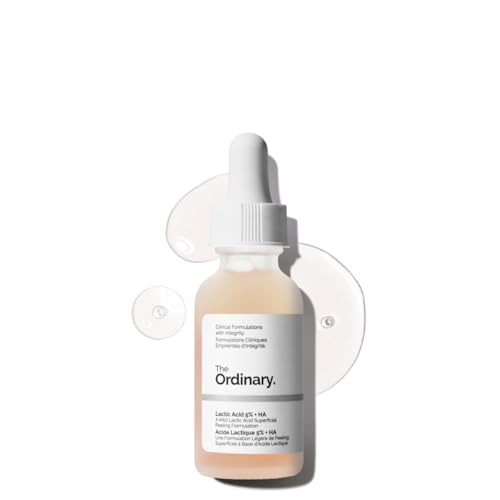
The Ordinary Lactic Acid 5% + Hyaluronic Acid 2%
The mildest useful strength, which is the point. At around $8 it’s cheap enough to use once a week and not feel obliged to get your money’s worth twice as often.
2. Your Cleanser Is Doing More Than Cleaning
We were taught to get our faces clean in our acne-prone years, when the idea was to remove every trace of oil and live for that squeaky feeling. But as we enter our 50’s, our faces just don’t produce as much oil, which means that type of cleansing is also taking the protective layer that keeps water in along with it. Now whatever you put on after has to work double-time to make up for it.
Hot water and the old habit of washing twice a day don’t help. For many, a rinse in the morning and a good one in the evening is enough. A balm or milk-type cleanser is far superior; it leaves the face soft and clean, not tight. Hart lists “tightness, dryness, or a thin or papery feeling” among the signs that a routine has gone too far, and a cleanser is often where it starts.
From the Hive
The buzz from our Beauty Empties Experts. Sign up to join!
The double-cleanse question comes up constantly, and the BEEs who dropped it rarely go back. “No one ever talks about how double cleansing is stripping so I kept thinking something was wrong with me,” one wrote, “but every oil, balm, and even micellar water gives me the same result.” Another found the culprit was the product she trusted most: “It turns out Cetaphil’s Daily Cleanser was too drying for me.” The best way to see if a product is working for you or not is to start (or stop) for two weeks and see how your skin reacts.
What to Do Instead: Stop washing your face in the morning, and see if you notice a more hydrated complexion. Often a splash of warm water is enough to start the day. Then at night, use a hydrating cleanser to remove makeup and sunscreen. I personally find a balm followed by a gentle jelly cleanser is a great combo, though as you can see above some of our BEE’s don’t love a double cleanse. You have to find out what works best for you via trial and error.
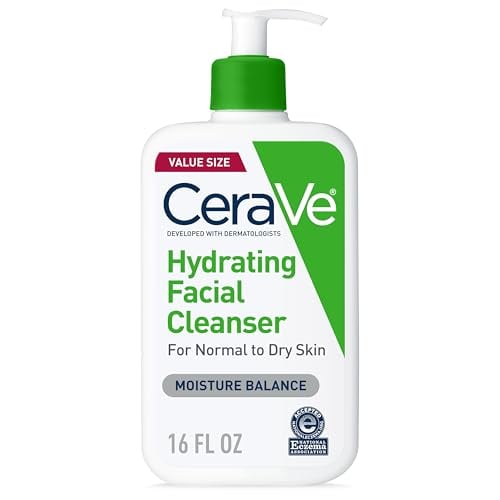
CeraVe Hydrating Facial Cleanser
Non-foaming, fragrance-free, and built around ceramides and glycerin. The 16-ounce pump lasts most of a year, which is part of why it keeps turning up in finished-product posts.
3. Applying Your Moisturizer When It’s Too Late
Most of us wash our and let it dry a few minutes before we put on any cream. But it’s actually the water that does the plumping and helps light reflect, giving you that glow. A moisturizer on completely dry skin isn’t doing nearly the heavy lifting you think it’s doing. Instead, apply it while your face is still a bit wet to get the most out of it.
Then there’s what’s in the jar to begin with. The lotion you were using at 35 isn’t cutting it, because it was made for skin with a much higher oil output. And being lightweight isn’t an asset once you’re in your 50s. The goal is to draw in water, and that’s where ingredients like glycerin and hyaluronic acid come in, followed by something richer over the top at night to seal it in. The AAD makes the same call for menopausal skin, noting that “a moisturizer with hyaluronic acid or glycerin can be especially helpful.”
One caveat our BEEs raise often, because it trips people up: the damp-skin rule is for hydrating products only. “It is actually better to apply hydrating products on damp skin,” one explained, “but definitely not any chemical exfoliant, nor retinoids.” Acids and retinol go on a dry face, or the sting is memorable.
Also, when it comes to moisturizers, you might be tempted to use face oil in its place, but it’s not a like-for-like. Oil is great at holding moisture, but it can’t put water into skin that has none to give. On a dry face, it only has the effect of making the dryness more visible. So instead, think of it has a two step process if you want to try oil: moisturizer THEN oil to help seal it in.
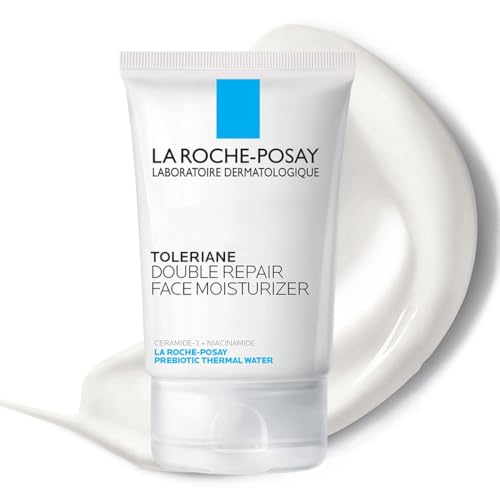
La Roche-Posay Toleriane Double Repair Face Moisturizer
Ceramides, glycerin and niacinamide in a texture that works over damp skin without pilling. It’s the one dermatology offices hand out most often when someone’s barrier is having a moment.
4. Dullness Isn’t the Same as Dryness
They can look the same in the mirror, but they’re two different issues. If you put on some moisturizer and your complexion still appears a bit gray or muddy in the light, you’re likely dealing with pigment. Years of freckles, sun spots and uneven tone have a way of blurring together so your whole face seems one shade too dim.
The sad news is a good cream won’t truly fix that. You need vitamin C or niacinamide in the a.m.. Also, you have to be patient with them; we’re talking months, not weeks. Vitamin C works on two fronts here, neutralizing the oxidants that come with sun exposure and interfering with tyrosinase, the enzyme that controls how much pigment your skin makes, according to a 2017 review in Nutrients.
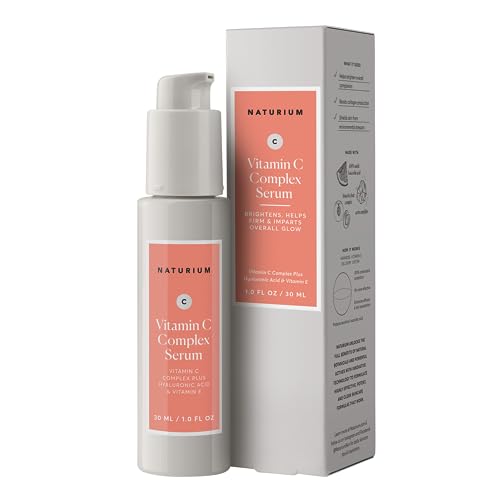
Naturium Vitamin C Complex Face Serum
A gentler vitamin C complex rather than straight L-ascorbic acid, which matters if the strong stuff has stung in the past. Under $20, and one of the serums BEEs name most for evening out tone.
And don’t let up on the sunscreen when the weather cools down. It’s the only thing standing between you and new spots while you’re out there trying to make the old ones go away, and it’s the one step with a randomized trial behind it: in a 2013 study published in Annals of Internal Medicine, the group using sunscreen daily showed no detectable increase in skin aging over four and a half years, and 24% less skin aging overall than the group who used it whenever they felt like it.
Existing spots are stubborn, though, and the BEEs are blunt about it. “I used this protocol religiously for 3 months and it’s done nothing to change my sun spots at all,” one reported. “I will say, it has made my skin smoother, but the appearance of the spots is exactly the same.” Tone evens out long before individual spots fade, and some spots need a dermatologist and a laser rather than a serum.
I personally have not had much luck with Vitamin C serums. I don’t notice a big difference even after consistent use, which probably means I need to consider a laser in the near future.
And remember, no matter which serum or cream or sunscreen you use, don’t stop at your chin! My point of view is that your face stops at your décolletage, so every cream and sunscreen I use goes all the way down to there.
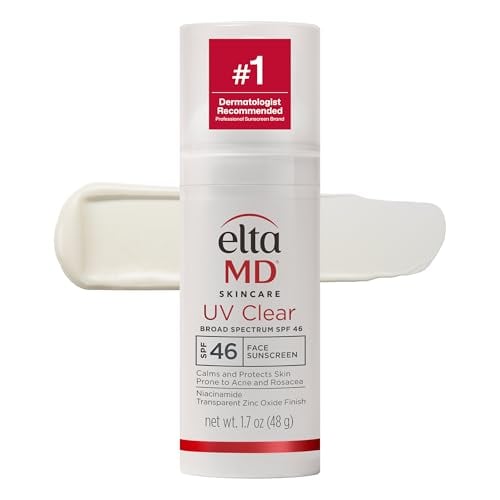
EltaMD UV Clear Broad-Spectrum SPF 46
Zinc-based, no white cast worth complaining about, and light enough that it doesn’t fight whatever you put on next. The one that survives the most routine overhauls.
5. Don’t Let Retinol Get the Better of You
If you’re used retinol before you know: that first month is not pretty. There’s the flaking, the tightness, and a point in time where you want to throw out the bottle because your skin looks worse than when you started. Week three is when some people throw in the towel on retinol and give up on what is one of the best skin treatments you can use.
Then there’s the opposite effect: overdoing it. Putting a prescription-strength product on your face every evening is a surefire way to get a red, irritated face for the next couple of months. This mistake shows up in our in our anti-aging mistakes after 50 as well, and it’s the more expensive one to recover from.
From the Hive
The BEEs who stuck with it all say the same thing about the timeline. “It will help with the congested pores and the dull skin look we get as we age,” one wrote. “Be patient with it though. It’s taken me months of consistent use to see results.” That matches how the research is set up: the trials measuring what retinoids do to sun-damaged skin typically run 12 to 24 weeks before anyone counts the results.
What to Do Instead: Be methodical. Start with a pea-sized dollop twice a week, put it on top of your moisturizer to let your skin get used to it, and go from there. I personally like to mix my retinol with a peptide serum (in particular CosRX’s). It helps me from peeling and I still see results. Consistency is more important than the strength of the formula.
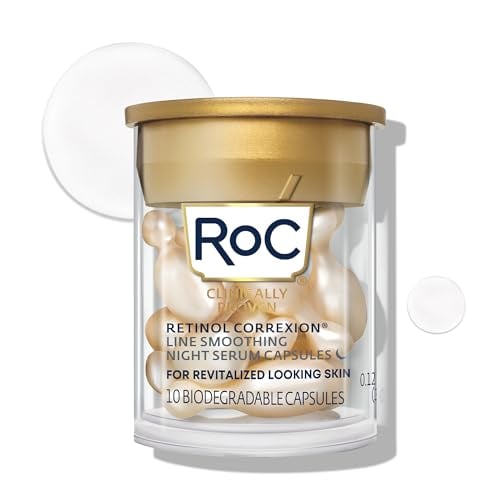
RoC Retinol Correxion Line Smoothing Night Serum Capsules
Each capsule holds one dose, which removes the main way beginners get this wrong. A 10-capsule starter runs about $10, so a slow twice-weekly start costs almost nothing to try.
6. Adding Shine on Top Instead of Underneath
For years, a full-coverage foundation and a good dusting of powder was the way to go. Over 50, it’s a quick path to a very flat appearance. Matte finishes have a habit of latching onto texture and lines, and a face covered in powder loses what little healthy luster it had. Makeup artist Jenepher Reynolds, whose clients have included Norah Jones and Harry Connick Jr., agrees: “As the skin becomes drier over time, matte products can grab onto fine lines and make the skin look flat and dehydrated.”
A lot of us think, well I want to add some glow back into my skin post powder, so I’ll just put highlighter on top! Sadly, shimmer on a dry surface will only call attention to it, and a strobe cream can have the dual effect of making you look older and glossier. “There is nothing wrong with a bit of glow,” Reynolds said, “but it is important to understand what shimmer does: it draws attention to the surface of the skin beneath it.” Creams are more forgiving because they go with the natural texture of your face.
Not everyone in the profession agrees, and the dissent is worth hearing. Avital of Puzzle Makeup warns that “heavy cream products can move, crease and break down throughout the day, and settle directly into fine lines.” Both things are true: a thin cream layer beats powder, and a thick one creases just as badly.
Our fix? The foundations that work best over 50 tend to be the sheerest ones in the drawer.
A tinted moisturizer or a light base, some cream blush, and a little powder in the center of the face where you’re prone to shine is what does the trick. Leave the rest alone. It may not seem like enough at first, but have a look at yourself in the daylight and you’ll see it works.
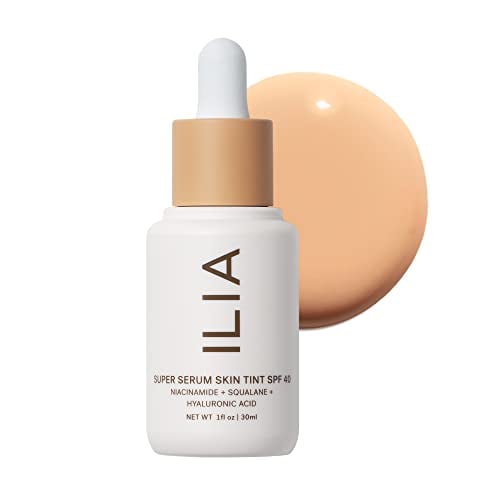
ILIA Super Serum Skin Tint SPF 40
Sheer coverage, niacinamide and squalane in the base, and SPF 40 doing double duty. Linked to ILIA directly so you can shade-match rather than guess at a name.
A cruelty-free mark means the brand is certified by PETA, Leaping Bunny, or both at the time of writing. A missing mark doesn’t mean a brand tests on animals; it just means the brand isn’t certified by these programs.
What Our BEEs Are Buzzing About
Here’s the beauty community on what actually brings a glow back:
Want to become a Beauty Empties Expert?
BEEs get free products to test, exclusive discount codes from our brand partners, and live access to The Hive sessions with dermatologists and beauty editors. Spots are limited and hand-picked.
Related Articles
- The Best Skincare Routine for Your 40s, Morning to Night
- The 7 Most Common Anti-Aging Skincare Mistakes after 50
- Anti-Aging Skincare Ingredients Everyone Over 40 Should Know About
- Our Top Face Oils for Aging Skin, and What Each One Is Really For
- The Best Foundations for Women Over 50
- The 5-Minute Polished Face for Women Over 50