The 10 Best Wrinkle Creams That Actually Work, According to Years of Testing

Shopping for a wrinkle cream is half hoping for a miracle and half hoping the product will do something (anything!) the last jar didn’t. It is exhausting, and expensive, to buy cream after cream and see a whole lot of nothing. And the frustrating part is that very few wrinkle creams do enough to notice.
If you buy through our links, we may earn a small commission at no cost to you. As an Amazon Associate, we earn from qualifying purchases. Our policy
I’ll put my own history on the table first. I used a very harsh Retin-A back when I was younger and dealing with acne, and that was just a terrible experience overall. But I have to say that lately I haven’t noticed a big difference between prescription tretinoin and the over-the-counter retinols like Shani Darden’s, which I think is personally interesting. The ones where I unfortunately did notice a difference are Augustinus Bader and La Mer. I don’t use them religiously, but if there were a better price point, I probably would.
What do I expect when I try a wrinkle cream? I want to see SOME difference. I want to see my skin glowing, and the wrinkles don’t have to disappear, but can I expect them to be a little less obvious? Absolutely. And of course I’ve bought a wrinkle cream hoping for a miracle. I think everybody does. We’re looking for a miracle in a jar. I’ve tempered my expectations as I’ve gotten older, knowing that without some sort of intervention, that’s not necessarily going to happen.
They can still work. You just have to be pickier about which jar you spend the money on.
Wrinkle creams help in different ways: a retinoid softens lines over months, a barrier cream makes skin look smoother by TONIGHT, and none of them replace sunscreen, Botox, or a prescription. If you know which of those jobs a cream actually does, the shopping gets a lot easier.
The research keeps pointing to retinoids more than anything else, so most of this list is some form of vitamin A. Peptides look promising, and hydrators smooth things out the same day, but retinoids are the ones with decades of studies behind them.
How we chose these wrinkle creams
I look to reviews, which is why I started this site, and to friends. If a friend has beautiful skin, I will ask her what she’s using and how long she’s been using it. I do look at reviews on sites like Sephora, and I check whether somebody’s been compensated. Mostly I look for consistencies: if I see the same notes time and time again about a product being good or bad, that’s when I really start to give it weight. That’s the filter for everything below, plus the BEE community’s own repurchase patterns.
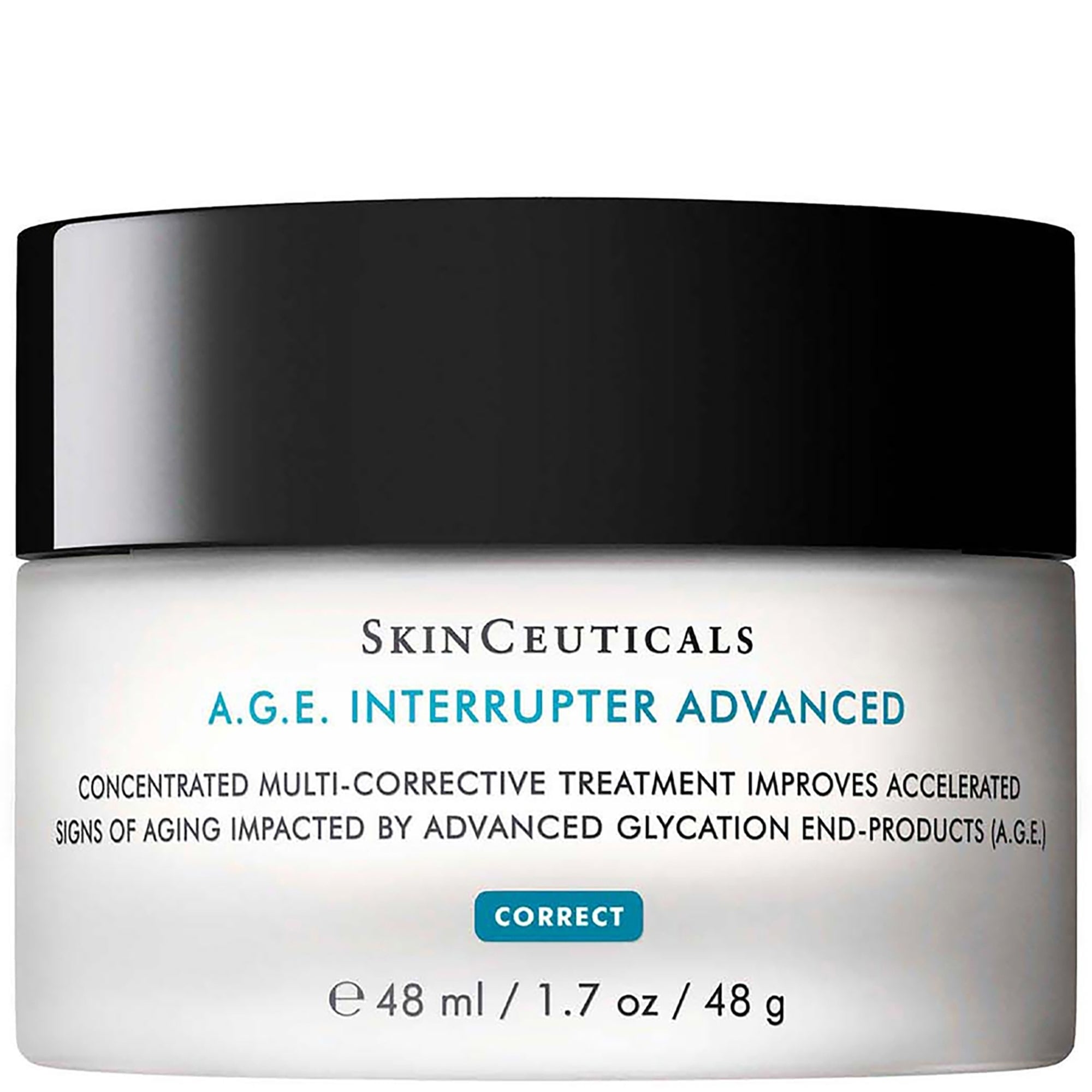
1. SkinCeuticals A.G.E. Interrupter Advanced
“One of the richest I’ve tried for dry skin is SkinCeuticals AGE Interrupter Advanced. If you have very dry skin you’ll love it,” says one fan who compared it against three other luxury creams. It’s the cream to look at first if your concern is deep-set wrinkles on very dry skin and the budget allows it.
My bar for a cream at this price: it really has to feel luxurious and do something. I have to be able to see results. If I put it on and I don’t like the smell, or I don’t like the texture, or it makes me feel greasy or dry, then I’m definitely walking away. The ones that have earned it from me are the ones where I put them on and thought, wow, this feels nice, and then I started seeing a glow.
This is not a retinol cream. You’d use it alongside a retinol, not instead of one. People love the texture, though one longtime fan noticed the reformulation: “I was obsessed with the Skinceuticals AGE Interrupter, and it got reformulated to a less preferable texture, but still solid.”
The formula runs 18 percent Proxylane with wild fruit flavonoids, aimed at glycation (a real process where sugar stiffens collagen, even if the word sounds like it was invented in a marketing meeting).
We would not buy this expecting it to act like a prescription wrinkle treatment, and some buyers wish they hadn’t. “THE MOST EXPENSIVE SKINCARE PRODUCT I’VE USED IN MY LIFE. Waste of my precious savings,” one buyer fumed, and a longtime user finally tapped out: “I’m sure there is no person who needs to use a cream this expensive, and I just can’t justify the cost anymore.” A third reviewer is torn: “My derm kept me on AGE interrupter for months saying nothing else helps against glycation. But honestly it’s just so expensive and I see very little results.”
SkinCeuticals A.G.E. Interrupter Advanced
Our top pick of the whole list. A rich, well-formulated cream built around 18% Proxylane and wild fruit flavonoids, aimed at the dryness and crepey-looking texture that retinoids alone do not fix. The version we reach for when the rest of the routine is already working and skin still wants something richer.
In the BEE community, this is the moisturizer people reach for when retinol alone is not handling the surface texture, especially the crepey look that shows up on cheeks and the neck. $185 is the number that stops people, and BEEs who are already paying for prescription tretinoin often downgrade to a $30 ceramide cream and come back to it in winter, when dryness is the bigger problem.
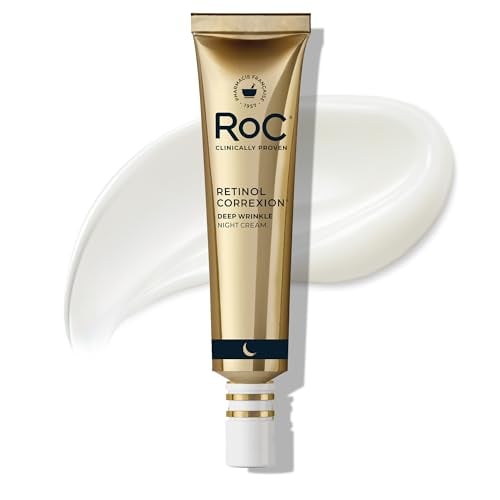
2. RoC Retinol Correxion Deep Wrinkle Night Cream
Results at a drugstore price are why RoC Retinol Correxion Deep Wrinkle Night Cream keeps showing up. “I’ve used this product every night for a little over 2 weeks now, and my skin feels smoother and more youthful. Unfortunately, it has caused a few breakouts, too,” runs one recent review. That trade-off, smoother skin but the occasional breakout, comes up in review after review.
From the Hive
The buzz from our Beauty Empties Experts. Sign up to join!
This is the retinol BEEs keep going back to between fancier serums, partially because the formula has been the same for so long that you know what you are getting. It is heavier and slightly tacky next to newer retinol serums. BEEs who eventually graduated to prescription tretinoin often hold onto a tube of this for travel or for nights when their skin needs a gentler retinoid step.
Results like that show up across a wide age range in the reviews. “At 70 years old, my skin was no longer responding to exfoliation. My skin looks and feels better after only a week’s worth of bedtime application. No lines are disappearing, but they appear softer, if that makes sense,” one buyer reports, noting “There is a mild burning after its applied. At first, apply it every other night.” A daughter passes along the longer view: “My mother swears by it. She’s 75 and is regularly mistaken for late 50s. It’s pretty strong, so it’s best to start with every other day if she’s not accustomed to retinol.” The dealbreaker for some is scent: “It has a strong perfume which was the reason I stopped using it, but it was fabulous when I did use it.”
RoC credits its patented retinol and a mineral complex. It’s a good match for fine lines, uneven texture, and early sun damage, and the gentlest way in is two or three nights a week at first.
RoC Retinol Correxion Deep Wrinkle Night Cream
The #1 drugstore pick. Patented retinol in a recognizable jar that derms recommend more often than any other drugstore wrinkle cream. The strength is consistent, the texture is forgiving while you figure out the routine, and the price keeps people using it long enough to see a difference. Certified cruelty-free (PETA).
3. Olay Regenerist Retinol 24 Night Moisturizer
For a retinol product that still feels like a normal night cream, look at Olay Regenerist Retinol 24 Night Moisturizer. It is the easiest retinol routine on this list to stick with.
It skips the separate retinol step entirely. “My skin doesn’t tolerate retinols very well so I use Oil of Olay Regenerist retinol cream only twice a week,” one sensitive-skinned user explains.
Olay claims 24-hour hydration with visible improvement in fine lines, and pairing niacinamide with the retinol is why it suits beginners.
This is not the strongest retinol product on the list, and that is part of why we like it. “I love this night cream for aging skin. It doesn’t bother my super sensitive skin and is helping with my turkey gobble slack neck skin. It is highly rated for a reason. I’m 64,” reads one review. The complaints are mild ones. It can pill over other serums (“since I stopped the serum when doing the retinol, the pilling stopped”), and one K-beauty convert found a cheaper cream she likes better.
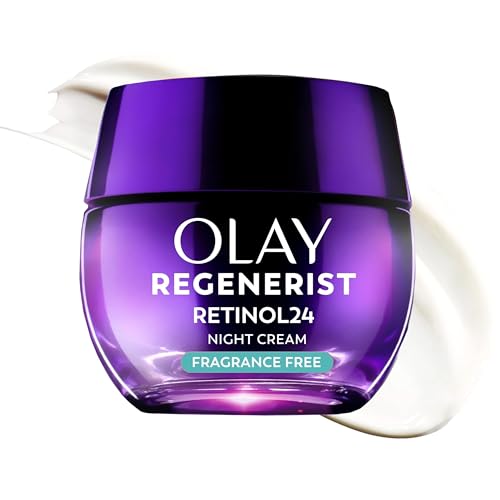
Olay Regenerist Retinol 24 Night Moisturizer
The one-step retinol routine. Retinol plus hydration in a single jar, so the routine stays short enough to do every night. The mildest retinol on this list, and beginners use it up.
BEEs flag this as the retinol moisturizer you can use almost every night without irritation, and that’s why so many of them finish the jar and buy another. The trade-off is potency, and BEEs looking for visible texture change in three months tend to find this too gentle on its own. The pairing that comes up most is using this in winter and switching to a stronger retinol serum from spring through fall.
4. Neutrogena Rapid Wrinkle Repair Regenerating Cream
Neutrogena Rapid Wrinkle Repair Regenerating Cream is a good first wrinkle cream, and Andrea Suarez, the dermatologist who reviews drugstore skincare as Dr. Dray on YouTube, lays out why: “Neutrogena is owned by Johnson & Johnson. They have over 20 years of research into retinols, they have over 20 retinol patents, and they’ve done many many many clinical studies on actual dermatology patients using their retinols.” She’s just as direct about the downside: “I will say that the Neutrogena product does sting when you apply it. It even tells you it’s going to do that on the label.”
From the Hive
Around the BEE community this is the starter product, the way Differin is for acne: the drugstore product that introduces a real active ingredient to people who would otherwise never have tried one. The fragrance is more noticeable than the label suggests, and the speed of results runs closer to ten or twelve weeks than the marketing implies, and that’s normal for any retinol.
Neutrogena calls its retinol “Retinol SA,” the brand’s slow-release form of the ingredient; as Suarez explains it, “basically it is a delivery system that allows for the slow release of that retinol to minimize irritation.” Her application advice matches what most derms recommend: “applying a moisturizer first and then applying this after the moisturizer has fully dried.”
The appeal is that it is simple. “It’s very gentle, moisturizing, and shelf-stable. It’s also fairly affordable (a tub lasts a long time),” as one user puts it, though she adds the honest hedge that mass brands “sometimes sacrifice being the ‘best’ product for being the ‘works-with-most-skin-types’ product.” A beginner says the gentleness cuts both ways: “it’s gentle enough that I’ve been experiencing no retinization peeling effects… though, speaking for myself, this likely means it’s not doing much, haha.”
If you’re buying your very first anti-aging product at the drugstore with twenty-five dollars to spend, my advice is to do your research and go for ingredients. Look for a retinol. Look for something with proven ingredients, not just a glorified moisturizer.
One more review sums up the texture: “I love how velvety smooth my skin feels after, and its not green like alot of other more affordable retinols.”
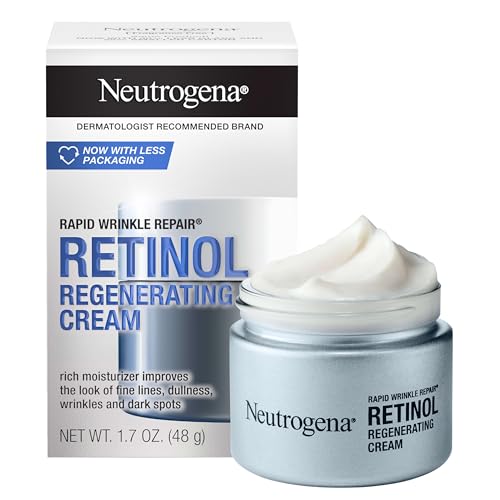
Neutrogena Rapid Wrinkle Repair Regenerating Cream
Where first-timers should start. Accelerated retinol with hyaluronic acid in a moisturizer-style cream gentle enough for a first retinol (the label itself warns about a brief sting). The drugstore starter that derms reach for when someone wants results without a rough first month.
5. Paula’s Choice Clinical 1% Retinol Treatment
If your skin already handles retinol and you want a stronger over-the-counter option, Paula’s Choice Clinical 1% Retinol Treatment is the next step. It’s what you try after drugstore retinol and before a prescription.
Do not start here if your skin is sensitive, reactive, or new to retinol. “Paula’s Choice Clinical 1% retinol gave me painful bumps on my cheeks that looked like cystic acne (which I’ve never had) but they went away immediately after discontinuing use,” one user reports, and another adds the shelf-life warning: “It was tough for me to get through the entire container before it spoiled, though, and it’s SO expensive.”
The formula is 1 percent retinol with peptides and vitamin C, about as strong as over-the-counter retinol gets, and you should not pair it with your exfoliating acids on the same night.
Reviewers describe both the strength and the payoff. “I am 52 and people regularly comment on how beautiful my skin is. The Retinol can be strong so I take a break for a day or two until skin feels better than start again,” one long-term user writes. Another five-star review starts much worse: “It burned my skin off as if I was in Chernobyl when it exploded. It was AWFUL and it took 10 days to heal. So once I healed — I then waited 6 days between applications.” She kept it anyway. A lot of reviews follow the same pattern: a rough start, then results that make the rough start worth it.
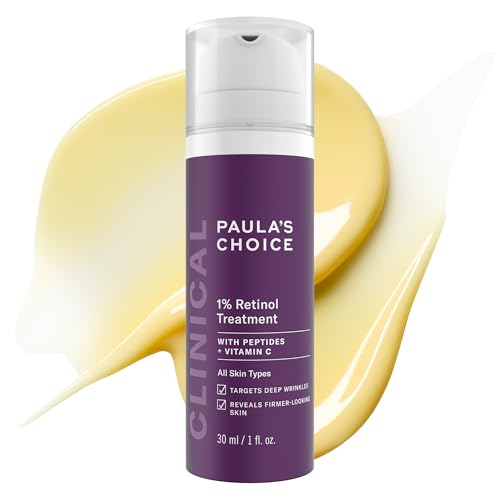
Paula’s Choice Clinical 1% Retinol Treatment
The graduation step past beginner retinol. One percent retinol, peptides, and vitamin C in a serum that lands closer to a prescription than a drugstore cream. The product BEEs reach for when the starter retinol stopped doing anything and a derm visit is still six months away. Certified cruelty-free (PETA).
BEEs treat this as the in-between step: stronger than a Neutrogena cream, gentler on the wallet than a derm appointment. BEEs say the dropper is temperamental and pushes out more than the pea-sized dose you need. BEEs who pushed through the first three weeks of dryness report visible smoothing around week ten, as long as they kept a heavy moisturizer on the off nights.
6. Avène RetrinAL 0.1 Intensive Cream
When traditional retinol has been a little too much, Avène RetrinAL 0.1 Intensive Cream is the one we would suggest: a vitamin A product that feels more advanced than basic retinol but still made with sensitive skin in mind.
From the Hive
For reactive-skinned BEEs, this is the retinoid that finally let them keep using vitamin A without backing off every few weeks. The recurring critique is that the tube feels small for the price. BEEs note the formula tends to oxidize faster once opened, so storing it somewhere cool and finishing it within three to four months keeps the retinal active.
The key ingredient is retinaldehyde (retinal), one step closer than retinol to the active form of vitamin A, so it tends to work faster without extra irritation, and sensitive skin usually handles it. Most people do best starting with two nights a week, moisturizing afterward, and wearing sunscreen every morning.
“My dermatologist doesn’t want to put me on tret so far as my skin is sensitive to irritation, and I’m glad I tolerate this and it works well,” reports one nightly user, and another derm-referred fan does the budget math: “It is the most expensive skincare item I use by a mile but is truly worth it. It goes on sale quite often (usually on amazon) and will go for about $55 when it does!” Pilling comes up again and again (“it pills so bad if I layer moisturizer on top of it,” per one otherwise loyal user), so give it a minute to settle before anything goes on top.
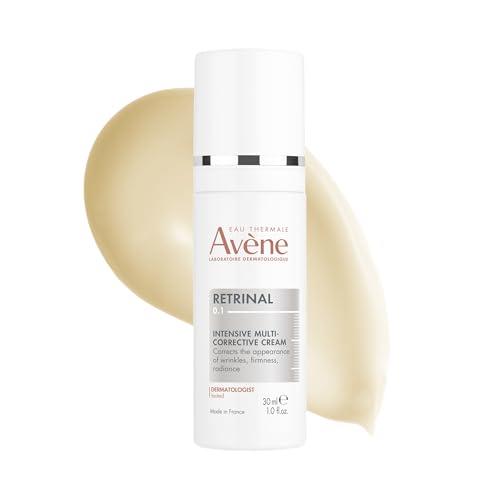
Avène RetrinAL 0.1 Intensive Cream
Made for sensitive skin that still wants a retinoid. 0.1% retinaldehyde in the same French-pharmacy formula that calmer skin types tolerate when traditional retinol turns their cheeks red. A real retinoid without the four-week burn period.
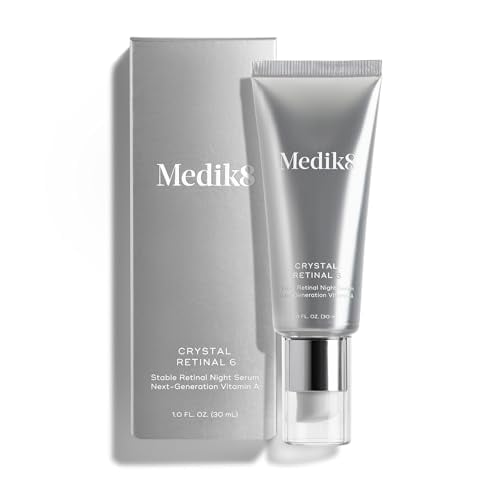
7. Medik8 Crystal Retinal
Medik8 Crystal Retinal is more treatment than moisturizer, and reviewers disagree about it more than anything else here: “I tolerate it well, it’s nicer on the skin than other retinoid products I have tried. Not sure how effective it is though,” admits one user who has tried three of the strengths, while another simply says a low strength “ruined my skin.” Moving up through the strengths slowly is how most people avoid the second outcome.
Crystal Retinal comes in graduated strengths from 0.01 to 0.24 percent so you can move up slowly. Most retinoid disasters start with someone jumping in too strong.
It’s best for someone who has already done retinol and wants something stronger. “I’m 42 and just threw in the towel with Tret. I’ve been using it solidly at a low % for about 3 years now and I have never truly acclimated to it. I just switched over to Medik8 Crystal retinal,” one convert explains, and a 52-year-old reports the tolerance payoff: “Even at level 20, I’m experiencing no irritation — no peeling, no redness, no dryness. The only downside: The color is VERY yellow — almost startling at first.” The tube also wastes product (“Over a week’s worth of product is left in the tube, to be thrown away,” per one three-star review).
Medik8 Crystal Retinal
For the slow-and-steady approach. The British retinal product with a built-in strength ladder, from 1 (the gentlest) to 24 (closer to prescription territory). The system lets you find your skin’s actual tolerance without guessing.
BEEs talk about Crystal Retinal as a splurge that pays off, because the strength ladder takes most of the guesswork out of starting a retinal. Climbing the ladder properly means spending months at each strength before moving up, so the bottles get expensive over a full climb. BEEs who pushed straight to the higher numbers report the same irritation they would get from any strong retinoid. Skipping levels throws away the one thing the system is for.
8. CeraVe Skin Renewing Night Cream
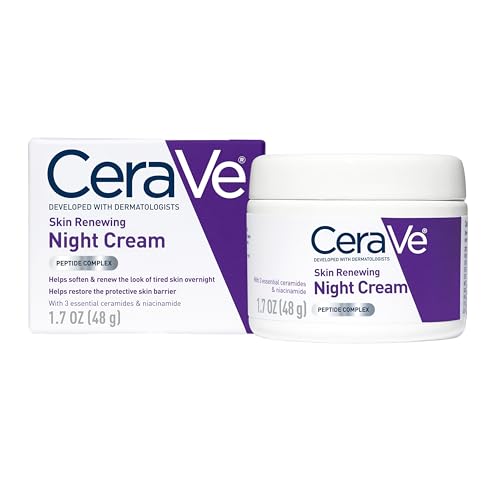
CeraVe Skin Renewing Night Cream is not the flashiest product in this article, but it may be the most repurchased. “I’m 54, my skin is dry, and I get asked if I’m in my 30s on the regular. This CeraVe Night Cream is a big part of why. After a few weeks, my fine lines looked less noticeable and my skin barrier felt stronger,” one review reads.
From the Hive
BEEs layer this right before or right after a retinoid, so the retinoid can do its work without leaving cheeks raw. BEEs say it can feel heavy in summer and sometimes pills under sunscreen if applied too thickly. The fix most BEEs land on is using a smaller amount at night and switching to the CeraVe lotion version in warmer months.
Look here if your skin is dry, tight, or irritated, or if you’re already on retinol. It will not replace a retinoid. It helps your skin stay comfortable enough to keep using one.
The formula leans on peptides (the kind that mimic what skin makes on its own), hyaluronic acid, and three ceramides. Those are barrier-repair ingredients, not wrinkle-erasers, and CeraVe doesn’t pretend otherwise.
That barrier support matters because dry, irritated skin makes lines look worse. “I have spent tons of money of high end moisturizers but for whatever reason this stuff has been the best Ive tried. I can slather it on and my skin is never sticky or oily. Just so good. Im on my 3rd container now,” writes one repeat buyer. It is not universal: a couple of users report clogged pores (“it clogged my pores :/”), so if you’re acne-prone, ease in.
CeraVe Skin Renewing Night Cream
The barrier-support workhorse. Three ceramides, hyaluronic acid, and peptides in a drugstore jar that keeps a strong retinol routine from going sideways. The cream that makes the rest of the routine survivable.
9. Burt’s Bees Renewal Firming Face Cream
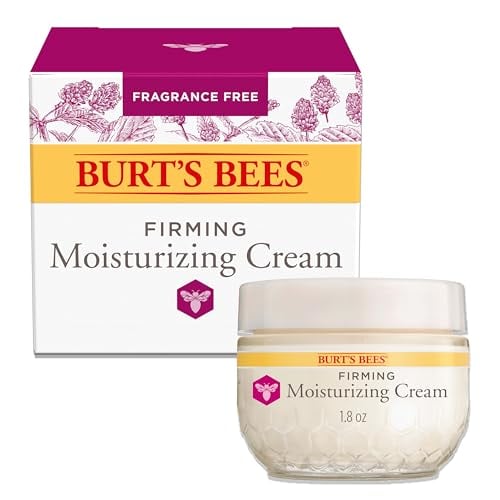
Burt’s Bees Renewal Firming Face Cream is worth considering if you cannot tolerate retinol at all. “All of a sudden my skin was super sensitive to EVERY facial cream out there. This cream feels cool and creamy and it leaves my skin full of moisture without the greasy feeling. It doesn’t burn or turn my cheeks red,” one convert writes.
It pairs bakuchiol (a plant ingredient with early evidence of retinol-like effects, minus the irritation) with squalane. Bakuchiol has nowhere near retinol’s research behind it, but it also doesn’t irritate, and for some skin that settles it.
This is the one we’d pick for skin that can’t take retinol at all, and this jar got the single best review I found while researching this article: “It is the best cream. I am 84 and in all my years of using facial cream, it is removing wrinkles. I am so happy. I almost gave up but This cream makes look and feel great.” (Every word as she wrote it.) Texture is where the three-star reviews land: “Beeswax might be used to retain moisture, but I don’t like the waxy feel,” one notes. The beeswax that locks moisture in is also what you’re feeling.
Burt’s Bees Renewal Firming Face Cream
The answer for skin that can’t take retinol. Bakuchiol in a soft drugstore moisturizer that costs less than $20 and is easy to find anywhere. The cream BEEs keep on rotation during pregnancy and through retinoid recovery weeks. Certified cruelty-free (PETA).
BEEs reach for this during pregnancy, breastfeeding, and on the nights when a strong retinoid has gone too far. BEEs who came in expecting retinol-level results on lines were disappointed at the eight-week mark and now use it as a moisturizer rather than a treatment. Comfort is what it does well: the texture is mild, the scent is light, and it layers under sunscreen without pilling.
10. EltaMD UV Clear SPF 46 (yes, sunscreen)
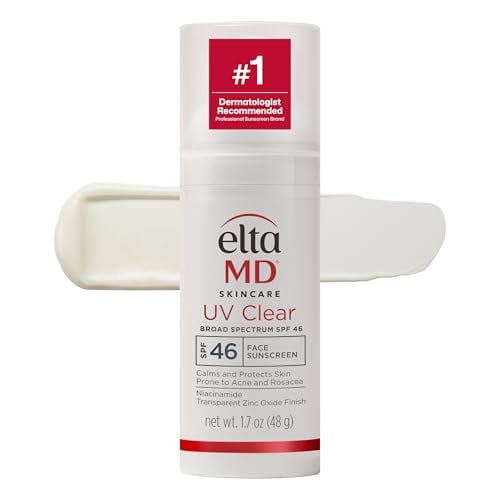
Sunscreen is not a wrinkle cream, but it belongs here because wrinkle creams make skin more sun-sensitive while the sun undoes their work (a truly unfair arrangement). “I’ve tried so many brands of SPF – including Korean ones – and the only one I am loyal to is EltaMd UV Clear. You can put on the full amount (I use one pump for my face) without it feeling heavy, and there is no alcohol dry down,” one loyalist explains. I’m a broken record on this, but the most boring product I repurchase time and time again is sunscreen, and it’s the thing that’s gotten me the most results over the years. I don’t think there’s one serum or one cream that has really moved the needle for me. It’s all preventative. The best wrinkle product I own is sunscreen. The counterpoint on this particular bottle, from an acne-prone user: “it made my cystic acne way worse. I hadn’t suspected it since EltaMD is such a skin friendly brand.”
From the Hive
UV Clear is the sunscreen BEEs use up, and with sunscreen, the bottle you actually finish is the one that works. A bottle sits in the $40 range and lasts a couple of months at a proper two-finger dose, so it adds up. BEEs who cannot justify the price often rotate it with a drugstore mineral SPF and save UV Clear for days when they are wearing makeup over it.
This is one of the few things BEEs and dermatologists agree on without much fighting: sunscreen protects whatever progress the creams above give you.
If we had to pick one to recommend, it would be EltaMD UV Clear SPF 46. “I developed rosacea with menopause and my dermatologist has me on Azelaic acid cream I use in the morning followed by EltaMD UV Clear Broad-Spectrum SPF 46,” reports one 59-year-old whose whole routine came straight from her dermatologist. The complaint that keeps coming up is the price: “The UV Clear 46 is the best mineral sunscreen I’ve ever tried, it’s just sooooo expensive. I’m down to a pump or two left in my last bottle of it and just can’t bring myself to reorder,” one user admits, and it can pill over some moisturizers.
EltaMD UV Clear Broad-Spectrum SPF 46
The daily SPF that protects the rest of the routine’s work. The fragrance-free zinc-and-octinoxate hybrid sunscreen that derms recommend to anyone using a retinoid. Niacinamide in the base calms redness, and the finish disappears under makeup instead of pilling.
How to use wrinkle cream without irritating your skin
My version of easing in: talk to your dermatologist, and take the advice they almost always give: two to three times a week to start, not every night. There are ways of applying it, too. Do very small dots all over your face instead of rubbing it in your hands and then rubbing it on, so one area isn’t getting more of the product than the others. And don’t be afraid to dilute it with a little bit of peptide serum to start. That really works. The rule I always follow with a retinoid is sunscreen, and definitely don’t mix it with the wrong things (we have a whole article on the skincare ingredients you shouldn’t mix).
- Start with one product at night, not three.
- Use a pea-sized amount of retinol or retinal for your whole face.
- Apply retinoids to dry skin.
- Use moisturizer before or after your retinoid if your skin is sensitive.
- Wear sunscreen every morning.
- Do not use strong exfoliating acids on the same night as retinoids unless your skin already tolerates that routine.
- Do not use retinoids if you are pregnant, trying to become pregnant, or breastfeeding unless your doctor says it is okay.
- Ask a dermatologist before using stronger products if you have rosacea, eczema, perioral dermatitis, or a history of easily irritated skin.
A cruelty-free mark means the brand is certified by PETA, Leaping Bunny, or both at the time of writing. A missing mark doesn’t mean a brand tests on animals; it just means the brand isn’t certified by these programs.
What Our BEEs Are Buzzing About
Here’s what the beauty community is saying about these products:
Want to become a Beauty Empties Expert?
BEEs get free products to test, exclusive discount codes from our brand partners, and live access to The Hive sessions with dermatologists and beauty editors. Spots are limited and hand-picked.