
The Best Skincare Routine for Your 40s, Morning to Night

My skincare routine in my 20s and 30s used to consist of cleanser, moisturizer, and sunscreen. Serums? I couldn’t afford them, and we didn’t have social media so I didn’t hear as much about them. But now I’m influenced by products left and right, and well, I run a beauty site so it’s sort of my job! But despite all the treatments and fads out there, no matter the decade or medium we’re getting information from, we know enough to know that some routines just WORK.
If you buy through our links, we may earn a small commission at no cost to you. As an Amazon Associate, we earn from qualifying purchases. Our policy
Many people find their skincare routine, one they’ve relied upon for about ten years, stops working in the first part of their 40s. What was once oily and would stay that way into adulthood suddenly becomes dry overnight; what you do to keep yourself well rested no longer appears on your face as much as it did before; and the moisturizer which felt so rich when you were 35 now doesn’t seem like nearly enough by February.
One of our Beauty Empties Experts (BEEs) summed up the shift in a single sentence: “Between my late 30s and going into my early 40s my skin went from shimmery and moist to glimpses of the Sahara!”
The good news is that the routine that suits this decade is short: a handful of steps done in the right order, with two or three ingredients doing the heavy lifting. One BEE has kept the same dermatologist-built lineup for over a decade: “My dermatologist has had me on this regimen for TWELVE years and my skin looks amazing.” The same BEE had a word for the other end of the spectrum: “Meanwhile, I see people doing a 15 step skincare routine on tik tok and spending $500 on a vitamin C and hyaluronic acid serum that doesn’t even work.” This is the morning-to-night version of that smarter, shorter routine, built from the products people in their 40s keep finishing and what the research supports. We also boiled the whole thing down to a printable one-pager near the end, if you are the type who likes to tick a list and tape it to the bathroom mirror.
What Actually Changes in Your 40s
Perimenopause typically starts during the mid-40s, but can start even sooner according to the American College of Obstetricians and Gynecologists, and, well, me; perimenopause is when your body’s estrogen levels begin to decrease, and the decrease shows up in your skin early. The slow decline in collagen we see beginning in our 20s (the approximate rate of loss being about one percent annually was studied via dermatology studies published in the British Journal of Dermatology in 1975) appears to increase dramatically with menopause, some estimates indicate you may lose as much as 30% of your total amount within the first five years after menopause; oil production also decreases as well and likely accounts for why many experience a shift from oily to dry skin during this decade.
So the skin you have at age 45 will be able to make much less of its own moisture and create new structural elements much slower than it could at age 30. The daily regimen for your 40s covers both tasks (retain water; promote collagen production), along with protecting as much of the collagen you already have as possible. Each step in this routine does at least one of these things.
If you want the study-by-study breakdown of the ingredients themselves, we get into it even more in our guide to anti-aging ingredients worth knowing after 40.
The Morning Routine
Step 1: A gentle, hydrating cleanser
Morning cleansing in your 40s should be quick and boring. A foaming gel that squeaks was probably fine at 25, but with less oil on your skin there’s less to wash off, and a stripping formula leaves your face tight before 9 a.m. A creamy, non-foaming formula (CeraVe’s Hydrating Facial Cleanser is the one people report emptying most often, and it’s under $20 for a bottle that lasts months) gets the job done without the tight feeling. Some mornings, a rinse with lukewarm water is plenty. We rounded up the cleansers people finish down to the last pump if yours has been feeling harsh lately.
Step 2: Vitamin C serum
If your 30s routine didn’t include an antioxidant serum, this is the decade to add one. Vitamin C defends collagen from UV and pollution damage, brightens the dullness that creeps in as cell turnover slows, and fades the sun spots that start surfacing right about now. Board-certified dermatologist Dr. Loretta Ciraldo puts it plainly: “Vitamin C is a terrific skin brightener with firming benefits since it boosts collagen and has antioxidant and UV protection benefits as well.” A French study published in Experimental Dermatology found that six months of topical vitamin C measurably improved photoaged skin compared with the same cream without it.
The benchmark here is SkinCeuticals C E Ferulic, which we reviewed in full and still consider the gold standard, but at $185 a bottle it’s a real commitment, and since the patent behind the formula expired in March 2025, the recipe (15 percent L-ascorbic acid, vitamin E, ferulic acid) is now legally fair game for everyone. Our favorite of the affordable versions is Maelove’s Glow Maker at $32.95. The formula follows the same blueprint with hyaluronic acid added, and it’s the one BEEs who left the SkinCeuticals bottle behind mention most.
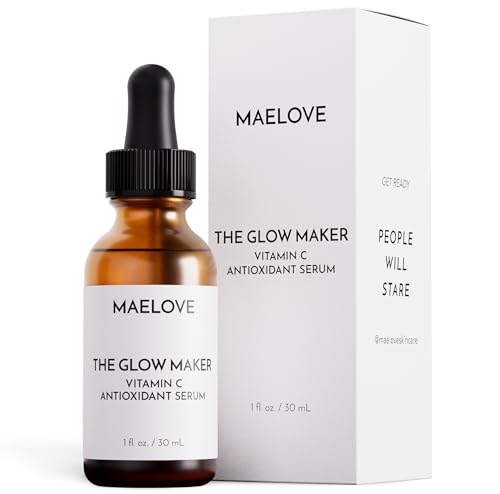
Maelove Glow Maker Vitamin C Serum
The C E Ferulic blueprint (15% vitamin C, E, ferulic acid) at a fraction of the price. Certified cruelty-free (PETA).
One longtime BEE made the exact switch a lot of us are weighing: “I used SkinCeuticals CE Ferulic for five years, consistently. Got tired of the price, and switched to MaeLove Glowmaker nine months ago. My skin loves the switch – better match for my combo sensitive skin, very effective and soooooo much cheaper. Highly recommend.” Another BEE preferred it over the better-known budget dupe: “I’ve used both Timeless and Maelove and I prefer the Maelove because it’s gentler.” A fair warning before you fall in love: L-ascorbic acid at this strength can make some skin purge for a few weeks. One reviewer new to vitamin C decided the price made patience easier: “The affordability of Maelove motivated me to tough it out, and luckily it was just adapting/purging.”
Step 3: Eye cream (optional, but worth a look this decade)
Dermatologists are split on whether eye cream is a separate product or moisturizer in a smaller jar, and we’ve made the case for the only two we think are worth the money. If under-eye puffiness is your bigger complaint, we also collected the fixes that helped women over 40 most. For this step, the short answer is a pea-size amount of something with caffeine in the morning if you wake up puffy, and no eye cream at all if your regular moisturizer doesn’t irritate your eye area. Either answer is fine.
Step 4: Moisturizer
Morning moisturizer in your 40s has one job: hold water in your skin until dinner. Look for ceramides and hyaluronic acid on the label, both of which your skin now produces less of than it used to. This is also the product category where spending more doesn’t buy more (we compared drugstore jars against the $100-plus ones, and the results were humbling for the splurges). Whatever you choose, apply it while your skin is still damp from cleansing so there’s water to seal in.
Step 5: Sunscreen, every single day
If you feel overwhelmed by the entire routine, keep this step and eliminate the others. Daily plain sunscreen has the strongest anti-aging data in skincare; a four-and-a-half year study done in Australia on adults with SPF was published in The Annals of Internal Medicine, those who used SPF daily did not develop any measurable skin aging as compared to those who applied it only when they remembered, whose skin aged about 24% more. No serum can match up to these kinds of statistics.
The one our BEEs finish fastest is La Roche-Posay’s Anthelios Melt-In Milk SPF 60. (It’s my personal fave, too.) It spreads like a regular lotion instead of sitting on top of your skin, works for face and body, and one BEE finds it hydrating enough to skip anything else: “I find the melt in milk sunscreen sufficient enough to skip moisturizer before it.”
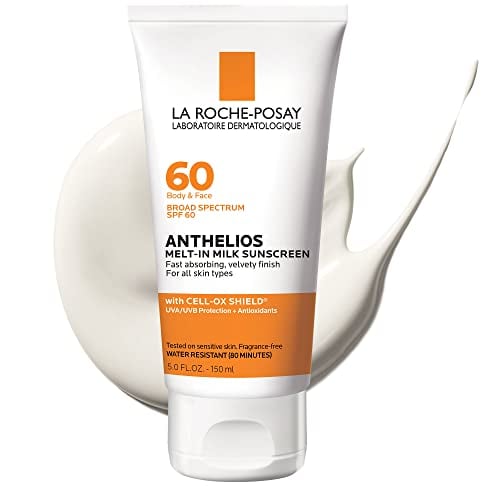
La Roche-Posay Anthelios Melt-In Milk SPF 60
An SPF 60 that applies like body lotion, for the days sunscreen feels like a chore.
The love isn’t unanimous, though: the formula is chemical rather than mineral, and reviewers with reactive skin sometimes land on mineral instead. One longtime BEE weighed the two and admitted “the melt-in milk is a really really nice consistency but overall I prefer the 50 mineral.” If mineral is your lane, we covered the full field in the sunscreens with a cult following.
From the Hive
The buzz from our Beauty Empties Experts. Sign up to join!
No step gets more credit from our BEEs than sunscreen, and none gets more regret about the late start. Daily wearers report fewer new spots at their yearly skin checks, and several say a lighter texture was what finally made the habit stick.
The Night Routine
Step 1: Take the day off first
Nighttime is when the treatment products earn their keep, and none of them work through a layer of sunscreen and foundation. If you wear makeup or SPF (which, per the above, should be every day), a cleansing balm massaged onto dry skin dissolves all of it, then a quick pass with your regular cleanser clears the residue. Clinique’s Take The Day Off balm has been the standard for years, and one BEE explained both the appeal and the technique most people miss: “I love Clinique Take the Day Off, but you’re right. It is expensive. It just leaves my skin feeling so nice. Most people I see using it online aren’t using it according to directions, though. They don’t add water, and emulsify it into a milk, before removing. They just go in with a wet face cloth.”
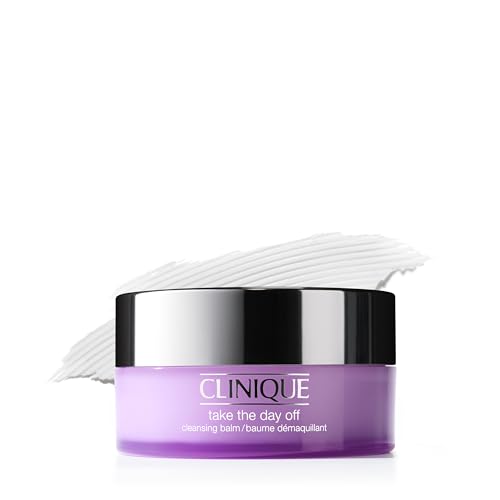
Clinique Take The Day Off Cleansing Balm
The fragrance-free balm that dissolves a full face of makeup and SPF in one pass.
One caveat comes up often enough to pass along: balms and eyes are not always friends. As one BEE put it, “I find balms and oils always cause blurry vision, no matter how well I rinse.” If that happens to you, a cotton pad of micellar water handles the eye area while the balm handles the rest.
Step 2: The treatment step (rotate, don’t stack)
In this part of the routine you’ll be alternating between retinol two or three times per week, an exfoliating acid one or two times per week, and then use a hydrator for all other nights. For most people who have reached their 40s using this type of approach works much better for them than trying to apply extreme treatments each and every night. It is during those off nights when your skin does its repairs.
Retinol nights. Retinoids remain the most-studied ingredient there is for keeping collagen production moving, and if you didn’t start in your 30s, your 40s are the right time to begin (gently). Our drugstore pick is L’Oréal’s Revitalift 0.3% Pure Retinol Night Serum, around $40, with reviews that skew loyal in the 45-plus age brackets. One BEE in the 45-to-59 range wrote: “I cannot stand being out of my most loved product. This product has gotten rid of some of my lines. Makes my face glow.” The strength is real, and it cuts both ways. Another BEE was more candid about week one: “I’ve been using it for 1 week and my face feels tighter and glowing. In the beginning it would burn but I knew my face had to get used to it.”
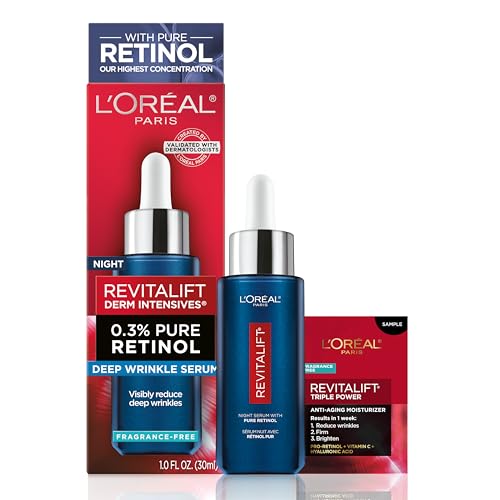
L'Oreal Paris Revitalift 0.3% Pure Retinol Night Serum
A pure-retinol serum at a drugstore price, strong enough to demand the slow build.
Start with two nights a week on dry skin, buffer with moisturizer, and give it an adjustment month. If your skin runs reactive, our retinol roundup includes gentler on-ramps.
Acid nights. Once or twice a week, a glycolic acid toner sweeps away the dead surface cells that hang around longer now than they used to and leave skin looking dull. The Ordinary’s Glycolic Acid 7% Exfoliating Toner costs $9 and has a following that borders on devotional. One BEE kept the endorsement practical: “The Ordinary has some great acids! I’m not a fan of their entire line but do like that their acids are well-formulated and easy to incorporate. Plus the glycolic acid bottle is HUGE!” A BEE who’s used glycolic for years described the pull of the ingredient itself: “Every time that I don’t repurchase thinking that I have too much cosmetics, I give in after a few weeks max and go buy it again. It’s just glorious, and fast acting.”
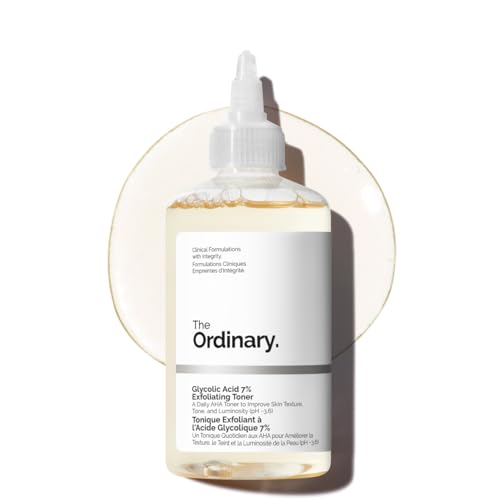
The Ordinary Glycolic Acid 7% Exfoliating Toner
A $9 resurfacing toner you swipe on twice a week for smoother, brighter skin. Certified cruelty-free (PETA).
Worth knowing before you start: the dramatic before-and-afters in the research come from in-office peels at much higher strengths, so at-home percentages work more gradually, and more is NOT better. Keep acids and retinol on separate nights, and if your skin runs sensitive, once a week is plenty.
Step 3: Night moisturizer (and why nighttime matters)
Research in the Journal of Investigative Dermatology found that skin loses the most water in the evening and overnight, right when it’s doing its repair work, so the richer-cream-at-night convention has real science behind it. You don’t need a separate product line for the job, but if you want one, the night creams people repurchase have earned their spots. On retinol nights, your night cream goes on top and doubles as the buffer.
From the Hive
Our BEEs are more loyal to their night moisturizer than to almost any other step, and what they finish looks the same across the board: the texture runs richer than their morning cream, the label skips fragrance, and the price is low enough to slather instead of ration. More than a few keep a backup jar on hand before the first one runs out.
Step 4: Facial oil (optional, for the extra-dry nights)
An oil as the last step a couple of nights a week seals in everything underneath and adds back some of what your skin no longer produces on its own. Kiehl’s Midnight Recovery Concentrate has been doing exactly this job since 2010 (squalane, evening primrose, a light lavender scent), and it’s a product people tend to come around to in their 40s specifically. One BEE wasn’t an oil person at all: “Even though, oils are not HG for me in general, I have Kiehl’s oil, use it, and like it a lot” (HG is holy grail, for the uninitiated). If oils are new territory, our face oil guide explains which one does what.
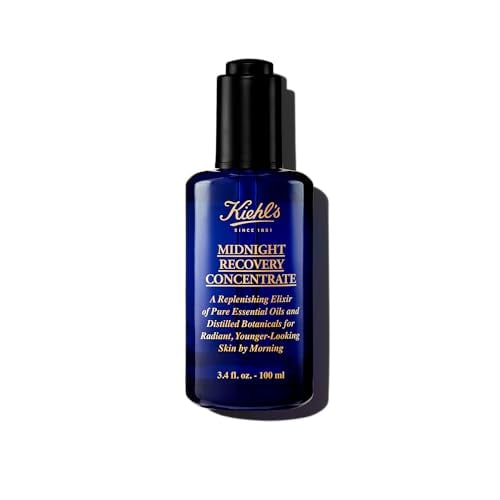
Kiehl's Midnight Recovery Concentrate
The night oil that has had the same seal-it-all-in job since 2010.
The Once-a-Week Extras
None of these are required, but they each do one job well.
A hydrogel mask. The cult favorite right now is Biodance’s Bio-Collagen Real Deep Mask, the overnight Korean mask that turns transparent as it absorbs (we wrote about why it has 35,000+ reviews). One BEE’s cosign came with a disclaimer: “I like biodance bio collagen deep mask. My husband did say I looked like an ax murderer, so that might be disqualifying. However, overnight as the product soaks into your skin the mask turns clear which I think is really freaking cool.” One buying note: counterfeits of viral Korean products are common on marketplace sites, so get this one from the brand’s own site or an authorized retailer.
Red light. LED masks have real (if modest) collagen data behind them, and we sorted out which ones are worth the money if you’re curious. Three or four short sessions a week is what the studies used.
Gua sha or a cold roller. The de-puffing is temporary, but on a puffy morning, temporary is exactly what you’re after. Five minutes with a cold roller before makeup does more than an extra layer of concealer.
The full routine comes to five quick steps in the morning, four at night, a rotation instead of a pile, and a weekly extra if it makes you happy. It costs a fraction of what a 15-step regimen does and takes maybe ten minutes a day. A BEE who’d just turned 40 left the note worth taping to the bathroom mirror: “Life is short and you don’t have to waste it fearing getting old. Take care of your skin & your body but live your life.”
Your Optimized Skincare Routine
An easy-to-follow routine for every day of the week.
Every Morning
- Gentle cleanser (or just lukewarm water)
- Vitamin C serum
- Eye cream (optional)
- Moisturizer, on damp skin
- Sunscreen SPF 30+ — every day
Every Night, the Base
- Take the day off: cleansing balm, then cleanser
- Tonight’s treatment (see the schedule)
- Night moisturizer, richer than your morning one
- Facial oil (optional, driest nights)
Your Week, Night by Night
A sample week that keeps retinol and acid on separate nights. Shift the days to suit your skin.
- MonRetinol
- TueBarrier night — just cleanse and moisturize
- WedGlycolic acid toner
- ThuBarrier night
- FriRetinol
- SatHydrating mask, then facial oil
- SunBarrier night
New to retinol or on the sensitive side? Drop to one retinol night and hold off on the acid until your skin settles. Anytime extras: LED red light three or four times a week, and a gua sha or cold roller on puffy mornings.
beautyempties.com
A cruelty-free mark means the brand is certified by PETA, Leaping Bunny, or both at the time of writing. A missing mark doesn’t mean a brand tests on animals; it just means the brand isn’t certified by these programs.
What Our BEEs Are Buzzing About
Here’s what the beauty community is saying about these products:
Want to become a Beauty Empties Expert?
BEEs get free products to test, exclusive discount codes from our brand partners, and live access to The Hive sessions with dermatologists and beauty editors. Spots are limited and hand-picked.
Related Articles
- Skin Longevity Is the New Anti-Aging: The Over-40 Routine That Actually Works
- Why Your Skincare Routine Stops Working After 50
- The 7 Most Common Anti-Aging Skincare Mistakes after 50
- The 10 Best Wrinkle Creams That Actually Work, According to Years of Testing
- How to Layer Your Skincare, Morning and Night