Struggling with Skin Issues? Here Are the 6 Most Common Problems and the Products That Solve Them
Most bathroom cabinets hold a $48 acne serum from a breakout six months ago, a $30 vitamin C that browned in the bottle before it got finished, and a $25 dark spot corrector abandoned at week six because nothing was happening yet. A bad breakout could be hormonal, bacterial, or stress-driven; a patch of dryness could be missing oil or missing water; a dark spot could be sun damage, melasma, or a pimple from last March that decided to leave a souvenir. By the time you’ve named the issue and bought the product, the other three issues on your face have already shifted into something else.
If you buy through our links, we may earn a small commission at no cost to you. As an Amazon Associate, we earn from qualifying purchases. Our policy
The few products that do keep getting used up until you reach the end of the bottle or tube handle more than one thing at a time: a retinaldehyde that smooths fine lines and surface texture, a barrier balm that calms eczema flares and retinoid burn, a ceramide cream that handles winter dryness and post-retinol recovery. These are the six that keep turning up across thousands of reviews.
1. Acne and Breakouts
Spot treatments are the default acne product. They shrink the pimple after it shows up and do nothing about the next one already forming below the skin. Differin (adapalene 0.1%) does the opposite job. It’s a retinoid (the same family as retinol) that regulates how skin cells turn over inside the pore, so new breakouts stop forming in the first place. The catch is the timeline: the first month often looks worse than the starting point, purging hits hardest in weeks two through four, and full results don’t show up until around week twelve.
From the Hive
The buzz from our Beauty Empties Experts. Sign up to join!
BEEs who pushed past the eight-week mark consistently say Differin is the only OTC product they’ve used that keeps new breakouts from forming, not just calms the ones already there. The recurring complaint is the purge. Anyone who didn’t know to expect four to six weeks of worse skin before improvement gave up on the tube and went back to spot treatments.
It clears the kind of forehead, chin, and jawline congestion that benzoyl peroxide spot treatments never fully solve: hormonal acne, blackheads, whiteheads, and the bumpy congestion that doesn’t quite break the surface. The one thing it doesn’t work fast on is cystic acne, the deep painful kind that lives under the skin instead of erupting at the surface.
The trade-off is that adapalene is drying, especially in weeks three and four. The standard pairing is a barrier-supporting moisturizer layered over the gel after it dries down (CeraVe or Cetaphil works fine, La Roche-Posay Toleriane if the skin is really reacting). The gel can pill under heavier creams, so it goes on dry skin only. Skip Differin on any night the routine already has an exfoliating acid in it (glycolic, lactic, or salicylic).
For cystic or hormonal acne that doesn’t respond to Differin, the next step is a dermatologist. Spironolactone is the standard for hormonal acne (the deep chin and jawline breakouts that flare with your period), and isotretinoin (Accutane) is the heavy hitter for the severe cystic acne that hasn’t responded to anything else.
The Buzz
Differin (adapalene 0.1%) was prescription-only from 1996 until 2016, when the FDA approved it for over-the-counter sale. It became the first new OTC active for acne in decades. The retinoid is what dermatologists prescribed for years before a $14 tube turned up on drugstore shelves, which is part of why it keeps getting bought and used up by anyone with stubborn breakouts.
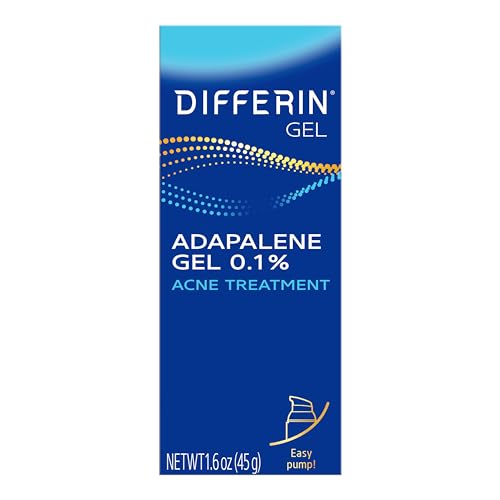
Differin Adapalene Gel 0.1%
The #1 pick for stubborn breakouts. The only OTC retinoid approved for acne, available without a prescription since 2016. Once-daily application clears the kind of forehead and jawline congestion that benzoyl peroxide spot treatments never fully solve.
2. Dryness and Dehydration
Brands call everything “dry skin” but two different things are usually going on. Dry skin is missing oil, dehydrated skin is missing water, and most of us have both at different times (winter air, retinoid weeks, a stretch of bad sleep). The reason CeraVe Moisturizing Cream keeps getting finished and rebought year after year is that one $20 jar handles both, and at a price that makes the splurge creams a hard sell.
From the Hive
BEEs name CeraVe Cream as the jar they keep buying after trying fancier creams, including some at five times the price. The recurring note is that the tub lasts months, the skin feels the same on it as it does on a $90 cream, and after the third or fourth empty, they stop asking whether the splurge version is worth it.
The formula leans on three ceramides (1, 3, and 6-II, the same lipids skin produces naturally to hold moisture in), plus hyaluronic acid to pull water in and a thin occlusive layer of cetyl alcohol and petrolatum to keep it from evaporating. The formula releases its ingredients gradually over 24 hours instead of all at once. A 19-ounce tub runs around $20 and lasts most people three to four months.
The texture is heavy enough that anyone with oily or combination skin in summer usually switches to the lotion version, which is the same formula in a lighter base. The fragrance-free label is mostly accurate, though some batches carry a faint chemical smell that not everyone loves.
If skin stays dry, itchy, or cracked past a few weeks of consistent moisturizer use, that’s the point to see a dermatologist. Eczema and psoriasis are the most common reasons “just dry skin” won’t budge. Eczema usually responds to prescription topical steroids or non-steroidal options like Eucrisa, with Dupixent (an injectable medication) for cases that don’t respond to creams.
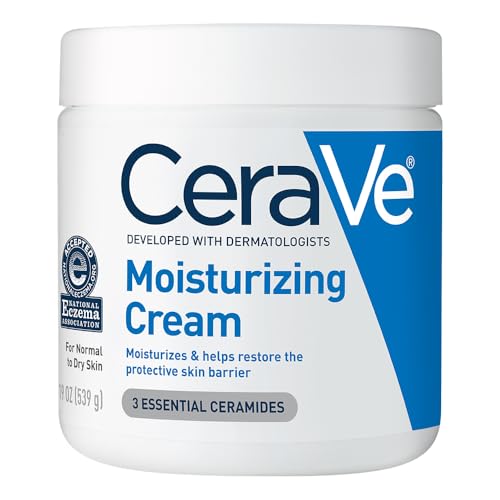
CeraVe Moisturizing Cream
The #1 pick for dry, dehydrated skin. Three ceramides plus hyaluronic acid in a thick cream that derms recommend more often than any other drugstore moisturizer. The tub lasts months and keeps getting bought back after people give up on $90 alternatives.
3. Hyperpigmentation and Dark Spots
Dark spots take months to appear and months to fade, and they come from three places: a pimple from six months ago that left a souvenir (post-inflammatory hyperpigmentation, or PIH), accumulated sun exposure (the freckles that aren’t really freckles), and hormonal melasma (which gets worse with pregnancy, birth control, and the sun). The three respond to different ingredients, but tranexamic acid is the one that lands on every dermatologist’s shortlist for PIH and melasma. It works differently from hydroquinone or vitamin C: instead of bleaching pigment that’s already there, it interrupts the signal that tells skin to produce more in the first place.
From the Hive
BEEs flag this one as the affordable starter for tranexamic acid, with most seeing fading between week eight and week twelve on PIH from acne. The skeptics show up too. They report no change on deeper sun spots and end up pairing it with a vitamin C serum in the morning for the brightening side of the equation.
Good Molecules Discoloration Correcting Serum pairs tranexamic acid with niacinamide for $12 (cheaper than the price of one fancy serum sample). Most people see visible fading at eight to twelve weeks of nightly use, primarily on PIH from acne and on early melasma patches, but none of that progress sticks without sunscreen. Without daily SPF, any dark spot treatment is sandcastle work: the spots come back as fast as they fade.
Tranexamic acid is a slow active, so anyone expecting four-week results will be disappointed. The serum is technically fragranced (the scent ingredient lands at the end of the ingredients list, which signals a small percentage but a real one). It works best on PIH from acne and earns its money there.
Stubborn sun spots and deeper melasma usually need stronger interventions. The standard prescription is hydroquinone 4%, often paired with tretinoin and a steroid in the combination cream Tri-Luma. For sun damage, in-office light treatments (IPL or BBL) and chemical peels clear pigment faster than any home routine.
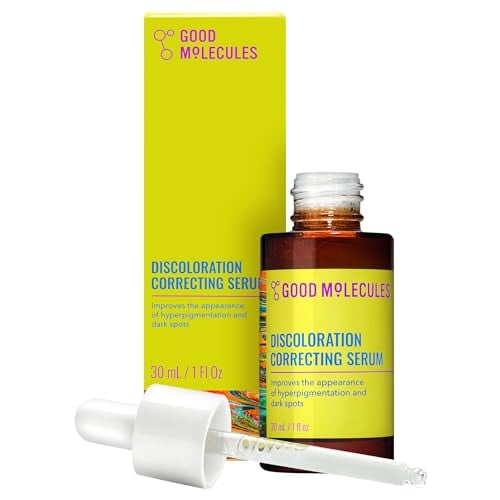
Good Molecules Discoloration Correcting Serum
The #1 pick for post-acne marks and melasma. Tranexamic acid plus niacinamide at $12, the affordable starter for the active dermatologists name first for pigment issues. Visible fading on PIH typically shows up between weeks eight and twelve. Certified cruelty-free (Leaping Bunny).
4. Redness and Sensitivity
Redness shows up for a lot of reasons (rosacea, eczema, post-retinoid irritation, broken capillaries from years of sun, generally reactive skin), and they all eventually land in the same place: skin that flushes at things it didn’t used to react to. Cicaplast Baume B5 is the tube that gets emptied across all of it.
From the Hive
BEEs put Cicaplast in the same kit slot as Aquaphor: the tube you keep around for whenever skin goes sideways. Most are using it on more than just the face, which is part of why the small tube empties faster than the price-per-ounce suggests.
The formula is 5% panthenol (provitamin B5, the active that calms irritation and supports healing), madecassoside (a centella asiatica extract that’s been used in French pharmacies for decades on minor burns and post-procedure skin), shea butter, and glycerin. The texture is thick and slightly tinted, absorbing into a dewy finish rather than a matte one.
The same tube ends up on retinoid off-nights, on at-home peel recovery, on shaving burn, on eczema patches, on the cheeks during a flare, and as a slugging layer over a nighttime moisturizer (slugging means sealing a thick, slick layer like Vaseline or Aquaphor on top of your routine to lock everything in overnight). That range is part of why the 1.35-ounce tube finishes faster than the per-ounce math suggests.
The thick texture is winter-friendly and summer-difficult, especially in humid weather. Some people pick up a faint scent even though it’s labeled fragrance-free (the botanical extracts have natural aroma compounds). The tube is small (1.35 oz for around $15), and the cap unscrews completely instead of flipping open, which is mildly annoying for a product you reach for one-handed.
Persistent flushing or visible redness across the cheeks, nose, and chin is usually rosacea, which has its own prescription playbook: metronidazole (MetroGel) or ivermectin (Soolantra) for bumps and inflammation, brimonidine (Mirvaso) for the flushing itself, and oral doxycycline (a low-dose antibiotic) for moderate-to-severe cases, while in-office laser treatments handle the broken capillaries that no cream will touch.
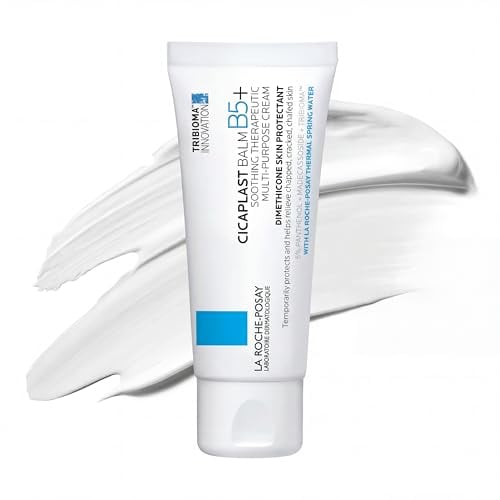
La Roche-Posay Cicaplast Baume B5
The #1 pick for redness and reactive skin. 5% panthenol plus madecassoside, the French-pharmacy barrier balm that calms a flare in hours and doubles as an overnight sealing layer. The same tube ends up on retinol irritation, eczema patches, and shaving burn.
5. Fine Lines and Loss of Firmness
Retinol is the most-studied ingredient for fine lines and firmness, but it has to convert to retinoic acid in the skin to do its work, and the conversion is slow and not fully efficient (which is why a $60 retinol can take six months to show results). Prescription tretinoin skips the conversion step entirely: it’s retinoic acid in finished form, which is why a dermatologist’s tretinoin script works faster than any over-the-counter retinol on the market. The catch is that tretinoin peels more, needs a barrier moisturizer right behind it, and requires a derm visit and a prescription to access. Retinaldehyde, called retinal for short, sits between the two: one molecular step closer to retinoic acid than retinol, so it works faster at lower doses and peels less along the way.
From the Hive
BEEs who tried retinaldehyde before retinol routinely say they got results faster with less peeling than expected. The catch they flag most often is that the strength surprises retinol-experienced skin in the first two weeks, so the slow-build approach still matters, even for anyone who’s already used everything else in the category.
The Ordinary Retinal 0.2% Emulsion is the version most people land on after the retinol arc. The texture is a lightweight emulsion (not a serum, not a cream), and the formula includes squalane to support the skin through the active period. It runs around $25 for 30ml, which is a fraction of what comparable retinaldehyde products from Medik8 or Avène cost. Visible results on fine lines take 12 to 16 weeks of consistent nightly use. Texture and smoothness usually improve sooner, somewhere around weeks four to six. The standard build is two nights a week to start, working up to nightly as the skin tolerates it.
Retinaldehyde is still strong enough to cause irritation, especially for anyone new to retinoids. The packaging is opaque and air-restrictive, which retinaldehyde needs because it oxidizes in light, but the formula will degrade once opened, so finishing the bottle within six months matters. It does not pair with acids on the same night, and going straight to nightly use is what turns a good outcome into a peeling face by week two.
Beyond creams and serums, in-office treatments produce more dramatic firming and texture changes. Microneedling, Morpheus8, and laser resurfacing are the most common options, all of which come with downtime and clinic-level pricing.
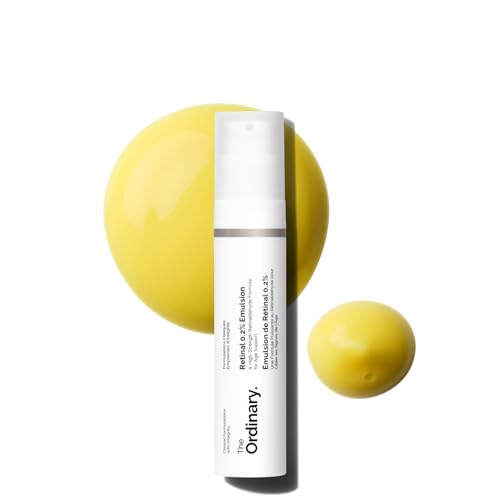
The Ordinary Retinal 0.2% Emulsion
The #1 pick for fine lines. Retinaldehyde is one molecular step closer to prescription tretinoin than retinol, which is why it works faster with less peeling. The 0.2% strength is the cult sweet spot for results without months of purging. Certified cruelty-free (PETA).
6. Dullness and Uneven Texture
Dullness is dead skin sitting on the surface, reflecting less light than it should and making everything look gray. The fix is exfoliation, and the face does not want a scrub (the abrasion is uneven and the irritation lingers for days). Chemical acids do the same job without the sandpaper effect, dissolving the bond between dead cells and letting them release on schedule. Pixi Glow Tonic runs on 5% glycolic acid, the smallest molecule in the AHA family and the one that penetrates the fastest.
From the Hive
BEEs name Glow Tonic as the gateway product for anyone AHA-curious. The recurring complaint is the rose-water scent, and the recurring fix is the fragrance-free version. Long-time BEEs are usually on their third or fourth bottle and still rotating it through the routine years in.
The formula buffers the acid with aloe vera, ginseng, and horse chestnut to take the sting out. It’s a leave-on liquid exfoliant: swept across clean skin with a cotton pad after cleansing, two to three nights a week. Visible glow shows up within a few uses for most people, and texture and tone improvements settle in around weeks four to six.
5% glycolic is gentle compared to a clinical peel and still active enough to do damage if it’s stacked with retinoids on the same night. The original formula carries a strong rose-water scent that some people find too much (a fragrance-free version exists for sensitive skin and keeps the active intact). The price runs $15 to $29 depending on size, which is fair but not the cheapest in the category.
For deeper texture and tone issues, in-office treatments are the next step. Professional-strength chemical peels (TCA or Jessner’s are the most common formulas) work on stubborn dullness and post-acne marks, while microdermabrasion and laser resurfacing handle scarring and accumulated sun damage that no home exfoliant can reach.
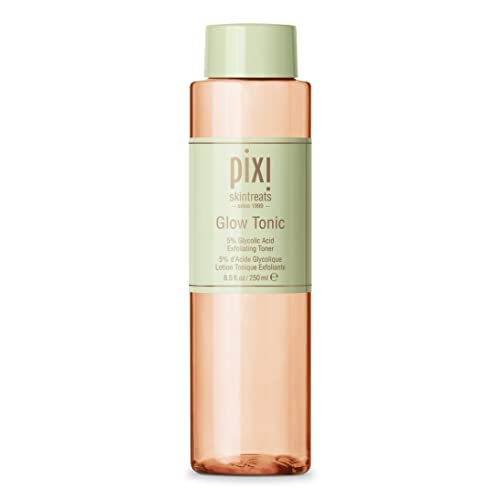
Pixi Glow Tonic
The #1 pick for dullness and uneven texture. 5% glycolic acid in a buffered formula that shows visible glow within a few uses. The gateway exfoliating toner that’s stayed in heavy rotation for over a decade, and one of the few drugstore acids dermatologists still cosign.
How to Use More Than One
Most people have more than one of these issues going at once, and the products above don’t all play nicely on the same night. What works is rotation: retinoids (Differin or retinaldehyde) take two non-consecutive nights, the chemical exfoliant takes a separate third night, Cicaplast covers the recovery nights in between, and the tranexamic acid serum can layer on any night, including barrier nights. Vitamin C is a morning product. Sunscreen is daily, and it’s the step that decides whether any of the rest is doing what it’s supposed to.
A cruelty-free mark means the brand is certified by PETA, Leaping Bunny, or both at the time of writing. A missing mark doesn’t mean a brand tests on animals; it just means the brand isn’t certified by these programs.
What Our BEEs Are Buzzing About
Skincare TikTok has gone deep on each of these issues, with dermatologists breaking down formulas and creators posting week-twelve before-and-afters. These are seven recent BEE-favorite videos on the products above.
Want to become a Beauty Empties Expert?
BEEs get free products to test, exclusive discount codes from our brand partners, and live access to The Hive sessions with dermatologists and beauty editors. Spots are limited and hand-picked.