7 Foundation Mistakes That Aren’t Doing Wrinkles Any Favors
It started happening to me a few years ago. I would apply my once luminous looking foundation the way the makeup artist in the store told me to: with a kabuki brush. The problem I started noticing almost immediately was I could see streaks and what I can only describe as little white dots (which I later learned were dry patches). It wasn’t until I put the brush down and started using my fingers to apply the foundation again that it went back to looking normal.
If you buy through our links, we may earn a small commission at no cost to you. As an Amazon Associate, we earn from qualifying purchases. Our policy
The same thing happened with concealer. The concealer brush that used to make my undereye circles disappearamazing made it look patchy and later ended up causing creases under my eyes. So I again started using my fingers and the problem went away.
Whether it’s the way you’re applying it or the type you’re using, it seems the older you get the more using foundation become a landmine of mistakes you have to to avoid.
Most of the reasons this happens come down to how you apply your foundation and how you treat your skin before and after. It can also be the type of foundation you’re wearing. To help you avoid these annoying mistakes, we’ve included the most common ones below along with advice on what to do instead.
1. You’re Still Reaching for Full-Coverage Matte
A full-coverage matte foundation is designed to sit on your skin and stay put, which is exactly why it looks great in photos but in real life looks like it’s moved in rent-free.
If there are fine lines anywhere on your face, a heavy layer of matte has nowhere else to go besides into those lines. A matte finish also flattens the light, which means you’re skin look more dull IRL instead of the radiant, dewy version hiding underneath.
What To Do Instead: Kick that low-light tenant out and swap it for a lighter, radiant formula that allows you to build only where you want it.
This medium-coverage foundation with hyaluronic acid still hides redness and evens out skin tone, but unlike other foundations, doesn’t crack under movement. Instead, it stays put and also gives you the ‘lit from within’ glow that helps skin look like skin.
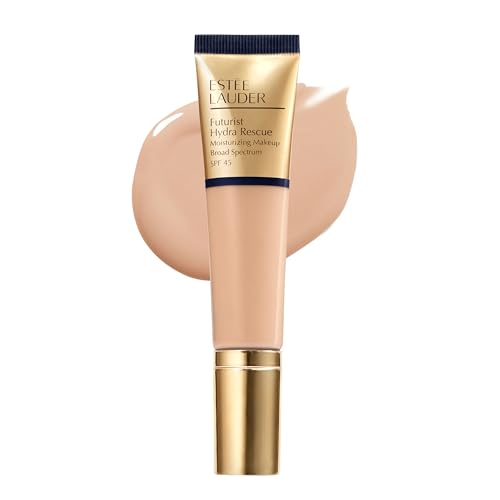
Estée Lauder Futurist Hydra Rescue Moisturizing Makeup SPF 45
A hydrating, luminous medium-coverage foundation that stays moist and skin-like instead of drying down into lines.
“This is really hydrating, not pretend hydrating. Your skin doesn’t look dried out by the end of the day, and it does have a luminous finish.”
—55-year-old Beauty Empties Expert (BEE)
2. You’re Skipping the Step That Makes Everything Else Work
Foundation settles into lines much faster when it goes on skin that’s even slightly dry. Dry patches grab pigment and hold onto it, so the driest spots (around the nose, the smile lines, under the eyes…I even see this on my cheeks) end up looking the most textured. The fix costs nothing: moisturize first, then actually wait. Give a hydrating cream three or four minutes to absorb before you go near your face with base. Foundation applied to a still-damp or under-moisturized face is the one most likely to travel. (I am definitely guilty of this.)
If your skin runs dry, a richer barrier cream does double duty here. It hydrates the dry spots so they stop grabbing product, and it gives the foundation a smooth, cushioned surface to glide over instead of dragging.
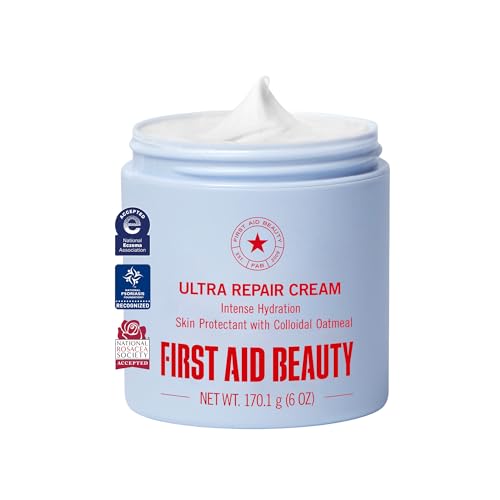
First Aid Beauty Ultra Repair Cream
A colloidal-oatmeal barrier cream that hydrates dry patches so foundation glides instead of catching. Certified cruelty-free (PETA).
“It absorbs quite quickly and doesn’t leave greasy marks. My skin is super soft and moisturized after.”
—48-year-old BEE
3. Your Primer Is Working Against You
Heavy silicone primers claim to reduce pores and fine lines, but often they only fill them (and create a mess) for approximately one hour. They can act like spackling compound in the folds of your skin, and when they’re warmed up or start to fade, all of the foundation you applied on top will slide into the same fold and pool there. Also, if you have dry skin you may experience pilling as some of our Beauty Empty Experts (BEEs) have noted.
What To Do Instead: A hydrating grip primer does the opposite job. Instead of filling in your texture with silicone, it gives skin a slightly tacky, cushioned base that hydrates and holds makeup in place, with no hard blurring layer for foundation to slide off of. Bonus? It’s the cheapest fix on this entire list.
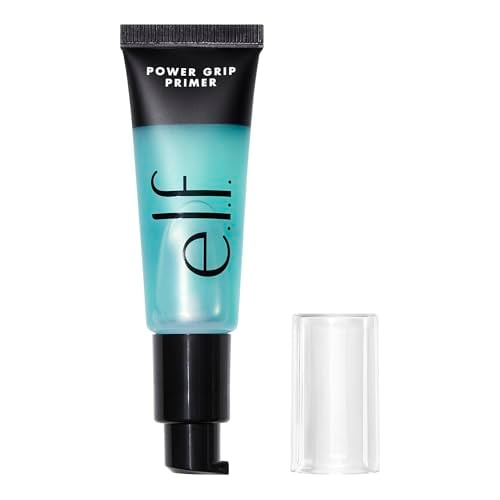
e.l.f. Power Grip Primer
A gel primer with hyaluronic acid that grips makeup and hydrates instead of blurring with silicone. Certified cruelty-free (PETA).
“It glides and blends in the skin nicely, and it made my foundation stay a good amount longer than it would have without any primer.”
—62-year-old BEE
4. You’re Wearing Foundation Everywhere
The thing is this: Not ALL of your face needs foundation. I know, I know. It’s sort of the opposite of what we grew up thinking. But the redness and discoloration you’re trying to cover lives in the center of your face (the nose, across the cheeks, maybe the chin). The outer edges and temples already look good, but they get coated out of habit anyway, and that’s where the extra product has nothing to do but sit and settle. More coverage over skin that already looks good won’t look more polished. It’ll just look like more makeup.
What To Do Instead: Apply a thin layer of foundation to the center of your face and blend it outward with a damp sponge so the edges disappear into your skin. Then tap tiny amounts of concealer only where you need more. A brightening, hydrating concealer does the under-eye job better than a heavier foundation, because the under-eyes and smile lines are exactly where creasing shows up first.
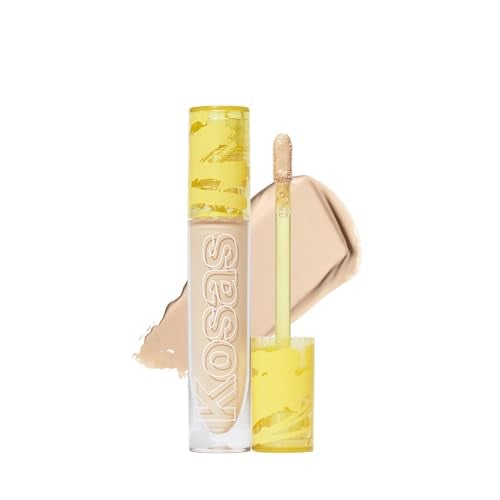
Kosas Revealer Concealer
A hydrating, brightening concealer with peptides and caffeine that spot-covers without settling into fine lines. Certified cruelty-free (Leaping Bunny).
“This is a great concealer if you have fine lines under your eyes, aging skin, dark like mine, very dark under-eye circles. You’re gonna love these concealers.”
—a 42-year-old BEE with dry, sensitive skin
5. You’re Setting Your Whole Face With Powder
Powdering your entire face is one of the fastest ways to make your skin look lifeless. Powder drinks up the oils that were keeping everything looking fresh, dries your foundation down into one flat layer, and clings to any spot with the slightest texture. The only place most of us need it is the T-zone, where the actual shine happens.
What To Do Instead: Use a fine, translucent powder and lightly dab your forehead and the two sides of the nose where you tend to get shiny. I also go down to my chin and a little outwards. For the best application use a brush, and apply only as much powder as needed. A finely-milled powder gives a soft-focus finish without the chalky, dried-out look that a heavy all-over dusting leaves behind. If you apply too much powder (hey, it happens), use a few spritzes of a setting or hydration spray/mist to break up the powder.
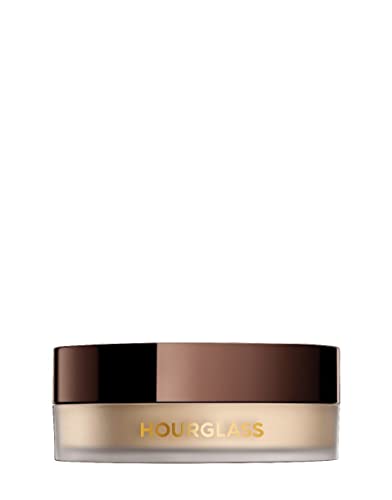
Hourglass Veil Translucent Setting Powder
An ultra-fine, talc-free translucent powder that mattes shine on the T-zone without a chalky, dry finish. Certified cruelty-free (PETA).
“It’s so fine that it does not accentuate fine lines.”
—55-year-old BEE
“Very light and smooth, lovely product for aging skin!”
—57-year-old BEE
6. You’re Baking Under Your Eyes
Sad news alert: Baking (packing on powder and letting it sit before you dust it off) was made for stage lighting and fresh-out-of-college eyes. On skin that’s aging like a fine wine, you’ll want to skip it. Why? The under-eye moves every time you smile, and it’s the driest, thinnest skin on your face, so a heavy layer of powder has to crack somewhere.
What To Do Instead: Use the smallest amount of concealer that does the job, tap it in with a warm fingertip or a damp sponge instead of dragging it, and set it with the barest touch of powder, if you set it at all. (I get scared if I don’t set my concealer, but TBH I might be ready to try.) What you want under the eyes is a thin, slightly dewy layer that moves when you do, not a matte block.
7. Your Color Shade Is Fighting You
This isn’t necessarily age/wrinkle-related, because the wrong shade is not doing anyone at any age any favors. But it’s worse the older you get. Either you match your foundation shade to your face and not your neck, which can leave a visible line at the jaw. Or the formula oxidizes, turning a shade or two darker and warmer within an hour, which is why a foundation that looked perfect when you tested it at the counter or first put it on in the morning can look orange and heavy by lunch.
Match the shade to the skin between your jaw and neck (not the back of your hand, and not the apple of your cheek), and check it in daylight instead of store lighting. If a foundation you love tends to oxidize, go one shade lighter than what looks right at first, or test a stripe and wait a full hour before you commit. The right shade in a lighter formula disappears into your skin. The wrong shade screams “Hello! I’m here!”
Foundation Over 50: Quick Questions
Is a tinted moisturizer or a skin tint enough coverage after 50?
For a lot of days, yes. A luminous skin tint over good skincare often looks fresher and more even than a full-coverage foundation, and you can spot-conceal whatever it doesn’t cover. On days you want more, a buildable medium-coverage formula applied in a thin layer gives you the option without committing your whole face to it.
Why does my foundation look fine in the morning and cakey by afternoon?
Usually it’s some combination of three things on this list: the formula is too heavy or too matte, the skin underneath was dry, or there’s too much powder on top. Go lighter on the formula, add more hydration underneath, and ease off the powder, and most of that afternoon creasing goes with it.
Do I need primer at all?
Not always. If your skincare hydrates well and your foundation wears nicely, skip it. If your makeup tends to slide or fade, a hydrating grip primer helps it last. The one to avoid is the heavy silicone kind that fills lines, because that’s the one your foundation slides into as the day goes on.
A cruelty-free mark means the brand is certified by PETA, Leaping Bunny, or both at the time of writing. A missing mark doesn’t mean a brand tests on animals; it just means the brand isn’t certified by these programs.
What Our BEEs Are Buzzing About
Here’s what the beauty community is saying about foundation after 50:
Want to become a Beauty Empties Expert?
BEEs get free products to test, exclusive discount codes from our brand partners, and live access to The Hive sessions with dermatologists and beauty editors. Spots are limited and hand-picked.