The Five-Minute Routine for Better Hands and Nails at Any Age

I don’t think hands get enough attention when it comes to skincare. We’re so harsh with them, and yes, we might get our nails done, but we don’t spend dedicated time on our hands the way we do for other parts of our body. (Go ahead and look at your own hands right now. I’ll wait.)
Some links are affiliate, so we may earn a small commission at no cost to you. Our policy
And our hands are so important! When you’re getting (or planning to get) Botox and fillers and facelifts, \what are you really going to do for your hands? There are very few treatments that would actually make sense, so we really do have to take care of them as much as we can.
And the hands take more abuse than almost anywhere else: the dishes, the hand sanitizer forty times a day, the gel manicure that took three coats to soak off, and a small smattering of sunscreen when we think of it. The good news is that the fix isn’t a $90 cream or a standing salon appointment. It’s a few rituals you can do at the kitchen sink, most of them five minutes or less, and a couple of them so, well, pleasant you’ll forget they count as upkeep. So let’s go through the ones worth your time, and what the research says about each.
Why your hands give your age away first
Dermatologists will tell you the back of the hands is one of the top spots for photoaging, right up there with the face, neck, and chest. It comes down to anatomy: hand skin is thin and low on the oil glands that keep facial skin cushioned, so it loses moisture fast and shows sun damage early. Years of UV break down collagen and elastin and leave behind the brown spots and crepey texture most of us notice on our hands before anywhere else.
It’s also preventable, though. In a year-long 2016 study published in Dermatologic Surgery, people who used a daily broad-spectrum sunscreen saw measurable improvement in photoaging on their hands. Skin gets a chance to repair when you stop adding new damage on top of the old. That finding is likely why sunscreen, the least glamorous item on this list, ends up doing more for your hands over time than any cream you can buy will. (Is there anything sunscreen CAN’T do?!)
The olive oil nail soak
I love this one, and it’s almost free (though olive oil can get expensive!). Warm a few tablespoons of olive oil (ten seconds in the microwave, no more, you want it warm and not hot), and soak your fingertips in it for about five minutes once a week. Olive oil isn’t a folk-remedy placebo, either. It’s rich in oleic acid, squalene, and vitamin E, the emollient and antioxidant compounds dermatology research credits for softening skin and supporting the moisture barrier. For your cuticles and the skin around the nail, that means softer, less ragged edges and fewer hangnails. And neat cuticles are half of the reason we make an expensive trip to the nail salon for!
So, why does this work so well? Oil mostly conditions the cuticle and the skin around the nail rather than soaking into the hard nail plate, but it’s important to note this is a softening step, not a strengthening one. A long daily soak can even backfire. A study in the Journal of the American Academy of Dermatology found brittle nails really don’t hold less water than healthy ones, and that the real culprit is repeated swelling and shrinking from getting wet and drying out, over and over again.
That’s because a nail plumps with moisture in about five minutes, then contracts as it dries, and that cycle is what loosens the layers. So keep the soak short and weekly, then seal it in with a cream or oil while your skin is still damp instead of letting it all evaporate.
Another important note: a 2013 study in Pediatric Dermatology found that rubbing olive oil into adult skin slightly weakened its barrier compared with sunflower oil, so it earns its keep on cuticles and the occasional soak, not as your everyday whole-hand moisturizer.
People who’ve gotten their brittle nails under control tend to repeat the same advice. “Use gloves for cleaning and dishes, don’t bathe or shower without at least a basecoat of polish on to protect the nail, and oil oil oil,” one of our BEE’s wrote. Another keeps it to a nightly ritual: “Overnight deep treatments with white cotton gloves. I just use jojoba oil with vitamin e.”
The once-a-week rhythm is the part people swear by. Cristine Rae, the nail-obsessed creator behind Simply Nailogical, tells her followers to keep the soak weekly and add a daily drop on top: “Do this soak once a week + 3x daily oiling on painted nails for a month and report back for longer, stronger nails.”
If you’d rather skip the warming and soaking and just get the conditioning, a bottled cuticle oil does the same work in ten seconds at the nightstand. The salon standard has earned a near-cult following for exactly that, and reviewers describe the same two things over and over, fast absorption and no grease. “The oil rubs in quickly and feels soft, not greasy or sticky,” one writes. Another says it “immediately moisturized my cuticles, but it didn’t leave behind a greasy feel.”
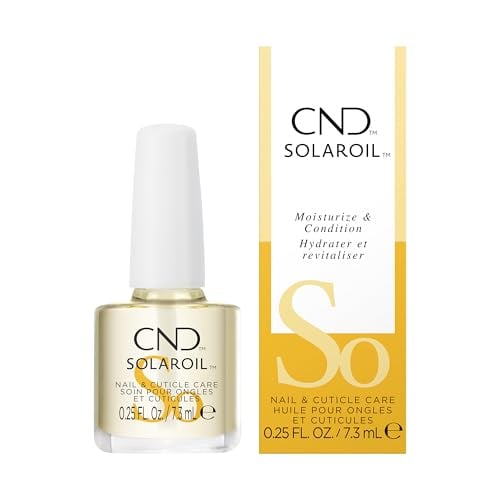
CND SolarOil Nail & Cuticle Care
The bottled version of the oil soak. A blend of jojoba, sweet almond, rice bran, and vitamin E that’s been the salon-go-to for years, in a bottle small enough to live in a nightstand drawer or a coat pocket. One drop per nail, rubbed in while you’re half-watching TV, is the whole commitment. The trade-off is that it’s slow and low-drama: you won’t see anything in a day, and if you stop using it the soft cuticles drift right back to where they were.
From the Hive
The buzz from our Beauty Empties Experts. Sign up to join!
Our BEEs treat the olive oil soak as a Sunday-night thing, not a daily one, and the ones who stuck with it say the difference shows up in their cuticles first. The trick that made it a habit was pairing it with something they already do, oil while a show plays, soak while the kettle heats. The ones who tried to make it a separate event quit by week two.
The weekly hand scrub
A scrub is the fastest way to make rough hands feel new, and you can build one from the pantry: one tablespoon of sugar, one teaspoon of honey, one teaspoon of coconut oil. The sugar is a physical exfoliant that buffs off dull surface skin, honey is a humectant that pulls water in, and the coconut oil leaves a soft conditioning layer behind. Work it in for a minute or two once a week, rinse with warm water, and put your hand cream on while your skin is still damp so you trap the moisture instead of sealing in dry skin.
The only real rule is restraint. Hand skin is thin, and scrubbing hard or more than once or twice a week does more harm than the dead skin you’re chasing, so keep it gentle and keep it weekly. If you’d rather buy than mix, our BEEs keep a tub of a sugar scrub by the kitchen sink and use it on hands as much as anywhere else. The honest knock is that the jars are big and heavily scented, so a little goes a long way and the fragrance-sensitive may want to swatch the scent before committing.
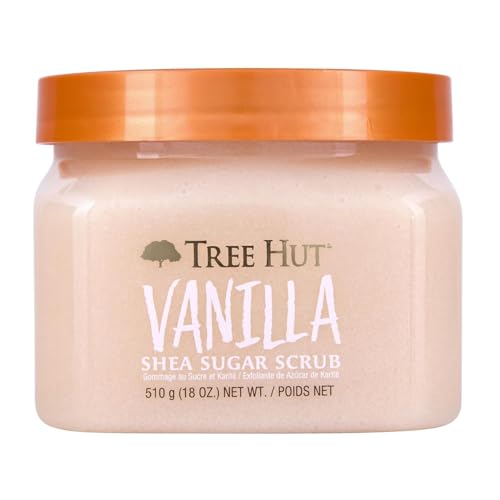
Tree Hut Shea Sugar Scrub
For when you’d rather buy than mix. A cane-sugar-and-shea-butter scrub that buffs and conditions in one step, and the tub is big enough to share with your elbows, knees, and the rest of you. It’s PETA-certified cruelty-free, which matters to a lot of readers. Fair warnings: the scent is strong and sweet, and it’s not fully vegan, so the fragrance-sensitive and strict-vegan crowd should read the label first.
Castor oil, and what the research says
Castor oil shows up in every hand-and-nail tip list, usually billed as a growth treatment, so it’s worth separating what it does from what it’s promised to do. Its main component is ricinoleic acid, an unusual fatty acid that gives the oil most of its useful properties. A recent narrative review in Cureus on castor oil in dermatology pulls together the evidence: it’s a genuine emollient that hydrates and softens, it has anti-inflammatory activity, and ricinoleic acid has measurable antifungal action against common nail fungi like Candida. There’s even a small clinical signal there, a 25-person trial using a hydrogenated-castor-oil formulation for nail fungus saw complete clearing in 60% of patients. So as a cuticle conditioner and a barrier-soothing oil, it earns its spot.
What it won’t do is make your nails grow faster. There’s no solid evidence that castor oil (or any oil) speeds nail growth, despite how often it’s sold that way. The plausible-sounding idea that it penetrates the nail to fill in microcracks is suggested in places but hasn’t been proven in a trial. So use it for what it’s good at: massage a drop into each cuticle and the surrounding skin a few nights a week, ideally before bed so it has time to sit. The main gripe is that it’s thick, so most people use it as a targeted cuticle treatment rather than an all-over hand oil. A little goes a long way, and one bottle lasts a very long time.
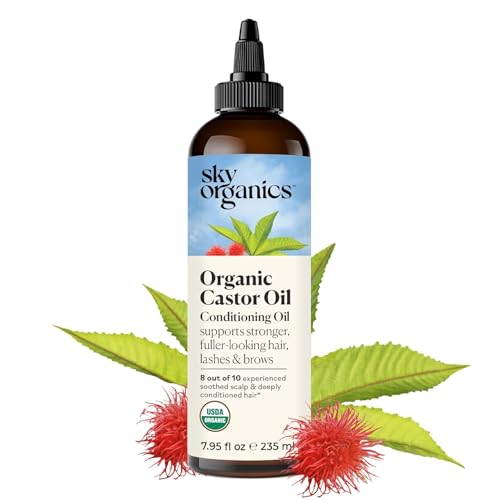
Sky Organics Organic Castor Oil
A cuticle conditioner, not a growth serum. A single-ingredient, cold-pressed, organic castor oil with nothing else in the bottle. For a cuticle massage, that’s exactly what you want. It’s PETA-certified cruelty-free and vegan, and the bottle is large enough to double for brows and lashes if you’re inclined. Go in clear-eyed: it’s thick and slow to absorb, and it will condition your cuticles, not lengthen your nails, no matter what the internet promises.
From the Hive
Our BEEs went in expecting longer nails and came out fans of castor oil for a different reason. It’s the one that calmed down their ragged, peeling cuticles, especially over a dry winter. Nobody reported faster growth, and the ones who were honest about it said the bottle is messy, so they keep it on a saucer by the bed.
Sunscreen, the step that does the most
If the hands are where sun damage shows up first, sunscreen on the hands is the step that pays you back the most, and it’s the one nearly everyone skips. We slather SPF on our faces and leave our hands bare on the steering wheel, where they catch direct light for the length of every drive. Driver’s-side hands and arms are a known pattern in dermatology for exactly this reason. The back of your left hand is collecting a commute’s worth of UV your face never sees. Some people get pointed about it: “I use spf driving gloves for this exact reason,” one commenter wrote.
Any broad-spectrum SPF 30 or higher works, including whatever you already use on your face. A hand-specific one is worth keeping around because you’ll actually use it. A sunscreen that doubles as a hand cream gets reached for after washing, instead of treated as a separate chore you skip by noon. Park it next to the soap so the decision is already made for you. The people who stay consistent fold it into a step they already do: “I treat my hands as an extension of my face and lotion up after every wash,” as one commenter put it.
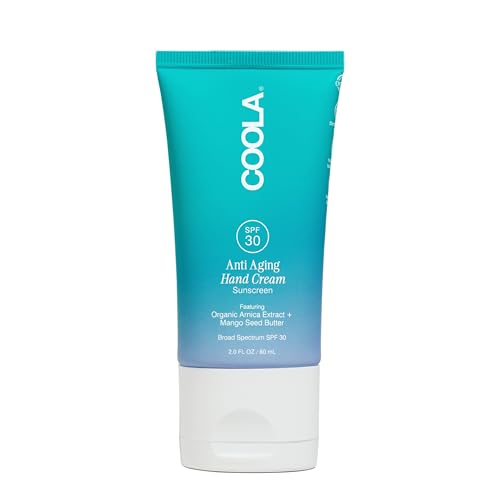
COOLA Hand Cream SPF 30
The one that makes the SPF step automatic. A hand cream and a broad-spectrum SPF 30 in one tube, with mango seed butter and vitamin E, so the sunscreen rides along with a step you were doing anyway. It’s PETA-certified cruelty-free. SPF 30 is the floor, not the ceiling, so reapply after washing if your hands are out in real sun. And the tube runs small for the price, since you’re paying for the cream-and-SPF combo in one.
From the Hive
The hand-SPF step is the one our BEEs forget most and regret most, and the two-in-one is what finally fixed it. When the sunscreen is the hand cream, there’s no extra step to skip. The reapply-after-washing part is still where most people slip, so a tube by the kitchen sink does more than one in a bag that never comes out.
The hand cream that seals it all in
Every ritual above works better with one last step: a real hand cream, on damp hands, after the last wash of the night. You want something richer than a body lotion, with humectants that pull water into the skin (glycerin, urea, or lactic acid on the label) and a thicker layer on top to keep it from evaporating. The most useful habit is keeping a tube where you already wash your hands, because a cream two rooms away in a bathroom cabinet is a cream you won’t use.
The cult pick for hands that have gone past dry into cracked is below, and the reviews read like before-and-afters. “I no longer walk around with stinging cracks all over my hands,” one reviewer writes after years of dryness. “I am only on day 2 and my hands are significantly better!!!!” a commenter adds. The refrain underneath the results is texture: it “is not greasy at all,” another notes, and “feels silky and soft.”
Our BEEs are split on jar versus tube: the jar lasts longer and costs less per ounce, but the ones who keep it by the kitchen sink swear by the tube because it stays clean when your hands are already a mess. Either way, it’s fragrance-free and sinks in fast enough that you can pick your phone back up a few seconds later. That’s why it earns a permanent spot by the sink.
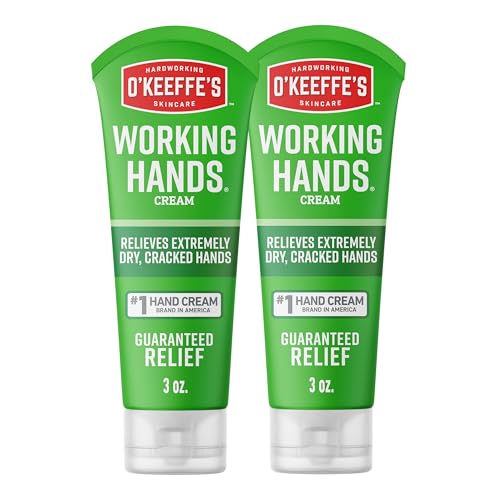
O’Keeffe’s Working Hands Hand Cream
The one people actually finish and rebuy. A thick, fragrance-free cream built for hands that have cracked, split, or gone rough at the knuckles, and it sinks in fast instead of leaving a greasy film. The tube travels better than the jar and stays cleaner by the sink. Worth flagging for the conscientious: O’Keeffe’s isn’t certified cruelty-free, and some formulas contain beeswax, so it’s neither badge-carrying nor vegan, even though the brand says it doesn’t test on animals.
None of this is a project. The daily part is cream, a drop of oil, and SPF, which adds up to about five minutes split across the day. The weekly part is the soak and the scrub, ten minutes you’ll look forward to. Do it with some consistency and your hands will look cared for. At any age, that’s the point.
What Our BEEs Are Buzzing About
Related Articles
- Our Top Face Oils for Aging Skin, and What Each One Is Really For
- The Best Neck Firming Creams, From an $8 Bottle to a $95 Splurge
- How to Give Yourself a Luxurious At-Home Facial
- 9 Beauty Habits of Women Who Always Look Good
Want to become a Beauty Empties Expert?
BEEs get free products to test, exclusive discount codes from our brand partners, and live access to The Hive sessions with dermatologists and beauty editors. Spots are limited and hand-picked.
Beauty Empties researches every pick independently. Products marked cruelty-free are certified by PETA and/or Leaping Bunny.