
What You Need to Know About Eyelash Extensions
Are you curious if eyelash extensions are right for you? Well, start batting yours and read on, cause we’re here to help!
Chances are you’ve seen celebrities like Jennifer Lopez and Kylie Jenner flaunting insanely long lashes, only to make you wonder why you’re not genetically blessed with flowing eyelid hair, too. Well, the good news is neither are they, but you can easily fake it with the help of eyelash extensions.
What Are Eyelash Extensions?
Eyelash extensions are individual lashes that are made of synthetic fibers, though real fur (Sable) is also available. Unlike false lashes that come in a strip, eyelash extensions are semi-permanent and applied strand by strand on top of your natural lashes with glue.
You will hear the terms mink and silk when it comes to eyelash extensions, but they are both made of a material called Polybutylene terephthalate. PBT, as it’s commonly referred to, is a type of polyester. Mink lashes have a thinner, fluffier appearance, while silk lashes are thicker with a bolder look. While you can get real fur/Sable lashes at certain locations, most pros think synthetics are better since they are unlikely to cause an allergic reaction and curl better. Plus, there’s no risk of animal cruelty.
You can customize eyelash extensions for your face in order to create more elongation or depth by adjusting the thickness, volume, length, and curl you choose. If you’re not sure you want to get the entire kit and kaboodle, go for a half set or corner lashes instead of a full.
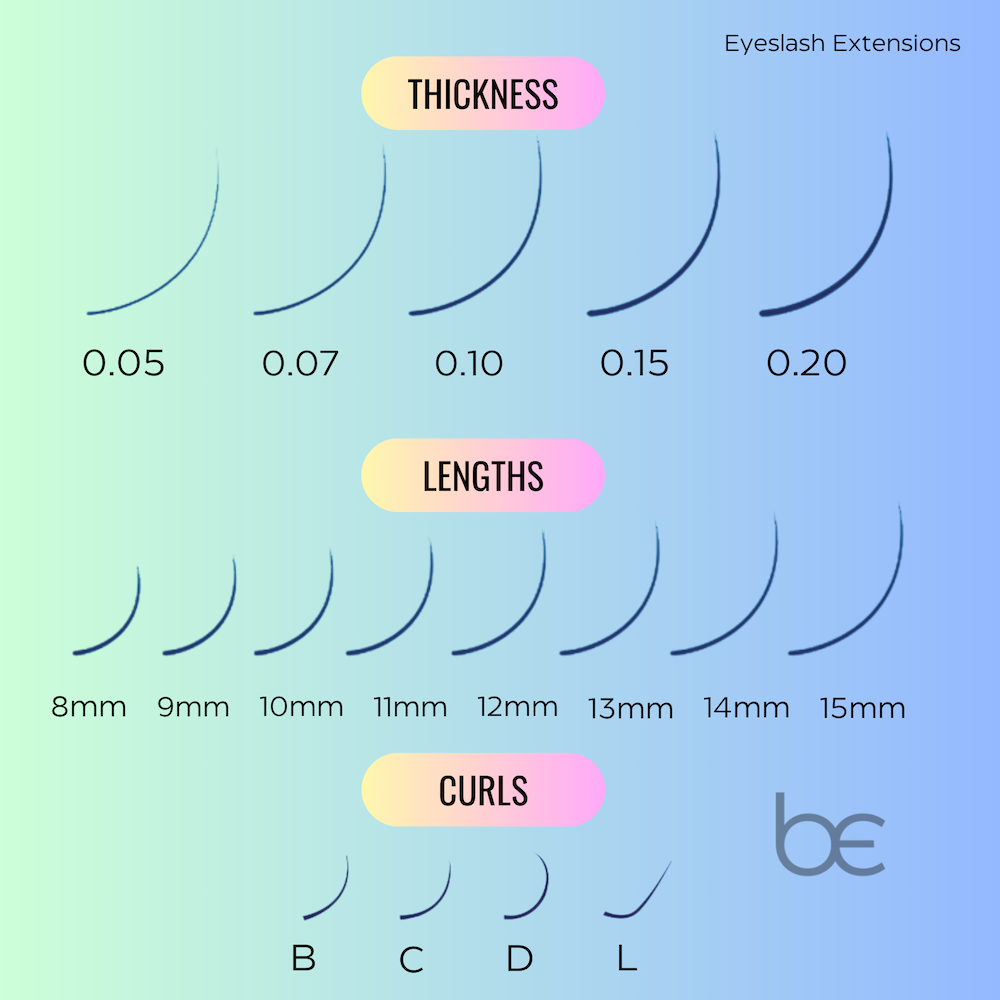
No matter what you’re looking for, a skilled eyelash technician will be able to create a custom look that works for your bone structure, eye shape, and the length of your natural lashes. This will also ensure that you don’t damage your real lashes, since getting extensions that are too long or thick could weigh your natural lashes down too much. (More on that below.)
Different Types of Eyelash Extensions
Once you start researching eyelash extensions, you might also hear about various volume types. While classic extensions glue one extension onto each of your natural lashes, volume lash extensions involve gluing multiple extensions to each lash in a “fan” shape to create more dramatic volume. So if a classic eyelash extension is a 1:1 ratio, volume extensions could be 1:3 or even 1:6 for super drama.
The number of extensions per natural lash is expressed as 2D, 3D, 4D, etc. Volume sets use thinner extensions and are great for those with sparse eyelashes, since it gives a fuller look that weighs less.
If you do choose a volume set, you might also hear the term Russian volume, a technique created by Olga Dobronravova and Irina Levchuck that started the volume craze. Now we have more volume techniques available, including American volume (created by NovaLash) and Mega volume.
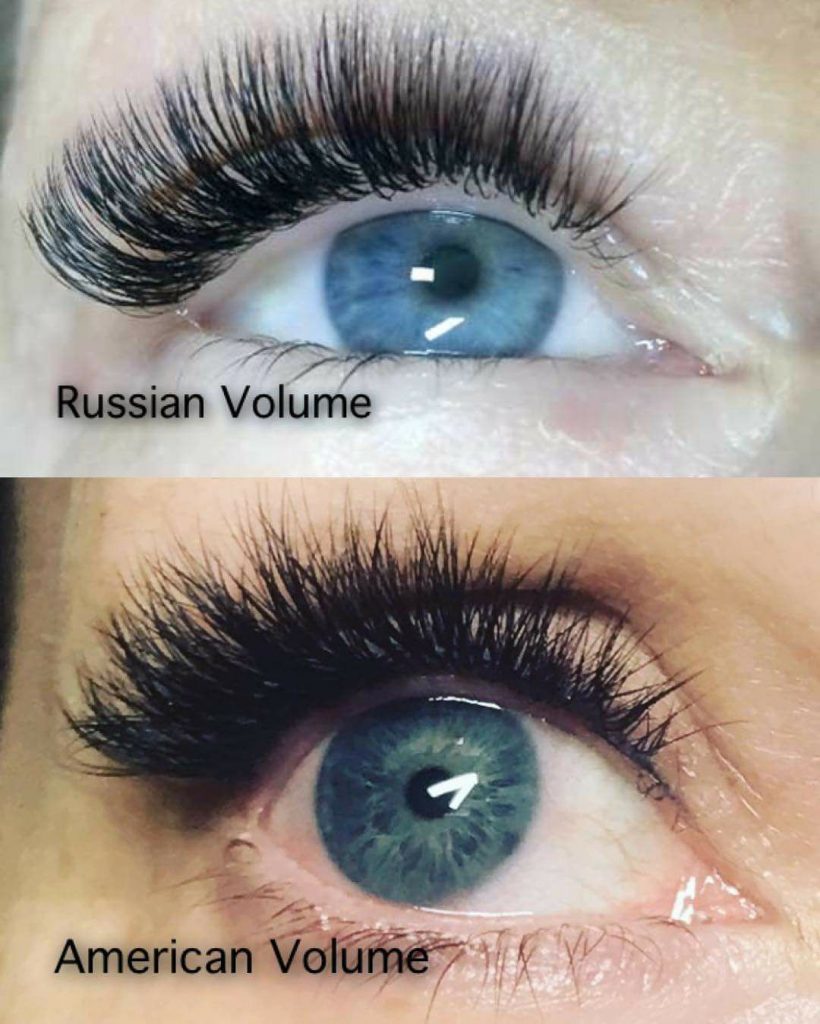
While Russian volume involves one length to create the fan of lashes, American volume uses 3 or more lengths to create a wispier and more natural look. They also have a tendency to show less gaps as they fall out over time.
The Mega volume is the most dramatic, and is similar to Russian volume except the lashes tend to be longer. If you like the idea of volume lashes but are worried they’ll look unnatural, go with a hybrid option and mix the classic and volume techniques that work best for you.
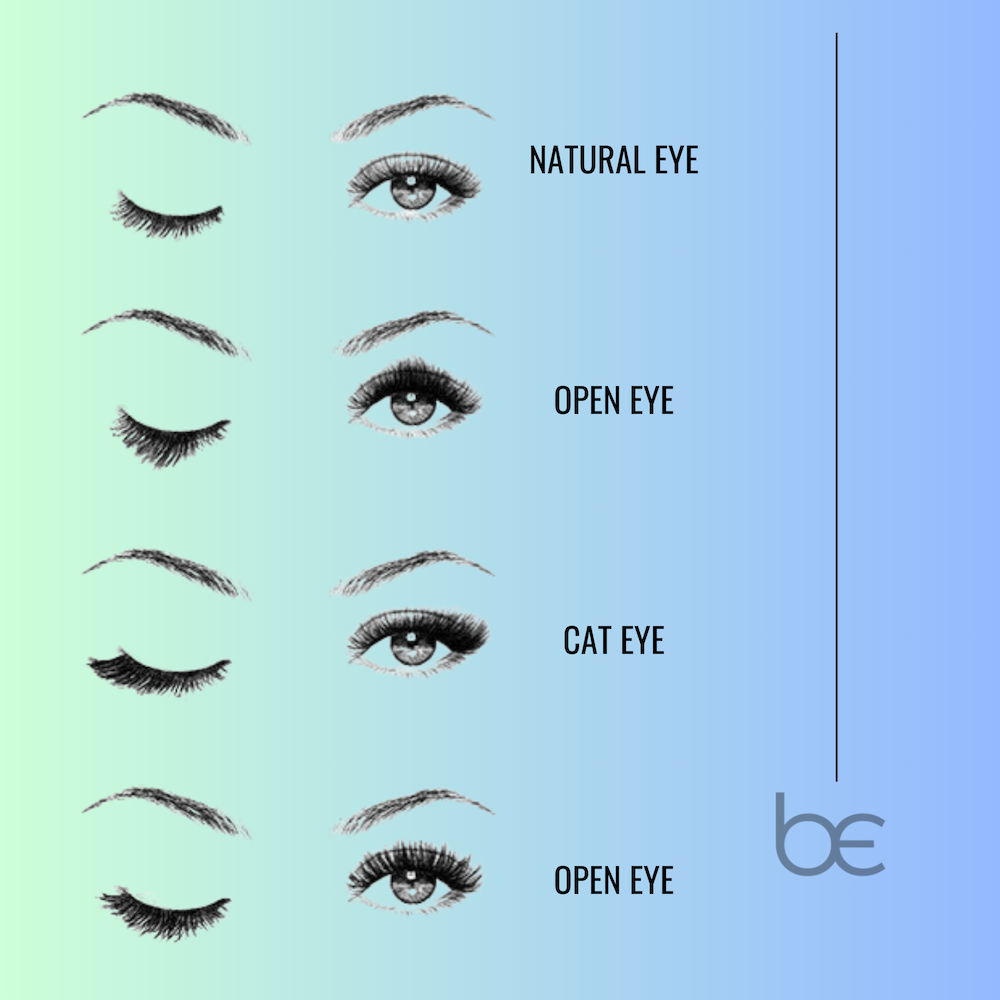
In addition to choosing the curl and length (the most common is 10mm), you can also select the look you’re going after with a technique called lash mapping.
Do Eyelash Extensions Damage Your Natural Lashes?
Most newcomers want to know if eyelash extensions can cause your natural eyelashes to fall out? The truth is on average you already loose between 1-5 eyelashes a day naturally, so you would most likely continue at that pace.
While there is no conclusive evidence that extensions cause any issues long term, there is always a chance improper application could cause real lashes to fall out (a condition called traction alopecia, which can happen to any natural hair follicle with friction), says Zaina Al-Mohtaseb, MD, assistant professor of ophthalmology at Baylor College of Medicine in Houston. This can happen to your eyelashes because of additional weight (IE: the extensions) placed on the hair follicle itself. However, the majority of people who do report stubby eyelashes or bald spots after removing their extensions say their eyelashes are back to normal when the next round grows in.
Extensions can occasionally cause infections to the cornea and eyelids–including conjunctivitis and keratitis, due to debris that can get collected in them. “The bacteria can also clog the oil glands and cause styes,” said optometrist Dr. Caryn Nearnberg.
With that being said, lots of people wear extensions with absolutely no issues, it’s just something to keep in mind. It’s also one of the reasons you should always go with a licensed technician who has experience doing them properly.
How Do You Apply Them?
The technician will apply patches to your undereye area to help keep your lower lashes separated. Then, they will use a primer on your upper lashes and isolate your natural lashes using a tweezer. Application of the extensions will then begin, with the technician placing each lash to the top of a real lash with glue.
The process typically takes up to 2+ hours for a full set, and about 45 minutes when you come back for fills (more on those below).
Beauty Buzz
Since your eyes are closed during your entire extension appointment, try taking a cat nap! Or if you’re at a salon, consider making a day of it and doing a mani/pedi first, since your nails will have lots of time to dry!
How Much Do Eyelash Extensions Cost?
A full set can cost anywhere between $100-$450+ depending on where you live and the type of extensions you’re getting (IE: Silk vs. mink vs. volume). Maintenance fills can range from $65-$125+ depending on how long it’s been since your initial appointment.
How Long Do They Last?
When you’re deciding if extensions are worth it, keep in mind that with proper care they can last around 6-8 weeks (with fills every 2-4 weeks, the average length of your natural eyelash growth cycle). After that time period you would most likely need to get another full set.
Where Can You Get Them Done?
While there are great DIY options that are a hybrid between traditional falsies and extensions (such as Lashify, which is applied in larger pieces vs. individual lashes to the underside of your lashes with a gentler adhesive) a professional must apply eyelash extensions.
It’s super important to research reputable technicians in your area experienced with eyelash extensions. Your technician should be licensed, and in some states they also need to be certified. Make sure to check their credentials. You should also call the salon and inquire about what kind of adhesive they use. Some salons use glue with formaldehyde, which is something you should avoid if possible as it can cause irritation if not properly applied. Be sure to look for one that has low levels of the chemical, or better yet none at all.
As you do with most salons, check online reviews and social accounts to see before/after photos.
How to Remove Eyelash Extensions
Do NOT try and remove them at home. This could lead to pulling out your natural lashes and dreaded bald spots.
“Unfortunately, there is no over-the-counter or any DIY oil-based products that can safely remove lash extensions,” says lash expert Clementina Richardson.
Instead, wait it out. If you don’t want to get another set or a fill, your lashes will eventually fall off when you complete your regular eyelash growth cycle.
You can also go back to the salon where you got them. Extension removal costs around $25-$50, though some places waive the fee if you get another set.
The technician will use a professional glue remover. First, they’ll have you tightly close your eyes, then the remover will be applied with a brush. After waiting a few minutes they will begin removing them one at a time with a brush or tweezers. A cleanser will be applied to your lashes to remove any remaining glue.
How to Care for Your Extensions
Experts say to wait at least 8 hours (and ideally 24 hours) before getting your extensions wet. Try not to wash your hair or face with water during that time period. Use the tips below to make sure you get the most life from your extensions.
- Don’t pull at them:
- You shouldn’t really do this with your natural lashes anyway! While the friction could cause them to become loose, the oils from your fingers can also cause damage.
- Avoid oils:
- Speaking of oils, avoid products with oil, alcohol, and glycerin, since those ingredients can affect the glue bonds.
- Skip the mascara:
- The general consensus is that you can’t wear mascara with your eyelash extensions. When you use regular mascara, you risk breaking the extensions off when you go to remove it from your lashes. You’ll also want to skip the eyelash curler!
- While certain beauty stores sell mascara for eyelash extensions, we suggest skipping it altogether. After all, that’s what you got lash extensions for!
- Go for less eye makeup:
- Heavy eye makeup and even concealer can get on your eyelash extensions, making them dirty and potentially affecting the adhesive. It will also require more friction from removal, so the less you do anything to your eye area, the better.
We’re a big fan of eyelash extensions, and think they can be a great way to add drama to your eyes without worrying about mascara on a daily basis. Just make sure they’re right for your lifestyle (and budget) before making the leap.
