The 7 Most Common Anti-Aging Skincare Mistakes after 50

Every product on Beauty Empties is one that actually gets used up and bought again. Some of the links in this post are affiliate, which means we may earn a small commission if you make a purchase, at no extra cost to you. Thanks for being here!
Once you hit 50, most skincare routines look pretty good on paper. Cleanser, moisturizer, SPF, the drugstore retinol your dermatologist mentioned in 2014, maybe a Sephora serum you picked up after a flight to somewhere humid. But most are missing a few small things that make the real difference long-term, and the cosmetic surgeons who literally rebuild faces for a living keep flagging the same ones.
Dr. Amir Karam (the board-certified facial plastic surgeon and founder of KaramMD Skin in San Diego) has a useful breakdown of the most common skincare mistakes after 50, and what he says matches what most dermatologists say. The seven below are the ones that come up most consistently across his patients, broader derm consensus, and the BEE community’s own repurchase patterns.
1. Skimping on Daily SPF (or Skipping It on Overcast Days)
Most women over 50 already own an SPF, so the issue is where the routine falls short. Most people apply half of what the dose actually requires (the dime-sized pearl on the bathroom shelf was always too little), skip it on overcast or rainy days, or wear a moisturizer with SPF 15 and count it as covered. Dr. Karam puts the share of skin aging caused by sun at “70 to 80%,” which matches the upper range across the research too.
The formula Karam uses on his own face is EltaMD UV Clear, the broad-spectrum SPF 46 dermatologists name most often as the daily face SPF that doesn’t break out reactive skin. It uses zinc oxide as the active ingredient (a physical block that sits on top of skin rather than absorbing into it). The tinted version blends without the white cast of the original, so it’s the one to default to if your skin is anything past pale. A quarter-teaspoon for the face and neck, every morning, regardless of weather or how much time you’re spending outside, is the dose.
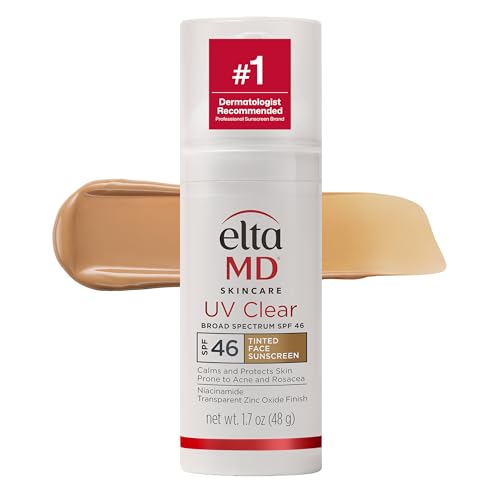
EltaMD UV Clear Broad-Spectrum SPF 46 Tinted
The zinc-oxide-based daily face SPF dermatologists default to for reactive skin and skin over 50. Tinted formula blends without the white cast of the original.
What Our BEEs Say
BEEs put the tinted version of EltaMD UV Clear in the same bathroom-cabinet slot as their fragrance-free cleanser: bought, finished, repurchased without overthinking it. The untinted original is the one BEEs return faster, since most of the community has skin past light olive and the white cast doesn’t dissipate. The tinted SPF doubles as a primer, which is why a handful of BEEs skip foundation on lighter days and just layer this with concealer. The recurring complaint is the price (about $43 a tube), and BEEs name the Korean SPFs at Costco as where they cross-shop when they want a cheaper backup.
2. Going Without a Morning Antioxidant
Vitamin C in the morning does a different job than SPF. SPF blocks UV from breaking down skin in the first place; vitamin C neutralizes the free radicals that slip through anyway (and some always slip through, even with a perfect SPF application). Used together, the two cover more ground than either alone, which is part of why Dr. Karam puts vitamin C on the short list of ingredients he says actually make a difference in your 50s. He pairs it with retinol and niacinamide as the foundational three.
SkinCeuticals C E Ferulic is the original formula every other vitamin C in the category was created to dupe. Dr. Sheldon Pinnell at Duke University spent years stabilizing L-ascorbic acid at the 15% concentration the formula requires (most vitamin C oxidizes the moment air hits it; this one stays active for over 24 hours after application). The patent ran for 20 years and expired in March 2025, so a wave of dupes started hitting shelves last year. The early ones are catching up on price, and a couple are getting close on the active ingredients, but most still haven’t matched the stability of the original in side-by-side wear tests.
The honest caveat: at $182 a bottle, it’s the most expensive product in the article, and the formula isn’t easy to love at first. The smell sits somewhere between hot dog water and old cardboard (that’s the ferulic acid), and a drop on a light cotton collar leaves a permanent yellow stain. If your only goal is general brightening rather than the full free-radical defense, Naturium’s Vitamin C Complex covers similar ground at a fraction of the price.
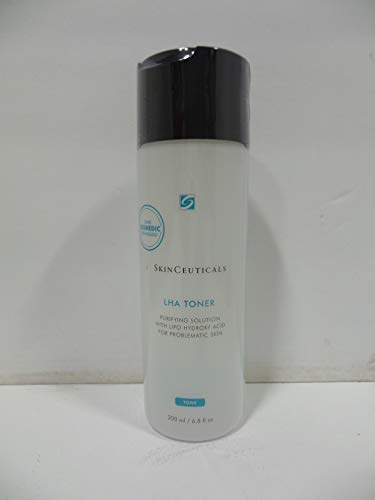
SkinCeuticals C E Ferulic
The patented 15% L-ascorbic acid serum every other morning vitamin C gets compared to. Stable for 24+ hours after application; the most-recommended pairing with daily SPF in the category.
What Our BEEs Say
C E Ferulic is the highest-priced vitamin C BEEs keep repurchasing, and the only one that wins enough side-by-side comparisons to justify the $182 line item in the routine. BEEs who’ve tried Drunk Elephant C-Firma Fresh and Naturium Vitamin C Complex name C E Ferulic as the one with the most visible morning brightness after about six weeks of daily use. The smell takes adjusting to (BEEs have described it as “a hot dog cart on a humid afternoon”). For travel, BEEs pick up the 0.5 oz bottle; for daily use the 1 oz works out to a better price per ml.
3. Treating Retinol as Optional
Of all the anti-aging ingredients, retinol has the most research behind it and the most dermatology agreement after 50. It’s also the most commonly-skipped one, usually because the first two to three weeks involve some mix of dryness, flaking, and irritation while the skin adjusts. Dr. Karam puts retinol at the top of his short list (“retinol is super important, vitamin C is super important, niacinamide is super important”), which matches what dermatology offices have been saying for the last two decades.
RoC Retinol Correxion Deep Wrinkle Night Cream is the drugstore retinol that comes up most often when dermatologists are asked which stabilized formula they trust. RoC has been working on retinol stability since the late 1990s and has more published research behind its formulas than any other drugstore retinol brand. Dr. Andrea Suarez (the board-certified dermatologist behind YouTube’s Dr. Dray) ranks it as “neck and neck with the Neutrogena Rapid Wrinkle Repair Retinol Cream.” Costco stocks the 2-pack at about half the per-jar price of standard drugstore retail when you can find it.
The honest caveat: 2-3 weeks of mild tingling and flaking is the predictable acclimation window. Start two nights a week and build to nightly only if your skin tolerates it. Don’t stack with chemical exfoliant on the same night. If the irritation lasts past four weeks, your skin may want a gentler retinoid like retinaldehyde (a less-converted form that’s slightly weaker on skin) before working back up to full retinol.
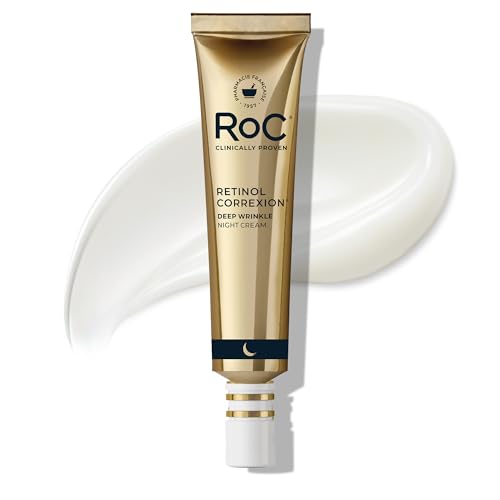
RoC Retinol Correxion Deep Wrinkle Night Cream
The drugstore retinol Dr. Dray ranks alongside Neutrogena Rapid Wrinkle Repair as one of the few stabilized formulas that work. Fragrance-free, well-studied, beginner-friendly.
What Our BEEs Say
RoC Retinol Correxion is the drugstore retinol BEEs start with before considering prescription tretinoin, and the only drugstore option with enough finished jars in the BEE community to qualify as the consensus pick. The 2-3 week acclimation Dr. Karam describes is the version BEEs report too, with most flagging week three as the inflection point where the tingling fades. BEEs with oily skin push back on the thicker texture and rotate it with a lighter retinol serum on alternating nights. The fragrance-free variant is the one BEEs reach for, and the Costco 2-pack format is the highest-repurchase RoC SKU in the community by a wide margin.
4. Skipping Peptides and Niacinamide
Retinol and vitamin C get most of the airtime. Peptides and niacinamide do slower, gentler versions of similar work with less of the irritation, and most routines miss one or both. Dr. Karam groups them with the ingredients that “stimulate fibroblasts to make more collagen” (peptides) and “suppress melanocytes to decrease pigmentation production” (niacinamide, on dark spots). The visible effect is firmer skin and a more even surface tone, on a timeline closer to three months than three weeks.
The Ordinary Multi-Peptide + HA Serum (originally sold as “Buffet”) is the most-finished affordable peptide serum in the BEE community. It combines a peptide blend, hyaluronic acid for hydration, and amino acids in one $13 bottle, which makes it the easiest entry point if your routine doesn’t have peptides yet. For niacinamide, the same brand’s Niacinamide 10% + Zinc 1% is the matching stand-alone option at $7. Both layer easily under your moisturizer and don’t compete with the retinol or vitamin C you’re already using.
The honest caveat: peptides take longer than retinol or vitamin C to show visible results. Eight to twelve weeks of consistent use, not four. Niacinamide at 10% is also slightly too concentrated for some sensitive skin, in which case a lower-concentration version (often baked into a moisturizer at 2-5% rather than a serum) is the gentler option.
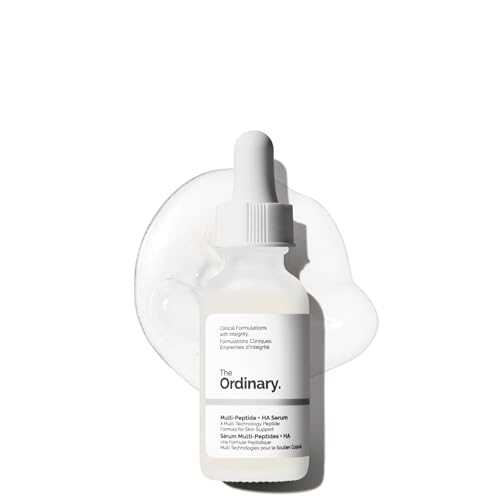
The Ordinary Multi-Peptide + HA Serum (Buffet)
A peptide blend plus hyaluronic acid in one $13 bottle. The easiest entry point if your routine doesn’t include peptides yet.
What Our BEEs Say
At $13, this is the highest-repurchase peptide serum in the BEE community by a wide margin. BEEs treat it as the daily peptide step rather than the splurge slot (Medik8 Liquid Peptides at around $84 is the splurge version, this is the daily one). The texture is slippery and absorbs fast, which is the main pushback from BEEs who prefer their serums to feel more substantial on the skin. A small but vocal subset of BEEs layer this morning and evening under their respective day and night moisturizer, which is the version that gets visible results fastest.
5. Not Exfoliating (or Going Too Hard With It)
After 50, the skin’s natural turnover slows from roughly 28 days to closer to 50 or 60. Without some kind of exfoliation, that slower turnover shows up as dullness and a rougher surface in the mirror. Dr. Karam describes what gets lost as “the way [young skin] reflects light,” which is the quality routines tend to lose first when exfoliation drops out entirely. Salon chemical peels every six weeks aren’t what most derms recommend (expensive, inconvenient, and the in-between weeks lose the brightness anyway). A gentle chemical exfoliant at home, two to three times a week, is what holds up over time.
Paula’s Choice Skin Perfecting 2% BHA Liquid Exfoliant is the at-home chemical exfoliant most dermatologists default to when asked. The 2% salicylic acid (a BHA, the kind that gets into pores rather than just sitting on the surface) is strong enough to make a visible difference within two weeks without being harsh enough to cause peeling. Paula Begoun has been formulating this product since 1995 and the formula hasn’t changed because it hasn’t needed to.
The honest caveat: don’t use it the same night as retinol (the combination is too irritating for skin in its 50s and up most of the time). The smell leans mildly chemical. And the at-home peel category Karam specifically warns against (the kind that requires neutralizing and carries real burn risk) is a different product entirely from this leave-on liquid, which is closer to a treatment toner.
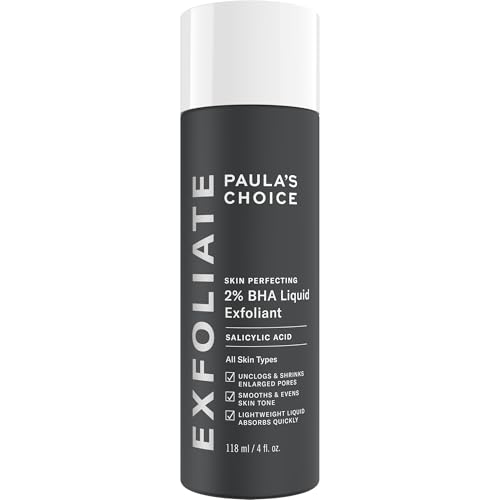
Paula’s Choice Skin Perfecting 2% BHA Liquid Exfoliant
The at-home salicylic acid leave-on exfoliant dermatologists default to. Same formula since 1995. Two to three nights a week is the starting dose once you’re over 50.
What Our BEEs Say
BEEs reach for Paula’s Choice 2% BHA when the goal is improving clogged pores and surface dullness without the recovery time of a salon peel. Most BEEs who haven’t exfoliated chemically before report visible brightness within two weeks. The smell (mildly chemical) is the most common pushback, and BEEs with very oily skin find the 2% slightly too gentle and rotate in the 4% extra-strength version instead. The bottle is sealed against air on purpose because the formula is light-sensitive, so decanting it to a clear container shortens its shelf life.
6. Bouncing Between Products Every Six Weeks
The bathroom drawer full of half-finished jars is what this one looks like in real life. The first three weeks of a new product is when skin is still adjusting and the visible improvement hasn’t kicked in yet, which is when most people get impatient and try the next thing they saw on Instagram. Dr. Karam puts the consistency problem this way: “You can’t overcome and win in any scenario without consistency. But it’s not just consistency, you could do the wrong things consistently. It’s figuring out what the right thing to do and doing it consistently over time.” Most routines violate the first half of that rule.
Most stronger ingredients need 8-12 weeks of consistent use before you see real improvement (retinol especially, peptides definitely, vitamin C usually). Bouncing between products at six weeks means you keep paying for the first part of every product and never getting to the part where it actually starts working. The fix is simple: stick with a routine for a full season (twelve weeks) before changing anything except SPF or moisturizer texture, both of which adjust by season anyway.
This is the one mistake on the list with no product card attached, because no jar fixes it. The drawer cleanout is the corollary, and the version of the cleanout that holds up is the one where you finish what’s already open before adding anything new. The next purchase tends to be the one you actually stick with.
What Our BEEs Say
The most common drawer-cleanout pattern BEEs report is keeping the cleanser, the moisturizer, and the SPF (the steps most routines settle on faster) and rotating the serums every 8-12 weeks until two or three settle in for the long haul. The serums BEEs keep long-term tend to be the boring ones (a vitamin C, a retinol, a peptide blend); the ones that get drawer-shelved are the trendy single-ingredient launches that promised something specific. The hardest change is patience, and BEEs who give a product the full 12 weeks before judging it report the highest satisfaction with their long-term routines.
7. Cleansing With the Wrong Cleanser
The wrong cleanser does more damage on older skin than on younger skin. Surface lipids are produced in smaller quantities (this is normal aging, not anything wrong), and a harsh foaming cleanser pulls out the lipids the skin is already running tight on. The result is the tight, squeaky feeling that some people interpret as “my skin is clean.” Dr. Karam’s read: “You can’t just wash your face. You have to wash it with a gentle cleanser that’s not aggressive, it’s not abrasive, it’s not drying.”
La Roche-Posay Toleriane Hydrating Gentle Cleanser is the no-foam, fragrance-free formula dermatologists recommend most for sensitive, reactive, or older skin. It removes makeup and SPF without touching the moisture layer underneath. Twice a day (morning and night) is what most derms recommend, with the night cleanse mattering more (you’re washing off SPF, pollution, and the day’s accumulated buildup). The morning cleanse can be a splash of lukewarm water on lighter mornings, or the same gentle cleanser on heavier overnight-routine mornings.
The honest caveat: the no-foam texture takes a week or two to adjust to if you’re coming from a foaming cleanser. The “clean feeling” doesn’t show up the same way, because your face isn’t being scrubbed down to bare skin. Most skin types over 50 find foam-free cleansers more comfortable within about ten days.
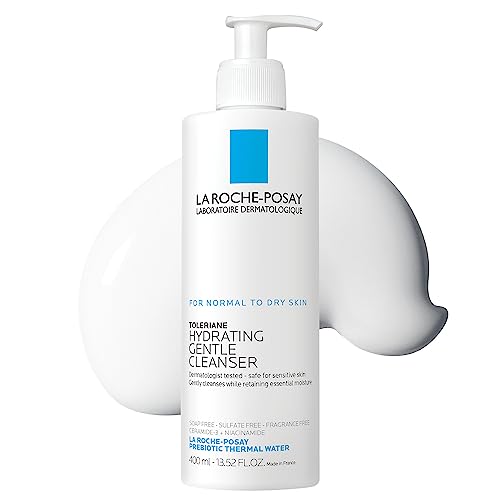
La Roche-Posay Toleriane Hydrating Gentle Cleanser
The fragrance-free, no-foam cleanser dermatologists recommend most for sensitive, reactive, or older skin. Removes makeup and SPF without touching the moisture layer.
What Our BEEs Say
La Roche-Posay Toleriane Hydrating Gentle Cleanser is the most-finished cleanser in the BEE community for skin in this age group, by a wide margin. The no-foam, fragrance-free formula is as close to a universal recommendation as any cleanser gets here. The most common pivot BEEs make is keeping this for the night cleanse and pairing it with a water-only or oil-based morning rinse depending on the season. The pump bottle is the one persistent complaint (BEEs report it can stop dispensing toward the bottom third, which is partially solvable by storing the bottle upside down overnight).
Frequently Asked Questions
Is Dr. Karam affiliated with any of the products in this article?
No. Dr. Karam runs his own skincare line (KaramMD Skin) that focuses on cleansing, vitamin C, and gentle exfoliation in a three-step format he calls the Trifecta. The products in this article are the broader dermatology-consensus picks for the gaps he describes, cross-referenced against BEE community repurchase patterns. We didn’t link to his products because the editorial standard at Beauty Empties is products with enough repurchase data across multiple retailers to qualify as broadly-finished, and KaramMD currently sells through its own site.
Can I start retinol at 55 if I’ve never used it?
Yes, with a slow start. Two nights a week to begin, paired with a basic moisturizer on the off nights, and build up to three or four nights a week only after about eight weeks. If your skin feels more reactive than it did five years ago (common around menopause), start with a gentler retinoid like retinaldehyde before working up to retinol. RoC’s Deep Wrinkle Night Cream is the drugstore version most dermatologists recommend for first-time users because the formula is consistent and the strength is well-tested.
Is the $182 SkinCeuticals C E Ferulic worth it, or is there a cheaper alternative?
It depends on the specific job you want vitamin C to do. For broad free-radical protection paired with daily SPF (the version Dr. Karam and most dermatologists are talking about when they recommend vitamin C in your 50s), C E Ferulic is the most-stable and best-absorbing formula on the market, and the side-by-side comparisons hold up. For general brightening without the full antioxidant defense, Naturium’s Vitamin C Complex covers similar ground at around $20. The decision usually comes down to whether SPF-plus-vitamin-C protection is the priority (C E Ferulic) or whether brightening is the main goal (a $20-30 alternative works).
What about lifestyle factors like sleep, alcohol, and smoking?
Dr. Karam calls these “massive accelerators of skin aging,” which matches what the research says. Smoking restricts blood flow to the face and breaks down collagen at the same time. Alcohol dehydrates skin from the inside out, and the puffiness around the eyes the morning after is real. Sleep is when the skin does most of its repair work, and the difference between five hours and seven hours shows up on the surface within about a week. None of these are skincare problems, but skincare is the smaller dial; sleep, hydration, and not smoking are the bigger ones.
Do I need all seven of these products, or is there a starter version?
The starter is three: a gentle cleanser (the La Roche-Posay Toleriane), an SPF (the EltaMD UV Clear), and either retinol or vitamin C (whichever fits your tolerance and time-of-day preference). With three products in place, the routine is already doing the majority of the work that the full seven-product version does. The other four (peptides, niacinamide, chemical exfoliant, second-active) fine-tune the rest, and most routines add them in one at a time over a year or two rather than all at once.
Why are peptides and niacinamide grouped as one mistake instead of two?
They’re frequently formulated into the same products, work on a similar slower timeline (8-12 weeks for visible results), and target related issues (peptides for firmness, niacinamide for tone). Splitting them into two separate mistakes would also mean recommending two extra serums for what is really one routine step. The Ordinary’s Multi-Peptide + HA Serum includes both functions in one $13 bottle, which is the version most routines should start with before adding a stand-alone niacinamide on top.
What Our BEEs Are Buzzing About
Here’s what the beauty community is saying about these products:
Related Articles
- 10 Common Beauty Habits That CAN Work Against Women Over 50
- The Eye Makeup Mistakes That Add Years Past 50
- 4 Derm-Approved SkinCeuticals Swaps That Save You $508
- The Retinols That Turned Skeptics Into Believers
- The Best Moisturizers for Crepey Skin, According to Dermatologists
Want to become a Beauty Empties Expert?
BEEs get free products to test, exclusive discount codes from our brand partners, and live access to The Hive sessions with dermatologists and beauty editors. Spots are limited and hand-picked.
We cross-checked every product against PETA’s Beauty Without Bunnies database before publishing. Where you see our cruelty-free mark on a product card, the brand has been independently verified by PETA. Brands without it may still be cruelty-free under their own policies; we only use the mark on the PETA-verified ones.